Feeds:
Posts
Comments

Posts Tagged ‘birds’

.   .   .   Think of the wren
and how little flesh is needed to make a song. 

from Why Regret?,  Galway Kinnell

Brown-Headed Nuthatch

Sitta pusilla

The Grandson and I are playing with Legos on the back porch. Above the constant chitter of the goldfinch kaffeeklatsch shines a sudden clear bright whistle. “Listen, Saul. That’s a Carolina Wren.”

After a few minutes of silent cogitation, a few more minutes of Lego cars brmmm-brmming across the planks, we hear the bird again. Saul remarks, “He’s saying Senner-pede, Senner-pede.”

“You mean centipede, the little crawly thing with a hundred legs?”

“No, Senner-pede.” Brmm, brmm. “I made that up.”

And the moral of the story: Encountering the logic of the philosopher, even if only six years old, it’s probably best to listen.

*      *      *      *      *

The Carolina Wren is one of my favorites, feisty little troglodyte whose voice is 30 decibels too big for his 30 grams of fluff. Listen to enough wren song and you discover the birds can be quite individual. Scolds, chatters, and so many variations on that 2- or 3- or 4-note whistle: just when you think you know them all someone new moves into the neighborhood.

Fred Chappell is one of my other favorites. He’s one of the writers that inspired me about twenty years ago to rediscover the dark forest of Poetry. I carried a typescript copy of his poem Forever Mountain around in my wallet until it wore through and I’d about memorized it. As I sort through the piles on my shelves I think it’s safe to say I’ve bought every one of his books. The epigrams, the complex forms, the backsass, the cat poems . . .

. . . and just when you think you know his song someone new moves into the neighborhood. At this year’s Sam Ragan Poetry Festival Fred revealed to us that he’s now writing fables, poems that tell a story with a moral. His voice just keeps getting bigger and bigger. And you can bet that a Fred Chappell fable is going to stretch your intellect and then bite you on the ass.

Feisty, yes; troglodyte, no.

*     *     *     *     *

Fox and Bust - Chappell_crop01

Fox and Bust by Fred Chappell; read at Sam Ragan Poetry Festival,
Weymouth Center for the Arts and Humanities in Southern Pines, NC, on March 21, 2105

IMG_1337_resize01

*     *     *     *     *

IMG_1638_resize01

IMG_1452_resize01

IMG_1217_resize01

IMG_1326_resize01

IMG_1402_resize01

IMG_1252_resize01

IMG_1208_resize01

IMG_1248_resize01

IMG_1420_resize01

IMG_1457_resize01

IMG_1464_resize01

IMG_1621_resize01

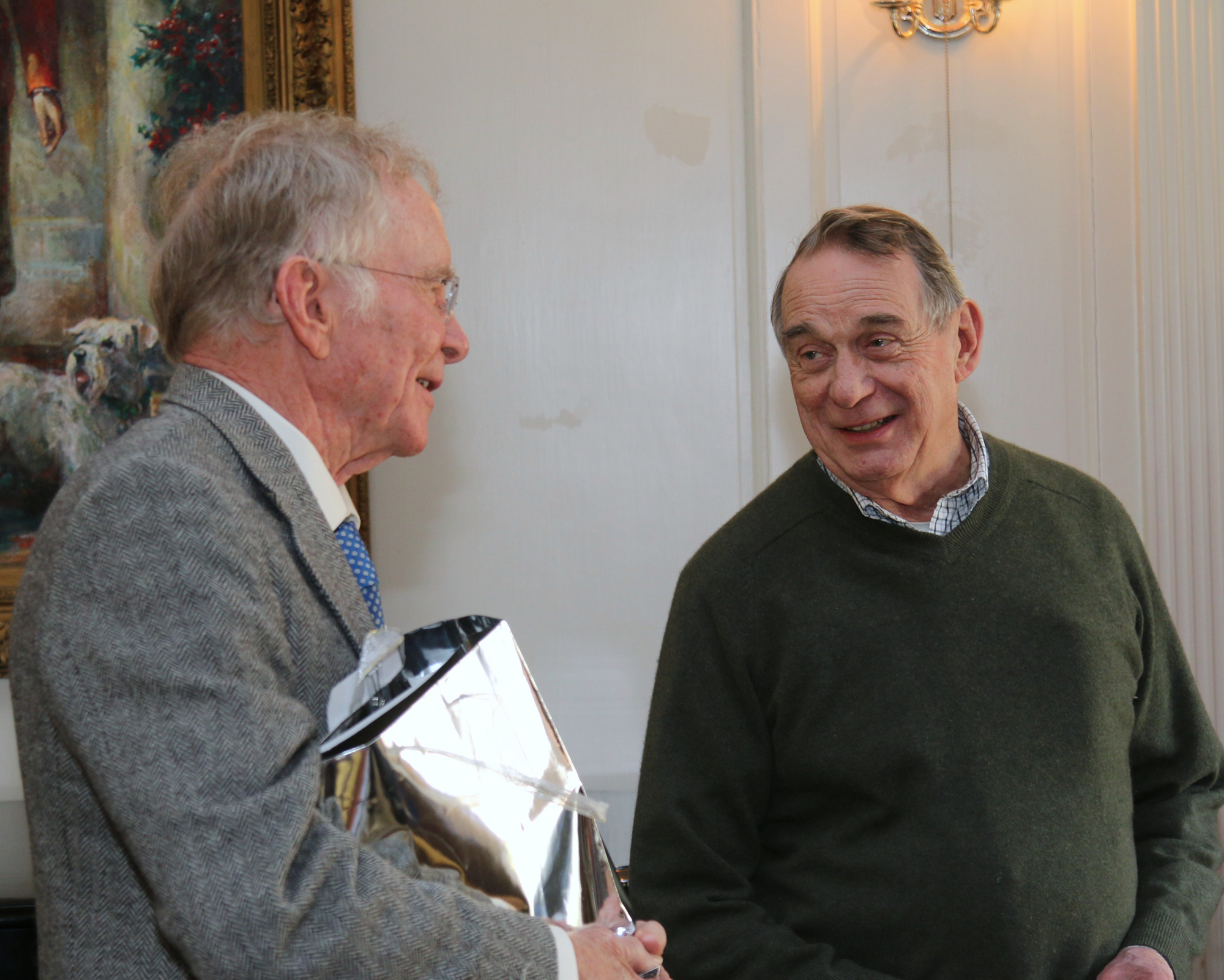
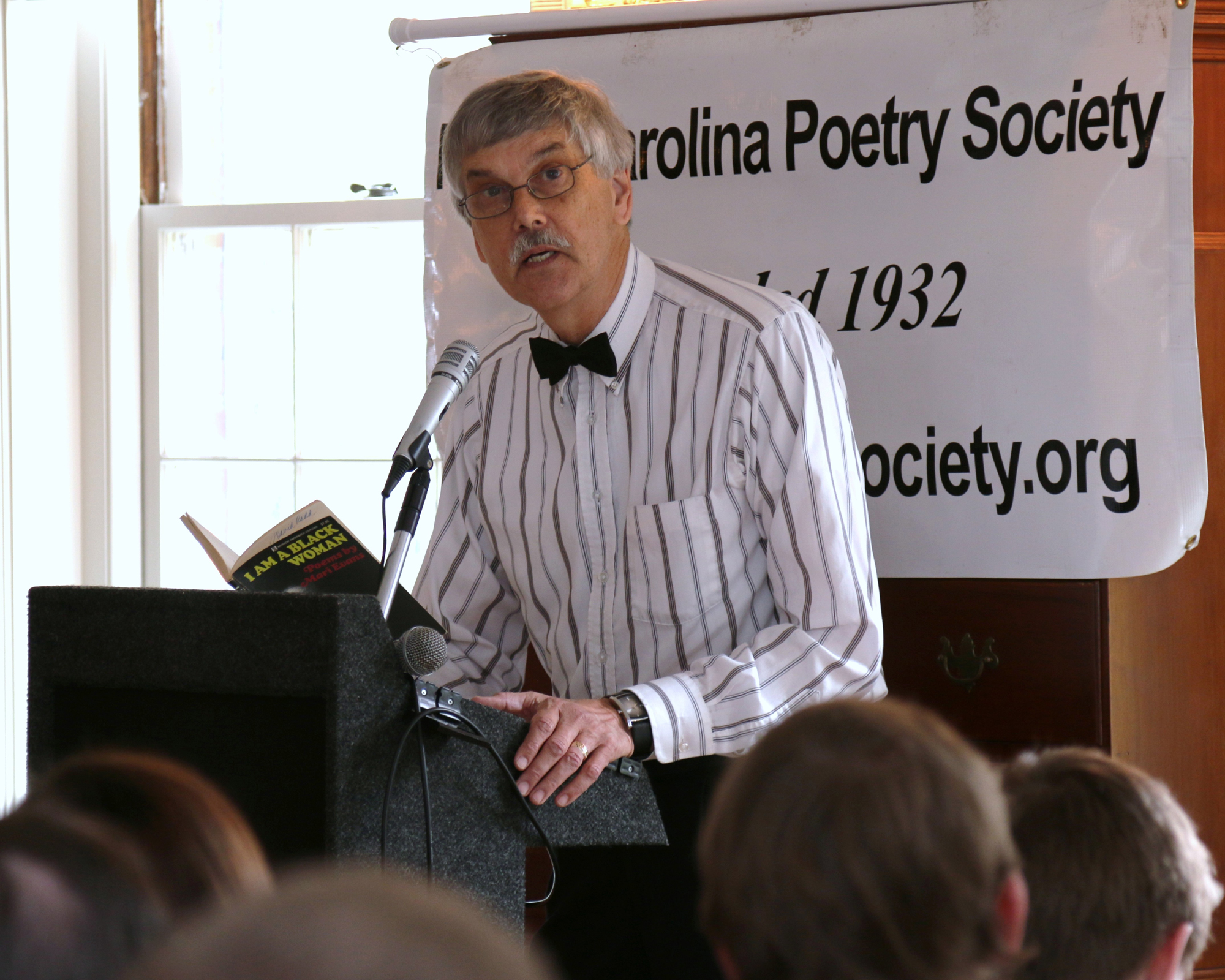
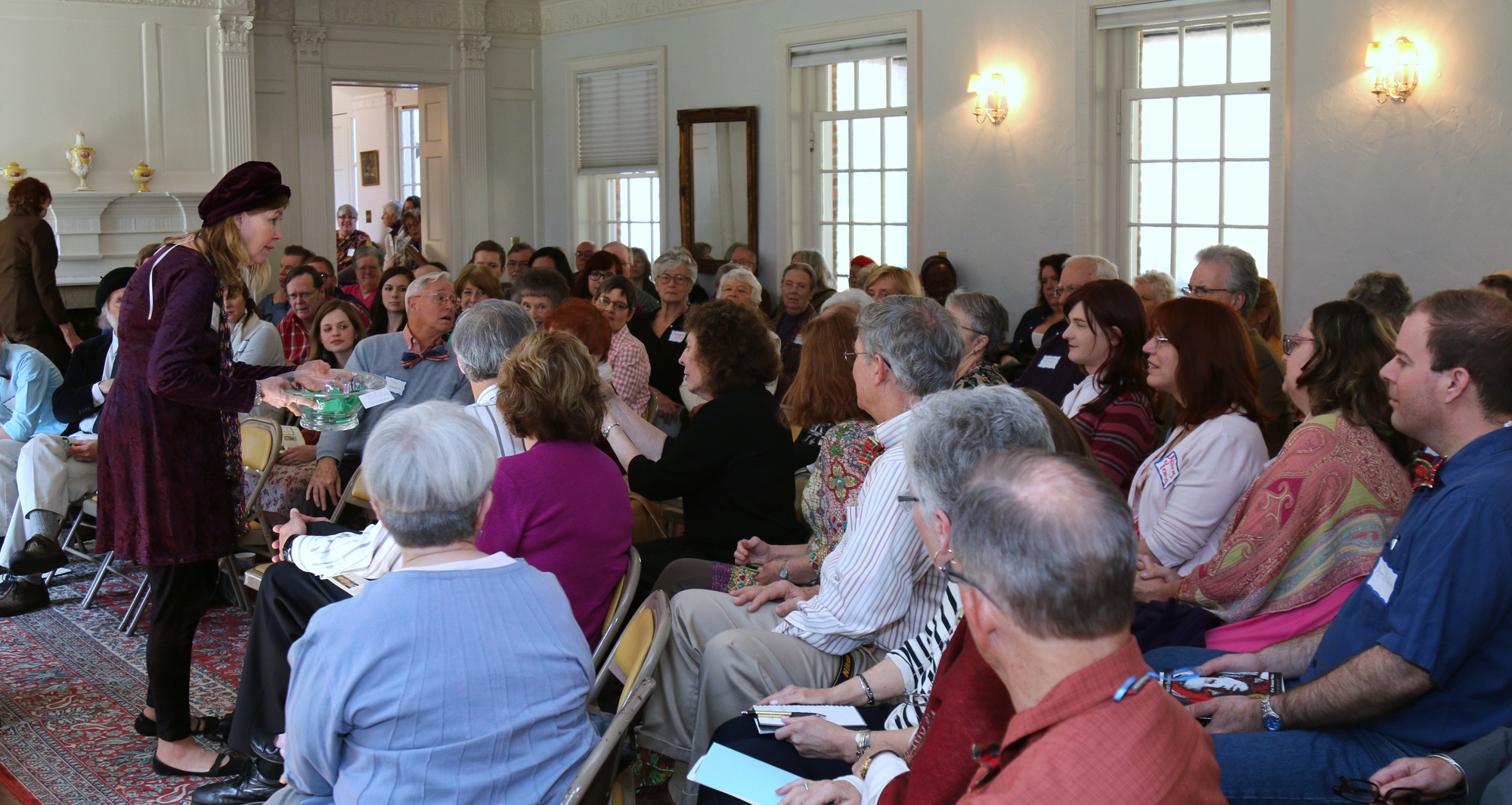
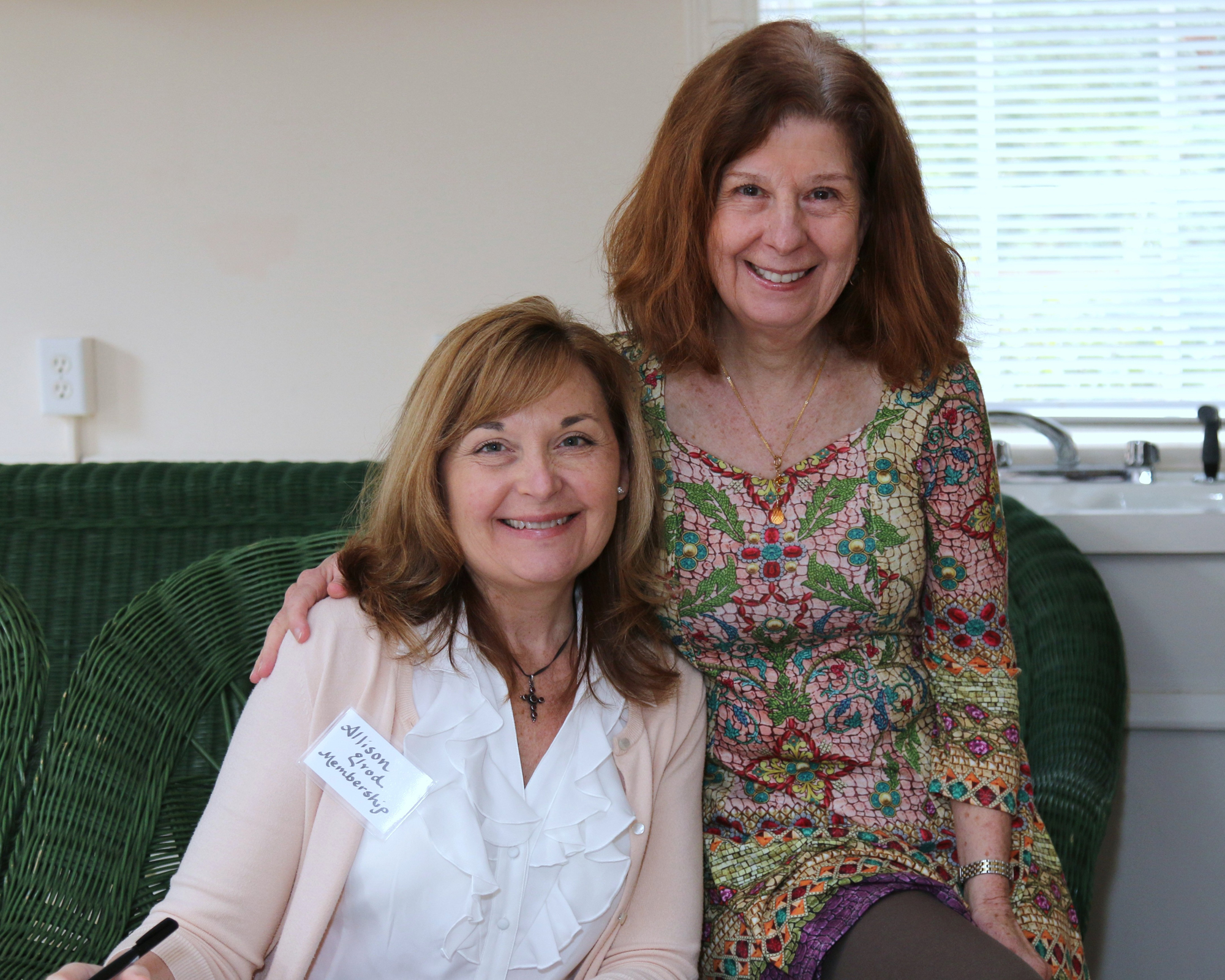
Every year the North Carolina Poetry Society sponsors the Sam Ragan Poetry Festival, named for our state’s third and longest-serving Poet Laureate.  Sam was succeeded by Fred Chappell as our fourth Poet Laureate, illuminating that post from 1997-2002. In 2004 Fred collaborated with philanthropist and poet Marie Gilbert, assisted by William Jackson Blackley and a volunteer board, to create the Gilbert-Chappell Distinguished Poet Series.  Each year since then three notable NC poets have been selected to serve as mentors, each to 3 or 4 students middle school to adult, to create and critique a body of poems, followed by public readings in libraries throughout the state.  Fred is still a guiding light for this endeavor, which celebrated its tenth anniversary at this year’s Sam Ragan Poetry Festival in Southern Pines on March 21, 2015.

The photos and poems from this and the five preceding GriffinPoetry posts commemorate that event.

*     *     *     *     *
IMG_1180_resize01

Weymouth Woods

*      *      *       *      *

Doughton Park Tree #1

Read Full Post »

 Keep a green tree in your heart and perhaps a songbird will come.
Chinese Proverb

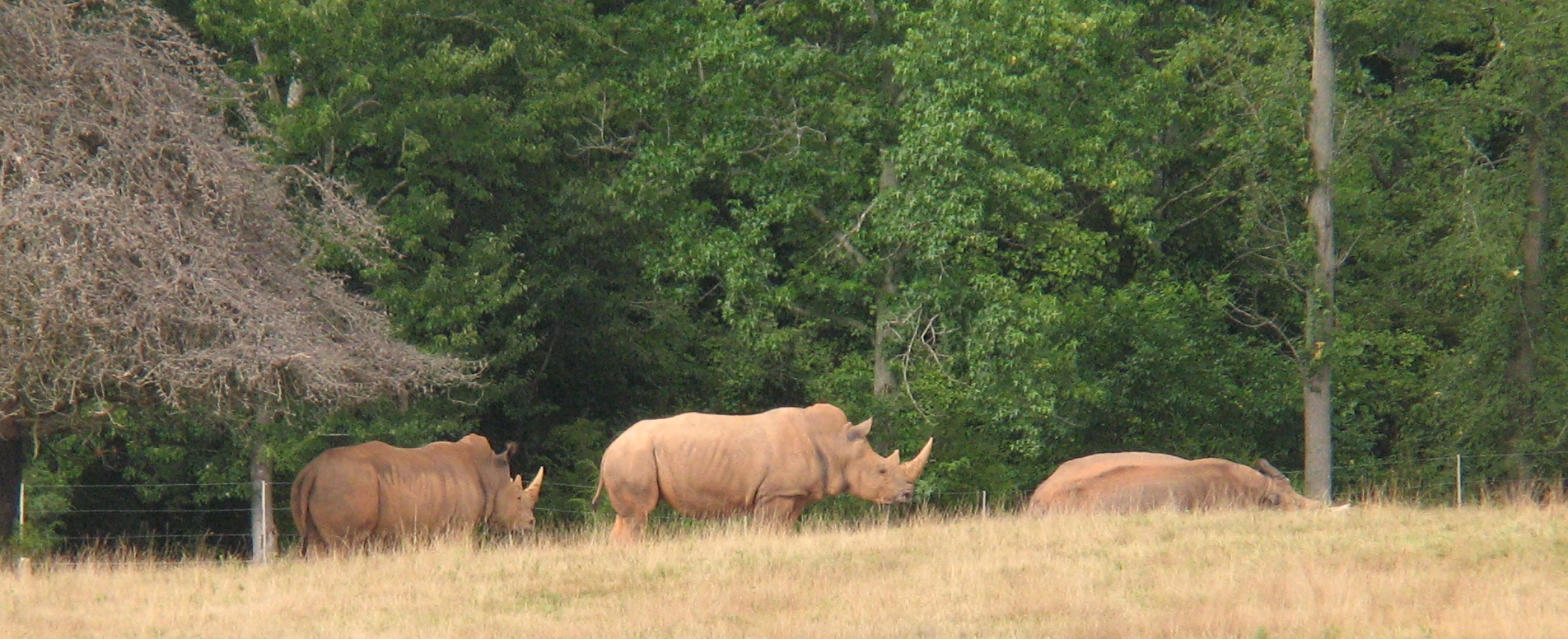
It’s five o’clock.  The waterbuck and Thomson’s gazelle single-file it to their nighttime holding. Moms with strollers and jostling teenagers single-file it for Akiba exit.  I lean against the railing at Rhino as the breeze freshens and a suggestion of thunder growls to the south.  The last guest in the Park ignores his cell and joins me.

The great horned beasts are standing now, three of them in the distance across the browning field, the vast male turned profile to us.  First time I’ve actually seen them move – today’s rain popped July’s hot bubble and the rhinos now seem willing to forsake their shade.  The man eyes my camera.  “Bet you can really zoom in on them with that lens.”

“No, it’s not really much of a telephoto.  I got a good look with these, though.”  I fish my binoculars out of my pack and hand them to him.

He thanks me and sighs.  “I love the rhinos.  I came just to see them.  Oh, I love all the animals, but I really wanted to get a good look at the rhinos.”

Now all three are moving across our field of vision, a slow parade for the man who loves them.  He watches them out of sight.  At last he returns the binocs, thanks me again, and hustles toward the exit.  Tomorrow he and his family are on to Wilmington, but today he’s had his moment.

IMG_3159_crop01

.      .      .      .      .

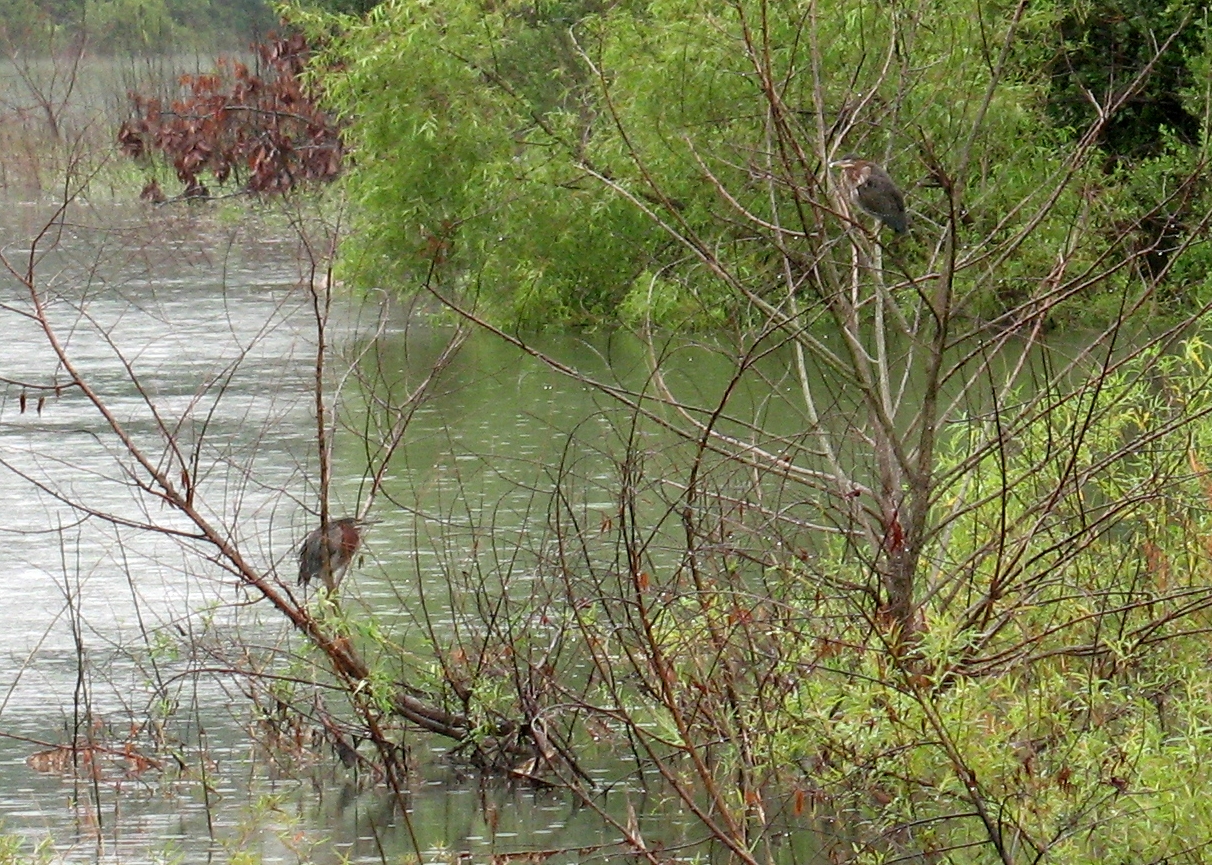
It was raining this morning, but I couldn’t go back to sleep.  I called Zoo Com and got permission to enter the Park early.  By 7:30 I had walked past bellowing alligators in the cypress swamp and crept to the edge of marsh (just below North America Plaza).  It was still sprinkling.  A yellowthroat sang.  Barn swallows perched at the tips of tall reeds in between their insect forays. Then in the world of muted green and gray something larger moved.

A green heron was perched on the lowest branch of a dead bush at marsh’s edge.  No, two green herons!  The lower one assumed hunting posture while the second, perched higher, preened.  My camera doesn’t have much of a telephoto; I would just have to watch them.  It was all I could do.  Bullfrogs and leopard frogs played a counterpoint duet.  The yellowthroat sang and sang from low in the water grasses.  Swallows flashed their ruddy chins and forked tails.  And the two herons acted as if their rapier bills, their fencer’s stance, and their plumage, hunter green and bronze, were just the most natural things imaginable.

IMG_3051_crop02

.     .     .     .     .

Pine Lake at Twilight

Whispering Pines, NC 1975

In the afterglow of February sundown
I hear the honking of two migrating ducks
over-flying our home –
fore-flyers of the flocks to come.

They swoop down over the pine-rimmed lake,
land on water, join the wintering mallards,
the pintails and widgeons feeding here
on the corn we spread at water’s edge.

The air tonight is soft as the lapping water,
sweet with songs of indefinable
pre-spring waking, quiet as the maples
lining the inlet to the pine-rimmed lake,

their branches reddening, swelling to liven
with starbursts of strange red-brown
tree flowers.  Something of last year’s
dying is in the air, swelling to ripen anew.

Even as we do.  We go from one year,
one love, one life, to another,
knowing spring will unfold us, summer
fly us, autumn flay us, till our veins

burst with longing to understand,
and we drop down – to lie with mosses
and fungi – under layers of leaves,
flexing our muscles on stone.

Mary Belle Campbell

.     .     .     .     .

Mary Belle Campbell was a devoted supporter of poetry in North Carolina, influencing a generation with her teaching, her encouragement, and her support of the NC Poetry Society and its endeavors.  She endowed the NCPS Brockman-Campbell Award, which has been bestowed upon such notable poets as A.R.Ammons, Charles Edward Eaton, James Applewhite, Fred Chappell, and many others.  When Peg, as she is known, was in her nineties she made a donation to become a lifetime member of the NC Poetry Society.  Our memories of her thrive.

IMG_3135

.     .     .     .      .

“I love all the animals.”  I believe you, rhinocerous-loving man.  I do, too.  But the birds I can just watch and watch.  There are Eastern Bluebirds nesting beneath the eaves just outside my window at Schindler Learning Center.  I hear the cheeping each time they bring an insect to the nestlings (like every five minutes); sometimes one parent will perch on the Handicapped Parking sign with a beakful while waiting for the other to finish at the nest.

This drizzly morning at Dragonfly Pointe I heard a familiar gravelly rattle across the water and spotted a Belted Kingfisher ascending to his surveillance vantage in a dead snag.  In just a minute or two he swooped down and caught a small fish; he carried it to the far shore of the lake to eat while swallows accompanied him.  Harassing?  Fighter escort?  They gave up when he reached his perch.

Yesterday at Oak Hill (a picnic area above Hippo Beach) I heard a Red-Shouldered Hawk with a somewhat tentative call.  Hmmm . . . suspicious.  Sure enough, soon enough two Blue Jays flew out of the huge white oak, one of them assuredly the mimic.

IMG_3093_crop01

.     .     .     .     .

For an hour or so this evening after all the visitors had vacated the Park I sat and wrote these comments.  It was after 6:00 when I left – as I passed Forest’s Edge, a raccoon was hunkered down in the giraffe’s high-mount feeding trough.  He looked quite sheepish when he realized I’d spotted him.

IMG_3163

.      .      .      .      .

IMG_0768

Read Full Post »

Everything I love changes me, and if I can be true to love I will welcome the changes.

Hear the veery in the deep dapple-dark forest.  Hear the descending double-voiced yearning so airy and earthy, old when these broad poplars were jade-and-honey flowers in their mother’s hair, old when these smooth mossed stones had just cracked from their father’s face.  Sit in the silence of light retreating and perhaps the spirit-bird will join you, a momentary apparition of brown leaf shadow and speckled dusk.  With bright eyes it will accept you, hop once, fly, and in the next moment you will hear again, ancient and aching, Audubon’s flute.

.     .     .     .     .

Creekside 01 crop_01

Audubon’s Flute

Audubon in the summer woods
by the afternoon river sips
his flute, his fingers swimming on
the silver as silver notes pour

by the afternoon river, sips
and fills the mosquito-note air
with silver as silver notes pour
two hundred miles from any wall.

And fills the mosquito-note air
as deer and herons pause, listen,
two hundred miles from any wall,
and sunset plays the stops of river.

As deer and herons pause, listen,
the silver pipe sings on his tongue
and sunset plays the stops of river,
his breath modeling a melody

the silver pipe sings on his tongue,
coloring the trees and canebrakes,
his breath modeling a melody
over calamus and brush country,

coloring the trees and canebrakes
to the horizon and beyond,
over calamus and brush country
where the whitest moon is rising

to the horizon and beyond
his flute, his fingers swimming on
where the whitest moon is rising.
Audubon in the summer woods.

Robert Morgan.

[Collected in Word and Witness: 100 Years of North Carolina Poetry, Sally Buckner, editor.  Carolina Academic Press, 1999.]

.     .     .     .    .

IMG_2510

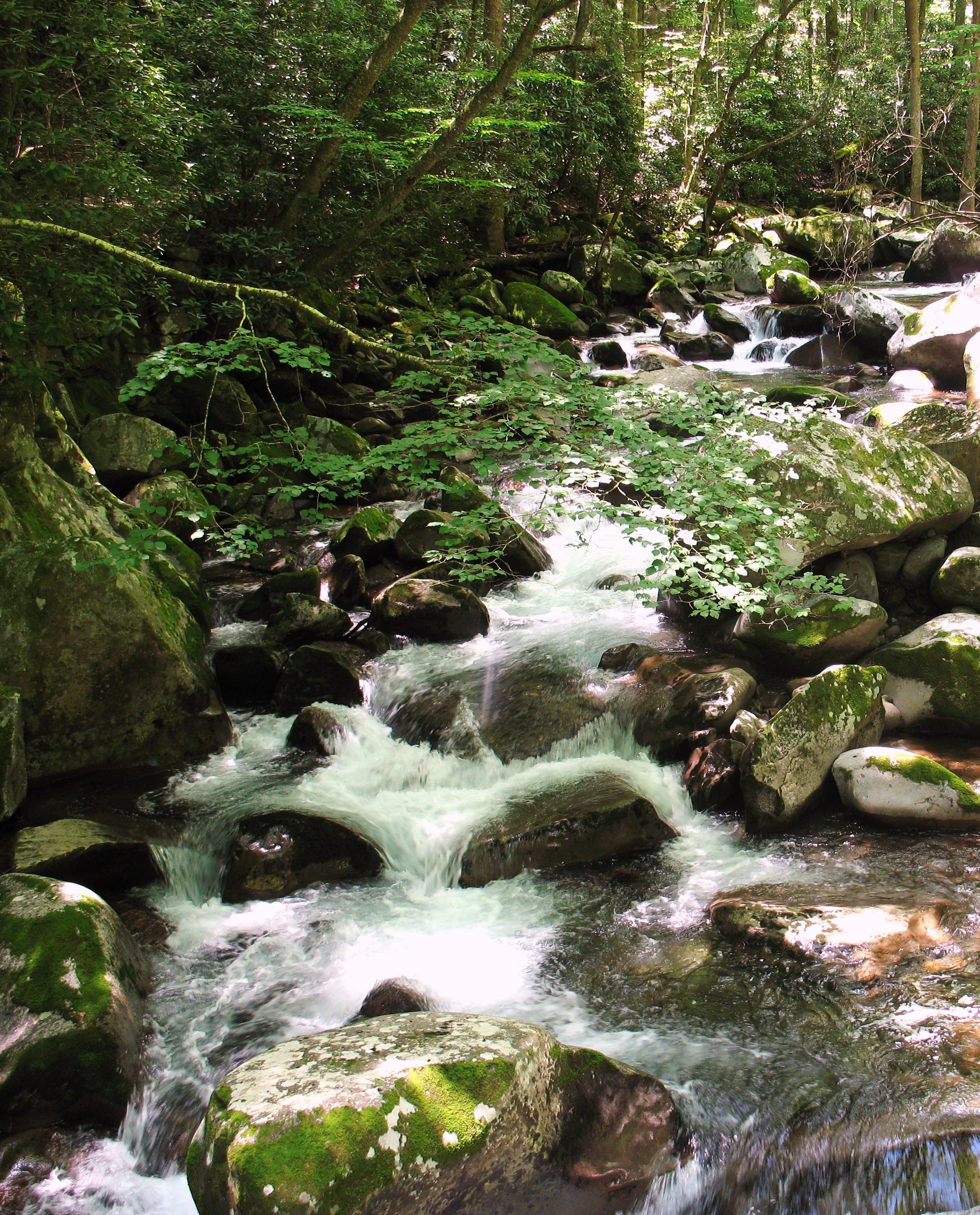
Last Saturday I walked beside the creek and up the mountain with my sister while each veery called to the next that we were on our way.  Today Linda and I drive to Durham to meet my teacher, the first time in over thirty years, and to gather with his students gathering from fifty states.  Already we’ve been cataloguing the changes.  What do I love now that I didn’t love then?  How have I been true to the loves that entered me years ago?  Before the noisy afternoon, I take a moment to listen.  And when my bones are old as stones, trees, moss, how will my voice be recalled?

.     .     .     .    .

IMG_2443

Robert Morgan was born in Hendersonville, North Carolina and grew up on the family farm in the Green River valley of the Blue Ridge Mountains.  He is currently the Kappa Alpha Professor of English at Cornell but has returned to North Carolina many times as visiting professor and writer to Davidson, Duke, Appalachian State, and East Carolina.

The Veery (Catharus fuscescens) is a small thrush of deep moist woods, chestnut brown with a speckled breast.  All thrushsong is melodic and haunting, but to me the veery is most magical.  On a quiet afternoon you clearly hear him singing harmony with himself, the doubled notes possible only with an avian syrinx (unlike my limited tenor’s larynx).

.     .     .     .     .

IMG_6944

Read Full Post »

« Newer Posts - Older Posts »