Feeds:
Posts
Comments

[with poems from PINESONG 2023, NC Poetry Society Anthology]


Ghazal: Ghost Apples (Kent County, Michigan)


Ice-encrusted boughs from which transparent versions
of apples hang – each fragile as hand-blown glass.
+++
Their history: fruit on the cusp of rot, winter storm trundling
down a hillside, sleet coating each apple in sudden glass.
+++
Viscous fruit leaked from apertures until only icy shells
remained – December trees bearing quicksilver bulbs of glass.
+++
Imagine them a vivid red or green, like cascades of apples
even humble grocery stores offer on the far side of plate glass.
+++
If we shattered these globes, would they taste like hard cider
or the cloying sweetness of pulp, like edible versions of glass?
++++++
Soon these crystalline shells will melt to nothingness, the way
we all disappear. Beloved, step lightly upon grief’s bitter glass.
+++
Lavonne Adams
Joanna Catherine Scott Award First Place, Pinesong 2023
+++
❦ ❦ ❦
+++
Diversity often blooms at the edge. This little trail heading out from Isaac’s Trail Head on the MST is limn upon limn . . . boundary . . . transition. The wide riparian border along Grassy Creek attracts neotropical migrants for a rest stop each spring; Louisiana Waterthrush, White-Eyed Vireo, and Common Yellowthroat stay behind to breed here. The footpath parallels a pasture fenceline, and while cows with their calves stand flank-deep in meadow grass and blackberry bramble, all manner of wildflowers hug the margin of No Grazing: Blue Toadflax, Venus’s Looking Glass, Carolina Crane’s-Bill. Leaving creekside, the trail is hemmed by a moist rising woodland: Rattlesnake Fern, Sensitive Fern, Southern Lady Fern. And by the end of summer, if the farmer hasn’t sprayed, the trail edges will fill with Blue-Curl, Cardinal Flower, Goldenrod, Wingstem.
+++
Smaller fields and many interruptions make for many edges; diversity begets diversity. At one point along the trail a wide acreage of corn abuts a small hay field of mixed grasses. The corn field is solemn in its solitude; above the hay the air is filled with swallows, Bluebirds and Phoebes perch along the wire, and as we hike past we’re apt to flush an Indigo Bunting foraging.
+++
But then there are Cowbirds. For centuries they followed prairie bison herds and no doubt also the woodland bison of the Carolina piedmont. Now they follow every human disturbance, common in cow pasture but just as common on suburban lawns. Cowbirds are exclusively brood parasites, known to lay their eggs in the nests of over 220 other species. To their detriment. Kirtland’s Warbler has been pushed beyond the edge of “endangered” by Cowbird predation, and most birds do not have the ability to recognize the foreign eggs which will hatch and out-compete the rightful occupants. How to resist? Escape the edges. Reverse the fragmentation. Cowbirds will not follow into deep woods – warblers nesting deep in the forest are safe.
+++
It isn’t the Cowbird that threatens wood warblers, whip-poor-wills, vireos. It is shrinking habitat. Many species thrive at the edge. Some, though, require wide wild expanses. How much wild can we leave?
+++
+++
Upon which side of the boundary does poetry perch, thrive or decline? And what would it look like, that restored, invigorated poetry habitat, a definite nudge toward thriving? More fifth graders setting pen to page and seeing their lines is print, as they have in this year’s annual Pinesong anthology by the North Carolina Poetry Society? More opportunities and promptings to write – whatever one’s background, training, preferred theme, chosen form? And more readers?
+++
That’s where we come in. This morning I broke a nice sweat hiking miles along meadow and creek, through upland forest to lakeshore and back. This afternoon with feet up I’ve covered another rewarding meander through the pages of Pinesong. Student poets, grades 4 through undergrad; dozens more of adult poets, many names entirely new to me. I’ve traveled new places, I’ve encountered the unexpected and enlightening, I’ve paused long to reflect, and I’ve even laughed out loud. As Robert Frost wrote in The Pasture: “You come, too.”
+++
❦ ❦ ❦
+++
Eleven Lines In Search of the Perfect Rhyme
+++
Is it accidental that bereft almost rhymes with death?
+++
Watching geese rise in a chevron formation The New River
at Grassy Creek, flying south to warmer waters, I think of how
+++
sons and daughters grow up, how the nest – that like death
almost rhymes with bereft, – empties with their flight.
+++
How these words fly out of my mouth like startled birds.
+++
How we dream of loved ones who are dead. How we forget
what happened in the dream, what we did, what we said.
+++
How there are hundreds of ways to leave, not only the 50 ways
in Paul Simon’s song, and thousands of ways to grieve, bereft.
+++
How you can both the lover leaving and the lover left.
+++
Beth Copeland
Carol Bessent Hayman Poetry of Love Award Honorable Mention, Pinesong 2023
+++
❦ ❦ ❦
+++
Pinesong is the annual publication of contest winning poems by the North Carolina Poetry Society, founded in 1932. Pinesong 2023 is Number 59, edited by Sherry Pedersen-Thrasher with assistance from Joan Barasovska. This year’s volume is dedicated to David Radavich, former NCPS President and steadfast supporter of poetry and the arts.
+++
You can learn more about North Carolina Poetry Society and its contests, plus read previous years’ editions of Pinesong . . . here.
+++
If you would like to purchase Pinesong ($12, postage included) please contact NCPS Vice President of Membership Joan Barasovska: msjoan9[at]gmail[dot]com
+++
A free issue of Pinesong is available to all NCPS members in good standing who request ($2 mailing expense). Please contact Joan, as above.
+++
❦ ❦ ❦
+++
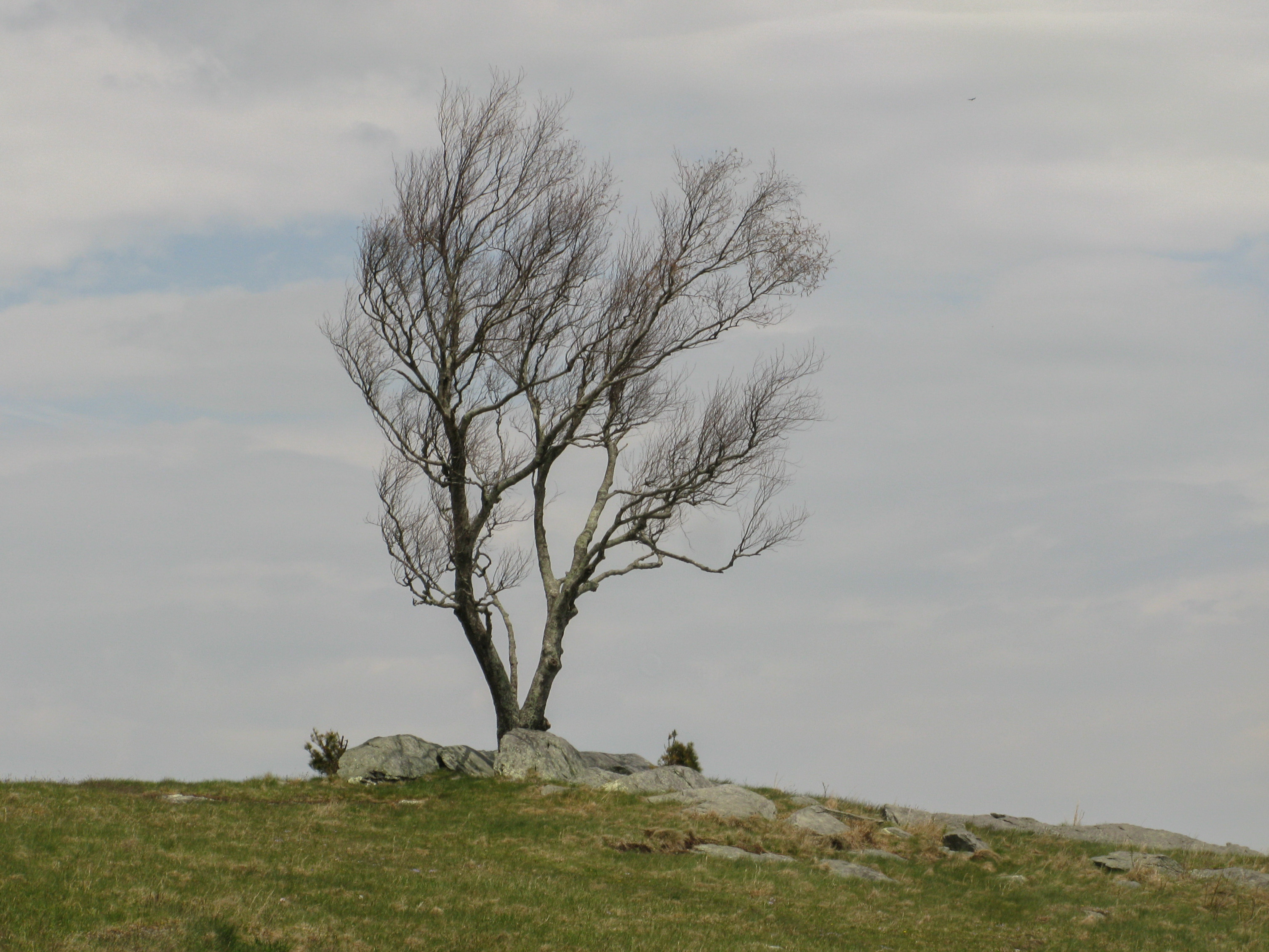
2020-09-08b Doughton Park Tree

[with poems from PINESONG 2023, NC Poetry Society Anthology]


Preservation

Even with the old house gone, ground smoothed
and seeded, other centuries erased,
we tell of Grandmother’s death
in a bedroom right about here.
+++
Tell how the kitchen floor sagged
as our mother, age five, made biscuits
afraid she would be spanked
if the didn’t rise to suit her mother.
+++
Tell how the old woman at last
spoke kindly to her only daughter
who sacrificed for weeks to buy the dress
her mother would wear only in her coffin.

+++
We never knew this grandmother, just
that our mother retold those tales never understanding
how a person can forsake life itself.
What to do with that choice?
+++
We remember the stories, pass them down
with our own embroidered feelings
in the fabric. We tell of Ethel’s first husband,
our grandfather, dead at thirty-six,
+++
who planted orchards and a vineyard.
We visit him in apples and pears,
retelling what became of his children,
what his absence has meant.
+++
We even imagine the coconut meringue pie
served at Grandmother’s wake,
toasted and dotted with sugar pearls –
so good it made mourners glad to be alive.
+++
Our mother smiled as we licked the story from our lips.
And each of learned to make this pie
just as Mother taught us, preserving
something sweet from every dark remembrance.
+++
I wish a kindly wind could blow away
the hurts of ages past, resettle the ashes
in pleasing ways, retell the stories with humor,
with morals to live by and cherish,
+++
but here we are, generations later, quibbling
whether families live and grow by story.
What of fact? Genealogy provided dates
and places, names and maps.
+++
The great grandfather who fought on both sides
in the Civil War, the uncle lost in Korea,
the orphaned grandfathers indentured to farmers.
Mother already had Alzheimer’s, told me,
+++
pointing to Daddy, Oh, honey, I can’t remember
and he lies. I don’t know what you’ll do for the truth.
Perhaps siblings never agree, once parents are gone.
Now we struggle to hold onto something vital:
+++
that places hold the sounds and scents
of lives passed there, that stout maples
and great-grandfather pecan trees remember
their youth, that all that ever was still is,
+++
that what has been preserved remains,
a family farm in Yadkin County, now
in its last iteration. Chant home like an incantation.
Weave a thread of truth in the weft.
+++
Is it enough to sustain family?
To embody story kindly?
And how to teach future generations
to savor what they refuse to know?
+++
A storm comes up, the wind and rain
sweeping the fields we work, the same
ground our great great-grandfathers tilled.
We shriek, wanting to run away,
+++
and Mother lets us go. She stays, leaning on her hoe,
takes off her straw hat and lifts her face to the rain,
a benediction. Grace, acceptance, story.
This is my Something to preserve.
+++
Jane Shlensky
Poet Laureate Award, Pinesong 2023
+++
❦ ❦ ❦
+++
How would you describe this little bird we’re hearing? Squeaky? About one octave below dog whistle? Here’s a big clue: couplets, always couplets, each longer phrase built from couplets. Peaches, Peaches, Sweety, Sweety, See Me!
+++
He’s perched at the edge. (Reminder to self, look higher than it sounds like I need to.) There he is, right at the edge of the big maple where the leaves peter out until we might actually have a good chance of spotting him. The edge of the treeline between cow pasture and copse: his preferred habitat is at the very edge, securing both cover for nest and forage for seeds & spiders. And at the edge of survival, on which side is he perched, thrive or decline?
+++
This Indigo Bunting and his two rivals nearby, all singing non-stop, flew 1,200 miles from Central America to arrive here a few weeks ago. He has found this little patch of Mountains-to-Sea Trail in Surry County very much to his liking, rural fragmentation, edge habitat at the merger of field and scrub. He and his cohorts are thriving. There are currently most likely many more Indigo Buntings covering a much larger geography than were here in North America before the colonists arrived. Last Saturday I ran my annual USGS Breeding Bird Survey count, my twenty-eighth run since 1995 (50 designated stops, count every bird seen or heard in three minutes). With rare exceptions, each year Indigo Bunting tops the individual tally. Despite woodlots harvested, farms planted with new homes, over-tended monoculture lawns, Bunting still finds enough fallow, neglected, brushy edge to make a living.
+++
And perhaps these Indigo Buntings also top the count of those seen and heard because they are such indefatigable singers, all day long, song after song, in every weather.
+++
There are winners and losers whenever humans move into the neighborhood. We planted nesting boxes and brought Bluebirds back from the brink. We tore down the woods and let our (F-word) cats range free and I’ve only heard two Whip-poor-wills since 2007. Some species seek out the edge habitat we create in our diced up rural landscape, some will even come to our feeders, but as I read through my yearly USGS data I wonder how much longer I’ll still be hearing vireos, tanagers, wood warblers. So many on the edge.
+++
+++
Poetry must seek out habitat where it can grow and thrive. When 150 listeners gathered at Weymouth Center in Southern Pines two weeks ago to hear poems read aloud from the newest issue of Pinesong, the ground of creativity burst its constrained borders into fresh and fertile fields. The North Carolina Poetry Society sponsors sixteen annual contests for individual poems, with a wide diversity of requirements, themes, forms, and prompts. The fruit of that diversity, the poems of the winners, is collected each year into this single volume. We open the book to read like walking a trail that winds from one discovery to the next.
+++
Poetry needs this edge, this sharp stab of novelty and this precarious but visible perch of invention and insight. An exploration, an awakening, a fulfillment. I am always glad to hear a song I can recognize. I am even more filled with joy to learn a new song.
+++
❦ ❦ ❦
+++
Henna
+++
The world misunderstands:
The stained designs of my homeland
Are not a fashion statement, but a
Statement of my mind.
People ask – they can’t help it
Might as well have committed
Bloody murder for the way they stare.
Try to act unaware when I’ve been caught red-handed.
Eyes like magnets to the henna; I wish I could disguise
The distaste on their faces but it’s lace
In every look they send, cant pretend it’s easy to withstand
They could never understand . . .
Because how do I tell them it’s my one way of feeling visible?
Oh, how I want to be seen. Just
Picture the scene:
The brown girl to dark for passing but
Too light to avoid them asking about whether I’m Mexican
Or next of kin to become the chief of a tribe but who actually
Comes from the place even Columbus couldn’t find.
Imagine being stranded at sea: alone and lost the
Ocean a pounding current of blows, it
Beats you and cheats you and goes to show
How scars can sprout
Without being sown.
The henna paste soothes the pain.
Though replaced with stains the scars remain.
A silent scream to the world around me
I will be know in this country!
Until then, inked flowers will bloom along my palm, vines
Shall curl around my fingers in song.
Let this garden surround you
With its beauty; it belongs.
+++
Kiran Singh
8th Grade, Cary Academy
Mary Chilton Award Honorable Mention, Pinesong 2023
+++
❦ ❦ ❦
+++
Pinesong is the annual publication of contest winning poems by the North Carolina Poetry Society, founded in 1932. Pinesong 2023 is Number 59, edited by Sherry Pedersen-Thrasher with assistance from Joan Barasovska. This year’s volume is dedicated to David Radavich, former NCPS President and steadfast supporter of poetry and the arts.
+++
You can learn more about North Carolina Poetry Society and its contests, plus read previous years’ editions of Pinesong . . . here.
+++
If you would like to purchase Pinesong ($12, postage included) please contact NCPS Vice President of Membership Joan Barasovska: msjoan9[at]gmail[dot]com
+++
A free issue of Pinesong is available to all NCPS members in good standing who request ($2 mailing expense). Please contact Joan, as above.
+++
❦ ❦ ❦
+++
+++ 
[with 3 poems by Denton Loving]
+++ 
Foundation
+++ 
Unable to stand in our hillside orchard,
too weak to swing a mattock or to wrestle
+++ 
with dirt, my dad wants to plant peach trees.
For him, I tear the earth open.
+++ 
Rocks bleed out from the poor mountain soil,
and I unwrap swaddled peach roots.
+++ 
Before I scrape the dirt back and tamp it down,
I return the largest rock under the young roots,
+++ 
a surrogate for what I fear. I bury it back,
imagine the roots encircling the rock,
+++ 
enclosing it, building from its foundation.
Like the hard stone buried in the sweetest fruit.
+++ 
Denton Loving
from Tamp, Mercer University Press, © 2023
+++ 
❦ ❦ ❦
+++ 
Needful things have a way of turning up. A chance word of assurance from a friend at church. An old photo misplaced and rediscovered. A new book.
+++ 
I’ve just called Dad to let him know I won’t be visiting tomorrow. Last week’s COVID has relapsed, and even though I caught it from him in the first place I don’t want to risk returning the gift. Maybe my sister can drive down from Asheville and refill his medication trays. Maybe a neighbor can help him pick up the car he will never again drive from the service department. Maybe all the little errands will get done some way or another until I can see him and Mom next week sometime. Something will turn up.
+++ 
Indeed. The needful thing that has turned up for me this week is Denton Loving’s new book, Tamp. Denton’s grief at the loss of his father is both gentle and vicious. Both cutting and sweet. Subtle, surprising, pervasive. But it’s how he expresses loss that is needful for me this week. He recalls and describes the many things he had done alongside his father, the toil and the joy. He describes the tasks he must now do without his father. I feel like I’m walking that very path not far behind him.
+++ 
I sit down and force myself to reflect. Push aside for a moment the aggravation and exhaustion of caregiving. Who was my father? Who is he now? Who are we together? I don’t want to summarize our years under the same roof with an offhand quip, “He didn’t like my long hair”; he doesn’t even comment on it now. Lately I labor with the frustration of all the capacities he’s lost (but struggles to admit he’s lost). Instead let me paint for myself an image of his presence throughout the twists and turns of all our decades – a steady beacon of approval. Sometimes distant, but never dim.
+++ 
Let me be thankful for the engineer, salesman, executive who still covers the dining room table with stacks of lists. Let me acknowledge how tough it must be for him each time he has to hand over another essential task to me – thanks, Dad, for letting me drive you everywhere, keep up with your prescriptions, clean out the recesses of the fridge. Let me set aside my own to-do lists when we’re together, if only for a morning’s cool respite on the patio.
+++ 
Let me prepare now, Dad, for the day when I won’t have you to take care of. Or to take care of me. Let me appreciate each day until then.
+++ 
+++ 
When I first learned of Denton Loving’s book and placed my order, I was curious about the title. I didn’t select which poems to feature today simply because you’ll find that word within them, but you will. As I re-read all the poems, I think I’m discovering that even without tamp explicitly visible within their lines, each one still speaks to the word’s theme. To create something solid and lasting; to be conscientious and never leave something half-done; to pay attention. And neither you nor I ever really tamp the earth in finality and just walk away. We are only continuing our journey, from fence post upright and steady, from headstone and grave, into the next day and the next. An unbroken genealogy of love.
+++ 
+++ 
+++ 
❦ ❦ ❦
+++ 
If there’s an angel of lost gloves
+++ 
my father didn’t believe and didn’t wait
for holy intercession. He mislaid his gloves
faster than his temper. He wasn’t careless,
+++ 
though I never knew him to lay hands
on the tool he needed when he needed it.
So he bought pair after pair, suede
+++ 
cowhide fit to stretch barbed wire. Still,
he usually worked with only one hand
sheathed and sometimes then
+++ 
with the fingers blown out, each digit
ruptured by the snag of steel points
reaching next to rip open skin.
+++ 
Now, I find his leather fingers cupping air
like wren nests, lingering in buckets,
on shed shelves, on the aged oak floor
+++ 
of the barn loft, in the midst of a task,
maybe a pair of nails within reach
as if he’ll return when he finds his hammer.
+++ 
Denton Loving
from Tamp, Mercer University Press, © 2023
+++ 
❦ ❦ ❦
+++ 
The Fence Builder
+++ 
My graves don’t rise or sink
the grave digger says after I show him
+++ 
the place to bury my father.
I take in the view as if this valley
+++ 
is what he’ll see for eternity.
Down the hill, children play
+++ 
outside the elementary school.
Sheep pasture around the cemetery.
+++ 
Some people just push their pile of dirt back in. 
But I tamp the dirt at every level.
+++ 
I’d never wondered why some graves swell
and some settle and sag
+++ 
but the grave digger’s words stay with me.
He taps the clay above my sleeping dad,
+++ 
leveling the damp ground
just as the man in the casket
+++ 
taught me to tamp around wooden posts
to make a new fence last,
+++ 
packing the dirt and rocks
so wire is pulled taut, forced to hold tight
+++ 
for at least a generation,
those rhythmic strikes a refrain
+++ 
for all those who take pride in a task well done,
those men who work the earth –
+++ 
the fence builder erecting his monuments,
the grave digger and all he lays to rest.
+++ 
Denton Loving
from Tamp, Mercer University Press, © 2023
+++ 
❦ ❦ ❦
+++ 
+++ 
❦ ❦ ❦
+++