July, Knife Lake, half a mile from the Canadian border. The vireos begin to sing at 4 a.m. and dawn follows right on their tails. I crawl out of my tent before the boys awaken. We’re camped on a bluff high enough above the water that the mosquitoes don’t find me for a while, so I just sit among the red spruce, wait for water to boil, and watch the dance of colors on the water.
We paddled to this remote spot yesterday at dusk. In the Boundary Waters Canoe Area Wilderness, northern Minnesota, you’re only permitted to camp at specified sites, perhap just one in the smaller lakes, half a dozen in large lakes. Of course there are hundreds of lakes, interconnected by creeks and sloughs and overland portage trails. This will be our fourth day on the water out of ten. Yesterday afternoon every campsite we passed had a couple of canoes pulled up the bank; we were afraid we’d be portaging ourselves and our gear to the next lake in the dark before we’d find an unoccupied spot. Then we glided through a straight, passed a promontory, and the lake opened before us. No tent, no campfire smoke for miles. The designated campsites, like the portage trails, are indicated “approximately” on the map — a red dot, no signs anywhere in the wilderness. On a hunch a boy in the lead canoe tied up to a sapling, rock-hopped to shore, climbed the abrupt bank, and fifty feet above the water there it was. A fire grate. Here we were allowed to spend the night.
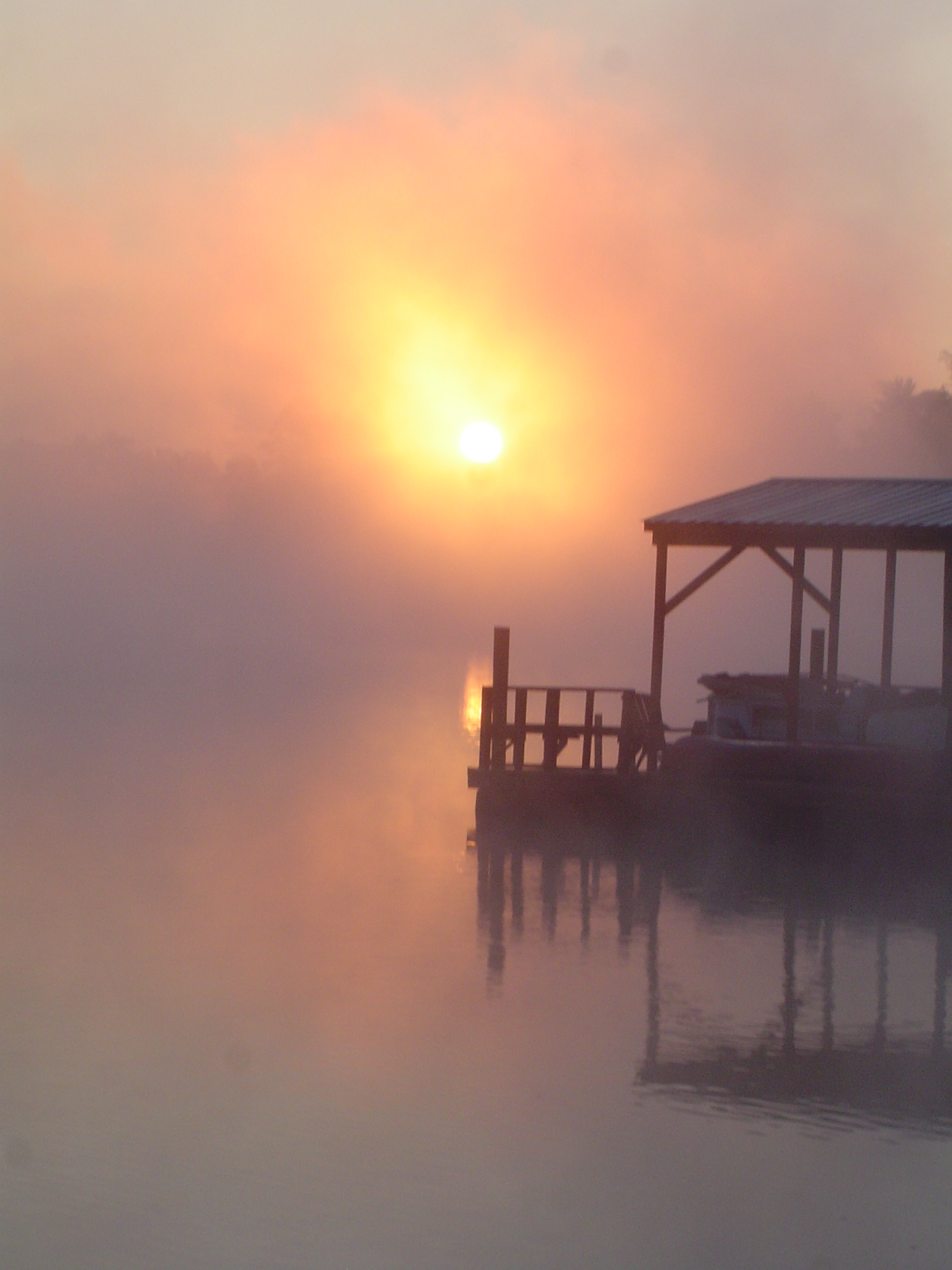
Now the sun promises to return, a coy suggestion through the conifers on the far shore. A loon cries, its liquid call mimicked in pastel ripples. Every minute the lake is different from the minute before. A phantom of mist here, a reflection of pale sky there; color rising, flowing . . .breathing.
I snapped a photo. For several years it hung in my office. I could name the landmarks: that curve of shoreline, sharp flint mouthing the shallows, trees reaching down to the distant notch where our next portage hid. But where was the dance of sky in water? Where the ephemeral colors that have no name? The print on my wall was like words on a page, a dead thing. It couldn’t breathe, it couldn’t speak . . . except in the fire it lit within my mind.
. . . . .
Can a poem breathe? Can it live? Can it set you down on some elevated vantage you’ve never visited and reveal a place you’ve never dreamed?
I’m looking for that poem. I want to stare across its rippled surface and discover in its reflections something that words can’t name.
Bud Caywood’s poems have taken me at times to that unnamed place. He is an artist, a canoer, a fellow birder, and his verse often endeavors to capture that singular moment of inchoate atmosphere. You want to enter the words he’s placed on the page. You want to return there.
. . . . .

Morning in the World of Fog
See the fisherman crossing the stippled lake,
cutting a swath through the layered
fog of morning. See how his image
darkens the falling light, brushed out
like a blurred black and white photo,
until thicker fog washes over him.
Now watch the boat docks quiver
in their eerie caress of the wake,
or the skeleton-like crepe myrtles
light-speared through their branches,
or the boathouse holding its stillness
against the thick gray-orange blanket,
while its squeaking hinge strums
one-chord songs again and again and again.
See the gulls appear like angles,
disappear like apparitions,
unwinding the velvet, circle after circle,
as if the sky’s whole element is one in them.
Now hold open your palm;
even the air around you has weight.
. . . . .
I first met Bud years ago at a reading in Hickory. He invited me to join the “e-Poets,” and for several years we shared poems with each other every month or so. We’ve continued our friendship and mutual admiration through the NC Poetry Society and now Poetry Hickory, a monthly reading organized by Scott Owens. Last month Bud invited me to read, along with Adrian Rice and Tyree Maddox, at an annual poetry night at the Bethlehem Branch Library near Hickory. Bud arranges art, sometimes accompanied by poetry, every month at the library; he is one of the stalwart perennials who are keeping verse alive in our modern culture.
And I admire his poetry. Images that breathe. I will hold onto and return frequently to that closing couplet: “Now hold open your palm; / even the air around you has weight.”
Additional poetry by Bud Caywood
Wild Goose Poetry Review
Dead Mule School of Southern Literature
. . . . .



Thanks Jenny. Glad you liked this visit to the archives. Kathryn Byer brought incredible riches to NC poetry. --B