…
[ 2 poems from Little Alleluias ]
…
❀ ❀ ❀
…
But tell me, if you would praise the world, what is it you would leave out?
Mary Oliver, Black Snake
…
❀ ❀ ❀
…
Crows
…
In Japan, in Seattle, in Indonesia—there they were—
each one loud and hungry,
crossing a field, or sitting
above the traffic, or dropping
…
to the lawn of some temple to sun itself
or walk about on strong legs,
like a landlord. I think
they don’t envy anyone or anything—
…
not the tiger, not the emperor,
not even the philosopher.
Why should they?
The wind is their friend, the least tree is home.
…
Nor is melody, they have discovered, necessary.
Nor have the delicate palates;
without hesitation they will eat
anything you can think of—
…
corn, mice, old hamburgers—
swallowing with such hollering and gusto
no one can tell whether it’s a brag
or a prayer of deepest thanks. At sunrise, when I walk out,
…
I see them in trees, or on ledges of buildings,
as cheerful as saints, or thieves of the small job
who have been, one more night, successful—
and like all successes, it turns my thoughts to myself.
…
Should I have led a more simple life?
Have my ambitions been worthy?
Has the wind, for years, been talking to me as well?
Somewhere, among all my thoughts, there is a narrow path.
…
It’s attractive, but who could follow it?
Slowly the full morning
draws over us its mysterious and lovely equation.
Then, in the branches poling from their dark center,
…
ever more flexible and bright,
sparks from the sun are bursting and melting on the birds’ wings
as, indifferent and comfortable,
they lounge, they squabble in the vast, rose-colored light.
…
Mary Oliver
from Little Alleluias, Grand Central Publishing, New York & Boston; © 2025 by NW Orchard LLC
…
❀ ❀ ❀
…
Gravel
…
6.
…
It is the nature of stone
to be satisfied.
It is the nature of water
to want to be somewhere else.
…
Everywhere we look:
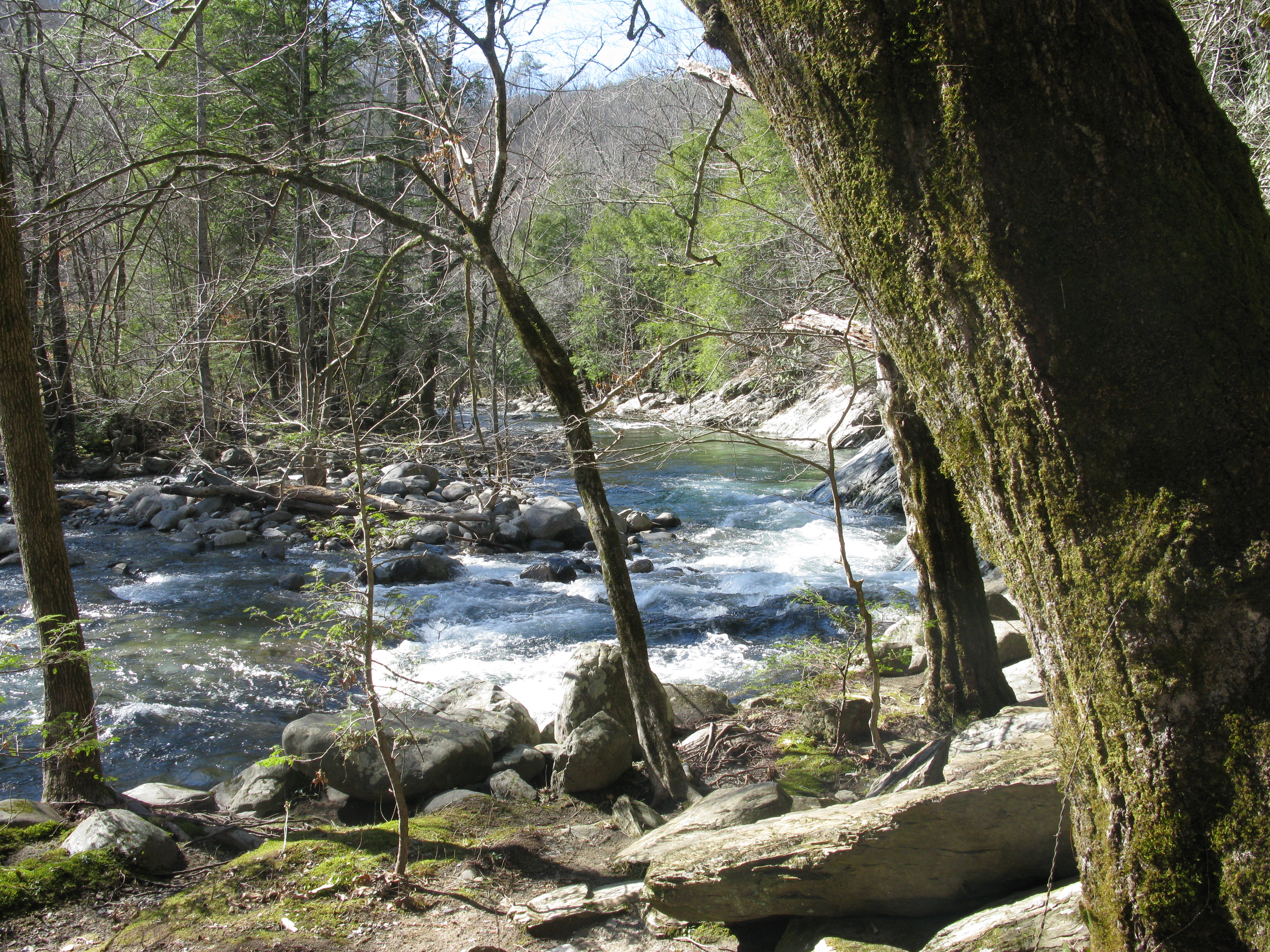
the sweet guttural swill of the water
tumbling.
Everywhere we look:
the stone, basking in the sun,
…
or offering itself
to the golden lichen.
…
It is our nature not only to see
that the world is beautiful
…
but to stand in the dark, under the stars,
or at noon, in the rainfall of light,
…
frenzied,
wringing our hands,
…
half-mad, saying over and over:
…
what does it mean, that the world is beautiful—
what does it mean?
…
the child asks this,
and the determined, laboring adult asks this—
…
both the carpenter and scholar ask this,
and the fisherman and the teacher;
…
both the rich and the poor ask this
(maybe the poor more than the rich)
…
and the old and the very old, not yet having figured it out,
ask this
desperately
…
standing beside the golden-coated field rock,
or the tumbling water,
or under the stars—
…
what does it mean?
what does it mean?
…
8.
…
Listen, I don’t think we’re going to rise
in gauze and halos.
Maybe as grass, and slowly.
Maybe as the long-leaved, beautiful grass
…
I have known, and you have known—
or the pine trees—
or the dark rocks of the zigzag creek
hastening along—
…
or the silver rain—
…
or the hummingbird.
…
10.
…
This is the poem of goodbye.
And this is the poem of don’t know.
…
My hands touch the lilies
then withdraw;
…
my hands touch the blue iris
then withdraw;
…
and I say, not easily but carefully—
the words round in the mouth, crisp on the tongue—
…
dirt, mud, stars, water—
I know you as if you were myself.
How could I be afraid?
…
Mary Oliver
from Little Alleluias, Grand Central Publishing, New York & Boston; © 2025 by NW Orchard LLC
…
…
❀ ❀ ❀ ❀ ❀
…
The deep guttural imperative, that croak of authority – some afternoons we hear Raven down by the Yadkin River, some days lingering in the grove around the abandoned furniture plant. He, or she perhaps for they certainly know but I don’t, always sounds single. Alone. Perhaps a companion is nearby nodding, “Yes! Tell it!” but never is there any boisterous chorus. Life is a very serious thing for Raven.
…
Not so much for Crow. Jostling jokers. Bullies at times, they certainly don’t ever seem willing to share a tree with Owl or Hawk. Or Raven, apparently. This morning I heard Raven’s gravelly baritone right above the porch. I looked up through the screen and watched him raise his powerful beak again and declare. But there on another branch just a meter away perched Crow, matching Raven’s every croak with three tenor caws. Which cawing called in a fellow crow to circle above them both. Intimidating the big guy? For several minutes they battled with their call-and-response fugue, then they all flew off in different directions. A minute later I heard Raven in the cove a quarter mile away.
…
What meditation on my own life might Raven or Crow inspire? I admire both of these intelligent Corvids but which, if either, shall I emulate? This morning, after Raven’s departure, Linda and I are picking apart last night’s exhausting choral rehearsal. Our director, Lance, has selected John Rutter’s Requiem for May’s concert by our little ensemble, and some singers are not particularly overjoyed about the Latin pronunciation or the challenging rhythms, harmonies, and counterpoint of the score. We are struggling to come together. I’ll just confess – we ain’t there yet with this music. But during last night’s repetition and mistakes and measure-by-measure struggle, there also arose a few moments when a beautiful spirit of blessing surrounded our gathering. This morning Linda and I conclude that this is no music that a single voice can carry. In its great complexity, even because of that complexity, the whole tapestry can only come into being when each part, each voice, weaves itself into relationship with every other.
…
❀ ❀ ❀
…
In the introduction to Small Alleluias by Mary Oliver, poet Natalie Diaz writes this: What can any of us make of our momentary intimate lives in such an immense world, with equally immense unknowns, mysteries as great as death or the whale, as deep as love or the ocean, as sad and beautiful as a jellyfish torn and glistening in a small fortress of shore rock? This world in which we are of consequence, shaped as violently and tenderly as we also shape it. Marked by and marking. Though we might not always, or ever, know what it means, we can’t deny: the earth, the earth is beautiful. How lucky to be in it.
…
Little Alleluias, collected poetry and prose, gathers poems and essays from the last years of Mary Oliver’s life into a newly released collection. Mary Oliver was born in Ohio in 1935 and died in 2019. Through her life as poet and teacher she won innumerable awards, including the Pulitzer Prize in 1984 for American Primitive, her fourth book. Little Alleluias is available from Grand Central Publishing.
…
Enjoy poetry by Mary Oliver which has appeared in previous editions of Verse and Image, including just last week:
…

RAVEN, by Linda French Griffin, from SNAKE DEN RIDGE, A BESTIARY
…
❀ ❀ ❀ ❀ ❀
…
Thank you for visiting Verse and Image:
. . . . . every Friday I present one or two poems I’ve read this week that particularly speak to me;
. . . . . every Saturday I present one or two poems submitted by YOU, my readers.
…
If you would like to offer a poem for consideration, either by a favorite author or your own work, please view these GUIDELINES for Saturday Readers Share:
…
…
If you would like to receive an email each time a post appears, please SUBSCRIBE to Verse and Image using the button on the Home Page.
…
If you have a hard time finding the SUBSCRIBE button on this WordPress site, you can send me your email address and I will add you to the subscriber list. Send your request to
…
COMMENTS@GRIFFINPOETRY.COM
…
Thanks again for joining the conversation.
…
– Bill
…

…



 V E R S E and I M A G E
[…] About/Submit […]