Feeds:
Posts
Comments

Archive for the ‘poetry’ Category

 . 
[with 5 poems from Kakalak 2023]
 . 
Autumnal Asymptote
 . 
The sun’s last red is seeping through the maple now,
and umber too, like the webbing of a frog, like the shadow of winter.
How tenderly the ground holds each leaf. How lightly they rest
before they snuggle down under the rain.
Such a wealth of dying. The coin of the land is on its edge,
a membrane, the balance of water, seeping –
even the roots break light together.
Even the fungus breathes its gifts
to the soil.
 . 
Even the breath of me shatters this silent grace.
My steps churn leaves, worm-cast, root, stone.
The arc of reaching out is endless, airless –
I cannot kiss the earth’s brow so lightly.
She cannot sigh and settle beneath my hand.
 . 
Hannah Ringler
from Kalalak 2023, Harrisburg, NC. © Moonshine Review Press 2023
 . 
❦ ❦ ❦
 . 
I am about to read an online poem titled Bicuspid and I immediately tell myself it will be about that congenital heart syndrome in which the aortic valve has only two leaflets instead of the normal three (“tricuspid”). The man in the poem won’t even know he harbors the cardiac defect. His life will be flowing along its secure expected trajectory until suddenly in his 30’s he won’t be able to walk up a flight of steps or have sex without gasping for breath. Everything crashes – painful tests & procedures, dangerous surgery, bankrupting bills, a foot-long scar down his sternum. The life he was a moment before so confidently devouring has abruptly turned to eat him up and spit him out. Will he discover a new center?
 . 
The title also launches me into another favorite pastime – etymology. Just what is a cusp, anyway? Whenever you open yourself to a new field of exploration, your first big hurdle is its vocabulary. In scientific parlance, its nomenclature, but, hey, still just words. Don’t your non-poet friends’ eyes glaze over when you wax rhapsodic about enjambment? I know when my grandfather G. C. Cooke attended medical school in the nineteen-teens his required courses included Greek and Latin. Maybe he couldn’t do anything about Bicuspid Aortic Valve Syndrome, or even diagnose it pre-mortem, but he definitely was armed with all the nomenclature he needed to know cusp derives from Latin cuspis, a spear or a point, and the first recorded use of tricuspidem for “three-pointed” is from the 1660’s.
 . 
Dig deep beneath the words growing in these lines, whether cultivated garden or rank unruly weeds, and you discover that all is metaphor. The cusp of the moment is a fulcrum impossible to balance upon; leap left or leap right? The spear prods your back; it will not permit you to remain standing on this spot of ground you imagined so stable. The motion of your very heart is arrested, worn out of synch, its fluttering leaflets no longer able to manage the flow of your minutes.
 . 
Wow. I read the poem. Turns out it’s describing teeth. Bicuspid, duh. But it is still all about getting chewed up by life. And it’s awesome.
 . 
 . 
[ read Bicuspid by Clemonce Heard on poets.org HERE ]
[ and HERE is my favorite online Etymology Dictionary (or download the app Etymology Explorer) ]
❦ ❦ ❦
 . 
Under
++ from the early Chinese philosopher Mencius:
++“The ten thousand things are part of me.
++ Treat those things as you would treat yourself.”
 . 
Under the cloud, a man in the airplane
looks down from the window and yawns
at the mountain’s green canopy,
the towering tree where, under
a branch, the owl sleeps.
Under the owl, a young mother
leans against the rugged trunk;
under her eyes, a small screen,
her frog thumbs hopping;
under the screen, her hands.
Under her darting glances,
her child squats. Under the child
the tumbling river dances;
under the river, the rock.
 . 
The child lifts the rock and squeals
as, under the rock, the crayfish wakes.
Between two fingers, under her gaze,
its curious feelers, its wiggling tail,
its many legs running midair,
its hooked fingers; its eyes
examine her. It whispers in her hear.
The water stirs. She lifts the rock again
and tenderly tucks the crayfish
under, for now she knows
the ten thousand things are part of her.
 . 
Martha O. Adams
from Kalalak 2023, Harrisburg, NC. © Moonshine Review Press 2023
 . 
❦ ❦ ❦
 . 
Fox Moves in Nearby
 . 
As incense from a censer,
+++ wildness wafts about him –
he saunters
+++ outside our sliding door.
 . 
Red as cinnamon,
+++ gray-flecked belly,
he swings his head side to side,
takes everything in
+++ his black pearl eyes.
Squirrels scatter,
+++ grackles fly.
 . 
He lifts his leg and marks
+++ the stoop
and, with deliberation,
+++ three stones by the fountain.
 . 
He hesitates, concludes,
+++ and prances
through the hostas,
+++ slows beneath the forsythia,
squeezes through the fence.
 . 
We spend sever quiet breaths,
+++ fingertips on glass,
before we step out to sense
+++ his leaving.
The birds flit back
+++ to feed and chatter
Shadows underlying trees
+++ are darker,
redbirds, redder.
 . 
Preston Martin
from Kalalak 2023, Harrisburg, NC. © Moonshine Review Press 2023
 . 
 . 
❦ ❦ ❦
 . 
A few weeks back a friend in my writer’s group (holy poesy, Bill is in a writer’s group now!) mentioned that she has edited an anthology by poets near her home in northwest Ohio. Imagine opening a collection and recognizing the writers by name! See their faces as you read their lines, hear their inflections and cadence. You might realize immediately that the poem is about teeth and not heart valves. Such a concept!
 . 
Welcome to Kakalak 2023. Although the editors no longer require a North or South Carolina connection in order to submit, I still discover many friends and acquaintances in the pages of this annual anthology. This year’s book very much retains the flavor of the South – has there ever been an issue without at least one mention of red clay or grits? But these almost 200 pages span most everything that could be said to make us human, whether grief or exaltation, recollection or discovery, love or despair, current events or origin stories, even a raised middle finger to the Home Owner’s Association.
 . 
I’ve read the book through from page one to the end. I intentionally avoided skipping straight to the names I know in order to discover names I want to get to know. I used my standard criteria to select three poems to feature here, which is no criteria at all except what grabs me in the moment of reading (and the three quickly becam five, eleven, fifty). Do you need some new friends? As Robert Frost invites when he heads down to clear the pasture spring – You come too!
 . 
 . 
[ Kakalak 2023 is edited by Angelo Geter, David E. Poston, and Kimberlyn Blum-Hyclack; learn more about Kakalak, and purchase  HERE ]
 . 
 .
 . 
❦ ❦ ❦
 . 
Moon-Child
 . 
+++ +++ +++ Sophie has pummeled the beach all day
+++ with the unbridled vigor of a one-year-old
dog, her tail held aloft like a kite gaining the wind
 . 
She is tired and wonders why we’ve come back at this hour,
+++ though sand feels coos as the night sky peels off
+++ +++ the top layers of heat. She pants and leans into me.
 . 
+++ +++ That’s enough, isn’t it?
+++ To feel day draining into atmosphere?
+++ +++ To hear the surf recite the history of a planet –
 . 
+++ +++ +++ extinction events,
+++ +++ +++ +++ rise and fall of Rome,
+++ +++ +++ discovery, war, conquest,
+++ +++ pandemics, and underneath it all,
+++ echoes of lost Atlantis rumbling in the waves?
 . 
Sophie’s nose twitches.
+++ Something in the dark has put her on alert.
The cone of my flashlight reveals where a ghost crab
 . 
+++ +++ has been sidling. A moon-child
+++ +++ +++ gleaning alms offered by the tide
+++ +++ has scribed in the sand abstract patterns,
 . 
ragged as the Milky Way,
+++ like a record of all the small events
that drive the Earth, too delicate to see.
 . 
Gregory Lobas
from Kalalak 2023, Harrisburg, NC. © Moonshine Review Press 2023
 . 
❦ ❦ ❦
 . 
The Hive in the Wall
 . 
Sometimes, when a soul has more to say,
it holds on to some place, some person,
or just moves in between joists and frames,
 . 
taking the shapes of bees, even their names,
their endless buzz near the too-warm kitchen.
Unlike other ghosts, they work by day.
 . 
They still need light and the scent of wet grass,
flowers that love summer and last until fall.
They, I say they, but I mean they act as one.
 . 
Many creatures made of one spirit, a mass
that’s a fused, united, yet scattered, all.
That’s what it takes to get the job done.
 . 
This may not be true, but here’s what I believe:
that one day, all bees, in one swarm, will leave.
 . 
Paul Jones
from Kalalak 2023, Harrisburg, NC. © Moonshine Review Press 2023
 . 
❦ ❦ ❦
 . 
Hannah Ringler (Durham, NC) is a poet, gardener, and educator.
 . 
Martha O. Adams (Hendersonville, NC) includes drawings for coloring with her recent meditative poem In Your Meadow.
 . 
Preston Martin (Chapel Hill, NC) facilitates classes in poetry and literature at Duke Continuing Education.
 . 
Gregory Lobas (Columbus, NC) won the Dogfish Head Poetry Prize in 2022 for Left of Center.
 . 
Paul Jones (Chapel Hill, NC) is a member of the NC State Computer Science Hall of Fame and some of his poems crashed on the moon.
 . 
 . 
❦ ❦ ❦
 . 
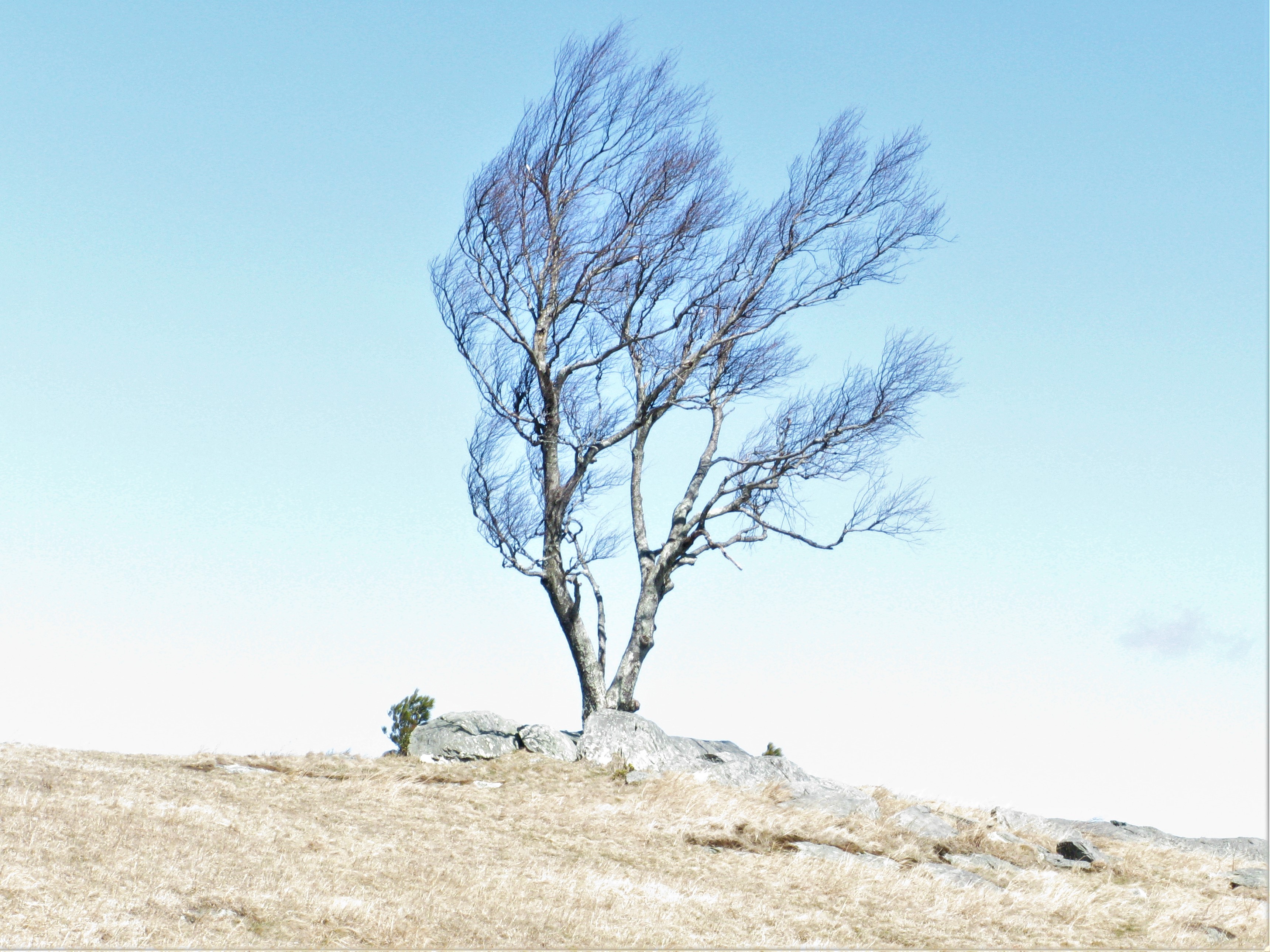
2020-03-07 Doughton Park Tree
 . 

Read Full Post »

 . 
[with 3 poems by John Hoppenthaler]
 . 
The Tiniest Toad in Moore County, NC
 . 
catches my eye, hopping with great care
over the rough flagstone. Don’t spook her,
I think: if a toad springs from your path,
death is sure to follow. Never turn out
a toad at the threshold: the worst luck
will follow for a year. Finding the creature
in your home, remove it to nature
with kindness, for witches posses them
as familiars. If you happen on a toad’s dead body,
place it on an anthill until the flesh is eaten away.
Its bones that don’t bob easy on water,
those you wrap in white linen and hang
in a corner to engender love. On a new moon,
if the bones float in a stream, they’re charmed; slide
them into you pocket or hang them from your neck
ere the devil gets them first. Then you can witch,
it’s said and won’t be witched yourself. She leaps
from stone near the fake frog pond’s edge,
where the real frog eyes her with desire
from his tenuous perch on a lily pad.
She nestles under a leaf to hide her nudity.
Here in the poet’s garden, she promises me
her tiny bones one day, a kiss for my civility.
 . 
John Hoppenthaler
from Night Wing over Metropolitan Area, Carnegie Mellon University Press, Pittsburgh, PA; © 2023
 . 
❦ ❦ ❦
 . 
How many seasons have passed for this tiny six-legged creature? How may growings and swellings before the last stricture, the ultimate fullness? And then the splitting, the release – how many times? The naiad can’t count – 20? 30? – but this one feels much different. Organs reforming within the cuticle, gills discarded, first glimmer of urgency to mate, and now wings! A long pause while invisible forces array; a stillness, a shiver; finally a mighty shrug splits her hard skin down the back and Stonefly crawls forth.
 . 
In minutes her new cuticle darkens and her newborn wings harden, ready for flight. Ready for two more weeks of life and the laying of one thousand eggs in this swift stream where she has crept for three years. Egg to nymph to imago, this is the adult, the perfect likeness of Stonefly.
 . 
Imago is from the ancient root *AIM, to copy; from the Latin for image and also the source of that faculty of mind which creates images: Imagination. I’ve held this word in awe for its creative power to conjure worlds out of dust. I’ve made it my mantra, to imagine, to spin webs of words that may charm from a handful of protoindoeuropean grunts a shimmering image never before . . . imagined.
 . 
But isn’t the act of imagining actually mundane and relentlessly unremarkable? We humans live and breathe imagination, ho hum. We constantly take the dumb flow of reality and make its meaning. You speak and I string the sentences into some semblance of the thing you intend to express (one hopes, for both of our sakes, with more than passing accuracy). I anticipate the next minute, the next hour or day, and walk into the picture I’ve painted in my mind. Last clean socks? Do some laundry. Imagination.
 . 
Let’s also not underestimate imagination’s darker self. Where else does evil arise but in the bleak and hateful poison of our own imaginings? Who creates our own pain and neuroses but we ourselves? How often do I ruminate about something I’ve said or done, imagining how I”ve affected another, how they feel, how they now think about me? How many wakeful nights have I ticked off all the possible futures that could open new boxes of pain, all the things I dread but just might be required someday to shoulder, the hour by hour of everything that could go wrong?
 . 
These questions lead me to this crossroad: why does the dreadful so readily slip itself into my imagining when the beautiful is hovering all around? The Stonefly nymph molts thirty times or more, growing each time a bit larger but still in the same immature likeness, until that final ecdysis into winged adult, the imago. During all those years of formation, does she imagine her final weeks, her brief flash and certain death, effete and fading in the leaf litter or sudden breakfast of a trout?
 . 
Or does she summon up stream froth, sharp air and sky, wings strong enough to lift her free, sweet nectar and beautiful desire beckoning? Possibilities. Even an insect’s fate is not altogether determined. How much more might this human mind, with all the likenesses and signifiers and connections it loves to conjure, create the very future it is able to imagine?
 . 
 . 
❦ ❦ ❦
 . 
Hummingbirds & Eagles
 . 
The whir of hummingbird wings. First here,
then fluttering over the pond, the wall of pine,
 . 
afternoon sun’s mirrored lazy flickering.
And the place where, just last weekend,
 . 
we watched an eagle stand with certainty
on the bank before dipping into a long pull
 . 
of water, before lifting over greenery
and disappearing, as eagles seem destined to do.
 . 
Hummingbirds are cantankerous creatures
at the feeder, taking time only to hover briefly,
 . 
tiny bodies flapping under their riveted heads,
bickering for position, fencing with long beaks,
 . 
then thrusting them into the well. Sometimes
we disappear – or so it seems – into the neuroses
 . 
of hummingbirds. We want the nectar, that’s all
and, when it’s gone, we apologize, my love, and fall
 . 
into making up. We drink deeply of it, approach
even the nobility of eagles. Hummingbirds
 . 
can fly backwards, sideways, hover up and down;
they wear wedding clothes their rest of their lives.
 . 
Fashioned from leftover feathers the gods
used to create other birds, their long tongues
 . 
bypass the bitter protections of flowers.
They bring good luck, so we offer them succor.
 . 
I hold the funnel in place while you pour sugar-
water, blood-red, into the feeder, steady
 . 
me as I stretch from the footstool
to hang it from a small hook under the eave.
 . 
I step down into waiting arms; you sink your talons
nearly to the bone, tell me you’ll never leave.
 . 
John Hoppenthaler
from Night Wing over Metropolitan Area, Carnegie Mellon University Press, Pittsburgh, PA; © 2023
 . 
 . 
❦ ❦ ❦
 . 
John Hoppenthaler’s poems travel an ever-changing landscape of imagination: through town and countryside, pausing to observe or plunging forward, celebrating and mourning. The vignettes are so many and so varied I might ask myself, “How many people are speaking here?” but the poet’s voice penetrates, clear and certain. The themes that wind through Night Wing over Metropolitan Area are not a procession of highway billboards illuminated by megawatts but more like those back-road historical markers you have to pull over and take time to make out. There are glimpses of his mother’s grim decline from dementia, of his father’s death and his own struggle. There is humor, exasperation, tenderness in his journey as parent and spouse. The travels, despite “night wing” in the title, are not supersonic. One meanders from poem to poem at the speed of wonder, reflection, gradual dawning. And the opening image of a metropolitan cityscape from altitude does not prophecy distance or aloofness; these poems  pull and draw into proximity, ever closer, the intimacy of love and inexorable loss.
 . 
It is possible to walk a familiar path lost in thought and completely miss your turning. In John Hoppenthaler’s poems we may think we recognize the waypoints, know where we’ve been and where we’re going, but these lines are always poised and more nimble than we expect. They can pivot in a moment to reveal an unexpected connection or juxtaposition. Or return to a trope from an earlier poem and shine light from an entirely new angle. To pull tight a frayed thread, to knit the disparate threads together, to weave from confusion a whole cloth of meaning – what better use for imagination and its poetry?
 . 
 . 
I knew I was going to enjoy this book when I opened to the dedication page and discovered a Grateful Dead lyric (Uncle John’s Band – I saw them play this live in Cleveland in 1973) preceded by The Gospel of Matthew. John Hoppenthaler is the author of Domestic Garden, Anticipate the Coming Reservoir, and Lives of Water, all also published by Carnegie Mellon University Press. With Kazim Ali, he is co-editor of This-World Company. He teaches at East Carolina University, and you can purchase his book HERE.
 . 
 . 
❦ ❦ ❦
 . 
Night Wing over Metropolitan Area
++ after Yvonne Helene Jacquette
 . 
Wing of a blackbird, wing
of a crow. If I seem a vulture
sometimes, on the wing, adrift
 . 
toward carrion, indistinct architecture
of loss, its ambience . . . . The hydraulic
whine and thud of the landing gear, absence
 . 
of towers, moderate tremor of shear
and turbulence. No, not buildings, only
insistent light that props them up; their
 . 
corporeal bodies dissolved – enormous
emptiness, which itself is full of color, ghosts
of light beyond emptiness, that which defines them,
 . 
that which looms outside the frame, space
between us,, the pregnant darkness of our
city, and a million tiny votives that oppose.
 . 
The night wing hangs, sags toward you with
gravity, weight of a thousand corpses, screech
of a virus, that shrill hawk as I circle
 . 
in a holding pattern, and all I can see is
primary color, pointillism of what’s left
behind or flown toward, fugitive colors,
 . 
especially the blue rims of your eyes. I lift
or descend, and it seems the same: proximity
may as well be absence; arrival means another
 . 
place has been left behind, and I’m taking
off or landing to deliver what support I can.
We are two dark birds, together, keeping
 . 
raptors at bay – there, out over the river.
 . 
John Hoppenthaler
from Night Wing over Metropolitan Area, Carnegie Mellon University Press, Pittsburgh, PA; © 2023
 . 
 . 
❦ ❦ ❦
 . 
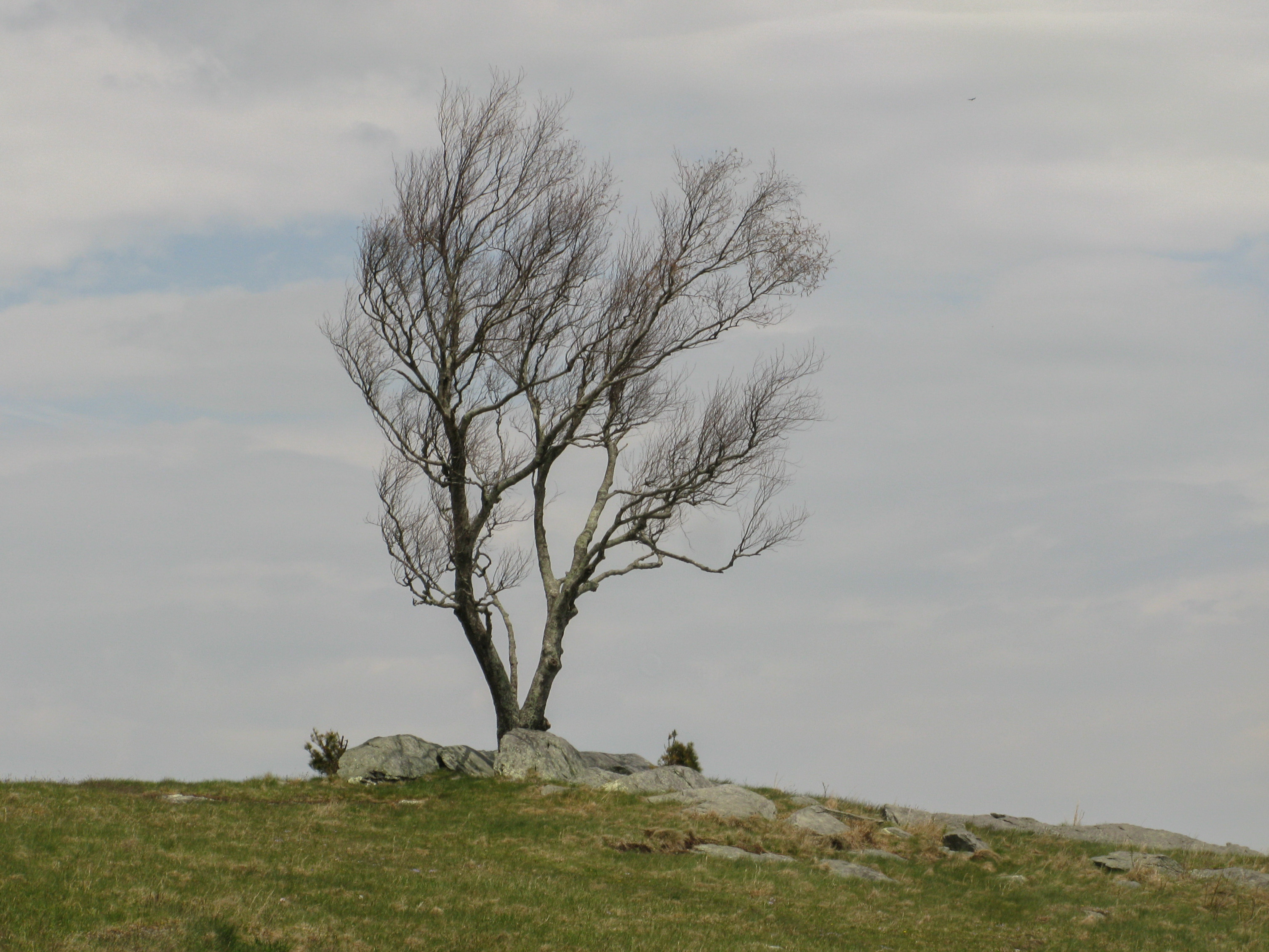
Doughton Park Tree 4/30/2022
 . 

Read Full Post »

 . 
[with 3 poems by Jane Shlensky]
 . 
Balance
 . 
Each morning Granny hobbles to the spring
uphill two miles with buckets in her hands
through woods now thick with frost, limbs cleared of leaves.
And over rocks almost atop a hill
behind her house, she sees the water gush,
and, slow with age, she stoops to clear away
the leaves and sticks that clot the pulses’ rush,
and, cracked cup in her hand, she dips into
“sweet water” as she calls it, gathered wild
as honey in abandoned rees, and pours
the nectar into metal milking pails
to carry down the mountain, arms held far
from hips and sides, all tense – as pugilists
might hold their arms, quite low with hands in fists.
But her fists grip the metal handle’s cut
into her palms, as water weighs her down
and down the well-worn path toward her house.
I offer her a new artesian well,
but she just laughs at me and shakes her head.
I ask if I may carry home the spring
for her, but she denies she wants the help
and says it gives her reason for a walk
among the trees on any given day
and carrying two buckets makes her sure
of foot and balanced in a world that’s not.
 . 
Jane Shlensky
from Barefoot on Gravel, Finishing Line Press, Georgetown, KY; © 2016
 . 
❦ ❦ ❦
 . 
I hate my anger more than I hate vomiting. The dead sick inevitability as it rises, how it makes my hands go cold and clenches my jaw. Disorienting, paralyzing rational thought. I am not going to let that anger out.
 . 
People tell you it’s best if you do. You have to let go of your anger. Maybe they’re right, because while it’s rising I don’t even see it coming, I don’t know to call it anger, I have no warning or defense that might prevent the stupid things I will do or the hurtful things I will say. I am afraid of the anger so I run from it before it can get me. Running, stumbling, I usually fall. Anger blasts me off balance.
 . 
Linda and I are sitting in the car. We had thought to take a walk in the gardens but now I’ve picked a fight with her, I can’t even recall about what. Linda has never let me get away with anything – I say this with honest, grudging admiration – and she says something now that jars me: “So is this what it’s going to be, then?” She is seeing something I can’t see. I admit it. I’m so confused, I tell her. And so she pushes me to relive the last couple of hours, ticking over the balance sheet – frustration at last night’s botched meeting, undercurrent of worried anticipation for tomorrow, niggling mis-steps and course changes this morning that had me snapping at a friend, patience evaporating to hot steam. Little angers mounting, not let out.
 . 
At last she wants to give me some justification. “Anyone would feel that way.” Not this time. True or not, I’m not buying that line. I’ve used it a hundred times to tamp down the anger, cover it and hide it. I don’t actually gain much insight into all this until much later, but there is one best way to regain some balance. To let anger’s own entropy cool it down to nothing. Sitting in the car next to Linda, I open up and own it. I said and did things that hurt people; I am responsible. I am sorry. I’m not happy with myself or the situation, but at least the two of us are finding enough balance to begin our walk after all.
 . 
 . 
It hurts to walk barefoot on gravel. When I first met Linda, she and her sisters went barefoot all summer long. It was nothing for them to walk a mile or two on those tar-and-gravel Ohio roads or through the woods over dry twigs and sweetgum balls. I tried to keep up, limping like an old codger and next day lame. But I kept walking on sore feet because I wanted to keep up. I wanted to be near them.
 . 
Jane Shlensky’s poems will not make you limp although they can be sharp and pointed. They will make you want to come along and keep up. Jane loves her characters, which she has drawn from generations of rural memories and red clay. She grew up in Yadkin County, NC, just across the muddy river from me, and she sees those farmers and grandmothers and wives more clearly than they ever saw themselves, perhaps. I don’t sense Jane imploring us to return to those old times and old ways. Instead, she shines her light on the truth of what brought her up and made her. What we carry in our pockets may change, but what we carry in our hearts does not. Read Barefoot on Gravel and find a moment of balance in a world that is so often not.
 . 
 . 
❦ ❦ ❦
 . 
Ain’t No Sunshine
 . 
“Oh, Lord,” she says, mixing the batter
for pancakes, the sausages sizzling,
the coffee perking in her mama’s pot
that’s so worn it’s barely metal.
She keeps it for the comforting perk,
fragrant life bubbling up, making promises.
 . 
But he’s in his wing chair, hunkered
over his guitar, his face blank as rain,
his strum, hum, strum him,
accompanying his slow moan.
His voice is like buttered rum, oiled
and warm as fever, just enough gravel
in his bass notes to scratch at her heart.
 . 
“Oh, Lord, that man,” she says to no one,
but her Lord hears everything in her heart.
She knows this as sure as she knows
the spit of oil before she tips the batter in,
as sure as she knows the hiss and blister,
bubble browning in the cakes.
 . 
He is having one of his blue days –
won’t fight the sadness, just leans on
that old guitar, curls in on himself
like a dog that hopes to lick the pain away.
He’s finding a sound to help him stand,
a trembling chord to lift a mighty weight.
 . 
He’s singing his own song and she knows it,
her heart clutching at his words, wishing
she could mother is sorrow away, feed
his hopes. She needs him, even if
they struggle every day. She turns to Jesus
kneeling on the wall and whispers,
“Dear Lord, that man there . . . we best
but some blueberries in these cakes.”
 . 
Jane Shlensky
from Barefoot on Gravel, Finishing Line Press, Georgetown, KY; © 2016
 . 
 . 
❦ ❦ ❦
 . 
One Better
 . 
While we puzzled over the perfect
birthday gift for our father,
he packed up his fishing gear and
a few clothes and bid us farewell.
 . 
Jane Shlensky
from Barefoot on Gravel, Finishing Line Press, Georgetown, KY; © 2016
 . 
❦ ❦ ❦
 . 
 . 
❦ ❦ ❦
 . 
 . Doughton Park Tree 2020-11-22

Read Full Post »

« Newer Posts - Older Posts »