
.
[with 3 poems by Claudine R. Moreau]
.
Lesson on Cryovolcanism
. .
How can a moon cry?
I wonder as I display the face
of Enceladus, the Saturnalian moon,
to students pecking on cell phones.
Their saltwater brains
enmeshed in everything
but this moon dressed
in bright fresh eruptions
of sow fall, pockmarked
craters, and frozen blue
rivers of tears.
.
It is January, my season
for venting and remembering –
the snow packed mountain
road which winded up
to the Flat Rock Church
that my father rebuilt,
post and beam. Every nail
hand-hammered,
every cement block place
and trialed with his patience
in finding God in hard work.
.
I want to tell the class
that humans are the only
species known to cry
from emotion.
Instead, I get locked
inside my mind’s
digital inventory –
to see a wooden pin
box engraved
with his name next
to the pulpit, wreathed
with baby’s breath, steam
and smoke escapes every seam.
.
Claudine R. Moreau
from Demise of Pangaea, Main Street Rag Publishing, Charlotte NC, © 2024
.
❦ ❦ ❦
.
Here’s how science works: observation – hypothesis – test – revise – test again – etc. Even gravity, which so far has bruised me every single time I’ve fallen, has chinks in its unassailable wall of theory. Revise – test – revise again. Science is less about nailing down and more about thrusting open.
.
What would happen if a scientist were to investigate love? A review of the literature would be in order, but the theories of Masters & Johnson and the Kinsey Report are to love as Newton is to Heisenberg. Perhaps the poetry of love would be more helpful, but wouldn’t that be like trying to map the cosmos without a standard candle, no reference point from which all other distances can be calculated? Uncertainty indeed!
.
And yet poets just can’t quit writing love poems. (And death poems. I argue that without an awareness of mortality there would be no poets and no poems at all. Perhaps knowing that all of this that is me will one day cease makes me even more desperate for love.) How would a science of love work? Is it a two body problem? Where each body’s mass and velocity keep changing and changing without pattern or predictability? A recipe for crashing or flying apart. Or, on some more beneficent cosmos, might each body practice its love science – observe, contemplate, revise – and at least on some days experience a stable orbit?
.
Clearly the chance for a unified theory of love is pretty slim. And yet, in the cold and darkness of space, how can we not be drawn to warmth and light? Each love poem is another data point. Each fond glance is a photon arriving from the void. I will allow myself to be encouraged and not afraid of infinite complexity in this expanding universe.
.
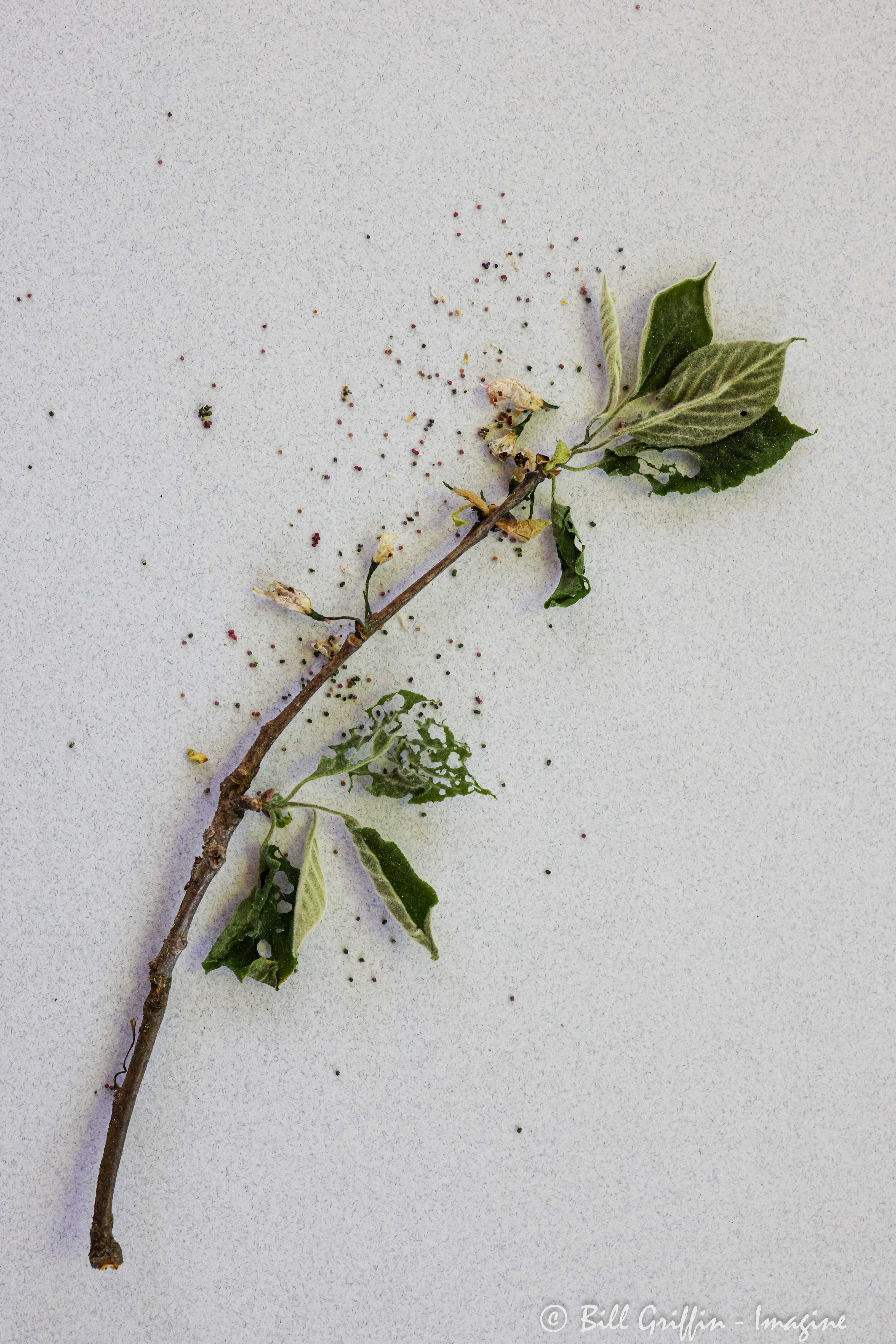
.
❦ ❦ ❦
.
Red Nebula
.
The doctor examines
every inch of me, every defect
I’ve collected on this skin.
When she gets to my breasts
she sees it –
a spoonful of jam dropped
by mother at birth,
beacon of wonder or disgust.
.
All my life I”ve wanted it gone.
I lied about it like a bad tattoo.
The doctor measures,
collects data on her notepad –
radius and diameter,
sketches its blurred perimeter.
.
Her eyes are cosmic cameras
lit even now by the big bang
of my birth. They rove the dried
alluvium of hips, descend
into the canyon of my C-section.
.
She zeroes in with calipers
to the belt’s middle more – my Alnilam.
Without warning,
she scoops it out,
as if it were a black hole
and would consume me
atom by atom.
.
This is when I am certain
that I love my mark of Cain –
imagine the nebula
going into a lover’s mouth.
Its sweetness, red
texture like cotton candy,
its wholesome intention
swelling the brain.
.
Claudine R. Moreau
from Demise of Pangaea, Main Street Rag Publishing, Charlotte NC, © 2024
.
❦ ❦ ❦
.
I recall my one conversation with Claudine Moreau some twenty years ago, learning she teaches physics and astronomy at Elon University, and saying to myself, “Hell, Yes!” Poetry is required to grasp modern physics; physics requires a poet to convey it. A beautiful equation is a crystal of metaphor; reality is no click of billiard balls but a cloud of imaginings. Every decade or two I re-read The Dancing Wu Li Masters to marinate myself again in what cannot be touched but only felt.
.
Like these poems. Demise of Pangaea – Moreau’s lines contain hard images which one might collect like fragments of iron in permafrost after a meteorite explodes, but the collection, the whole, is the flash and steam and momentary brilliance of matter and atmosphere colliding. Halfway through the book I grumbled, “These are not at all chronological. How am I to connect these poems and make them make sense?” Exactly, exactly. Whose life makes any sense at all as it unspools? Contemplating my life is like looking through a telescope – the moments that seem separated by only a fraction of an arc-second are actually years apart, light-years distant. These poems are raisins in a pudding: as it cooks and expands, they separate so that when we open it, each sweet, pungent moment stands out by itself. Galaxies in an expanding universe.
.
And so I return to the title poem for my reference point, my Alnilam in the center of Orion’s belt. Once the earth was whole, a single land mass, and seemed surely destined to remain so forever. But deep forces and dark machines work on us and our desires, and no one can bridge every chasm and rift as the continent splits in two. Hold on to the bright moments. Seek a high point from which you can embrace the Milky Way. Every star burns out, as it must. Fix it in your memory. Perhaps in the glimmer of a star, in a poem about love, you may for a moment forget how heavy / Earth makes all of this.
.
❦
.
Sample additional poems and purchase Demise of Pangaea at Main Street Rag, HERE
.

. ❦ ❦ ❦
.
Demise of Pangaea
.
It’s June and the sky never goes dark –
the solstice sun entombing night.
.
An endless red dusk
seeps like a wound,
.
bleeds through Oslo’s
barcode skyline.
.
Harbor fjords become gnomons,
track the day’s slow radioactive decay.
.
We are in bed, midnight sun exposes
the long ridge between our bodies.
.
I watch your chest rise,
a hundred tiny moles move outward –
.
the continents pull apart by slow churn,
some invisible thing rising through rock.
.
Claudine R. Moreau
from Demise of Pangaea, Main Street Rag Publishing, Charlotte NC, © 2024
.
❦ ❦ ❦
.

.

 V E R S E and I M A G E
Fascinating. I thought Koko the gorilla cried when his first kitten died, so perhaps were are not unique when it comes to crying from emotion. Science is a bit more complicated than the standard model suggests; Imre Lakatos has the best work on how science progresses, but I certainly agree that poetry is essential for even trying to gain a hold on contemporary physics, especially quantum physics. Quantum field theory is fascinating; it seems that matter is made of nothing–the electron, up quark, and down quark along with the four forces are immaterial–all there is is energy and information. Fascinating poetry and meditation in this post; thank you!
LikeLike
Thanks for extending the connections, Michael. So much that our human minds can’t grasp in sensory, concrete terms, yet metaphor can communicate directly, non-analytical, non-rational. I appreciate your comments. —B
LikeLike
Amen, Bill, to your comments about the poetry-physics connection. I’ve always admired Claudine’s science-related metaphors. I try to use my scientific knowledge in my own poems. Of course, my science is more like a junior high level; hers is grad school.
LikeLike
Hey, thanks Richard. Your metaphors do reveal the universe to me. —B
LikeLike
LikeLike
Ha, thanks, Les. Let me know when you find something we can really be certain of! —B
LikeLike
Not likely to happen until we have a new Hawkins or Einstein. Possibly not even then.
LikeLike
wonderful
LikeLike
Quite a collection. Check it out. —B
LikeLike
It’s good to hear from Claudine again. I appreciate how her science background informs her lyrics. Sense and sensibility, one might say. And thanks for your reflections, as always, Bill.
LikeLike
When I first met Claudine at Weymouth, my first thought was, “Now there’s someone who can probably communicate the irrational truths of modern physics.” And it’s so. —B
LikeLike
These selections remind me that there are “other ways of knowing” far beyond what our classrooms have taught us… science is humming across the universe and its work is the engine for our own minds… the result? poetry!
LikeLike
Thanks for making that connection, Jane. Who knows what we will notice next that will gradually set out mind spinning? —B
LikeLike
[…] Love-ology […]
LikeLike