Feeds:
Posts
Comments

Posts Tagged ‘poetry’

It’s been a few years since I saw a patient with their fingers stiffened by black gum, so tarry and mean you just absolutely couldn’t get it off.  For years they were regulars, members of several local families, and by late August I’d usually treated two or three of them.  Oh, they didn’t consult me to take care of the black gum.  That was a fact of life.  They’d come in with a sprained back from first priming (bending over to pull the lowest leaves, the first ones to ripen).  Or one of their kids would be vomiting from green tobacco sickness when the morning dew permitted the nicotine to penetrate her clothing and permeate her skin.  (The older ones all smoked or dipped, and a little extra nicotine didn’t phase them.)

To say tobacco farming has changed is like saying calling to your neighbor has changed.  The wood-fired tobacco barn has gone the way of the rotary dial phone.  The government bought back all the allotments, but you can imagine plenty of other reasons why you see so many fewer acres of tobacco in Surry County now (and so many more acres of grapes).  On top of that, those big steel gas-fired curing barns just ain’t as picturesque.  And I guess the kids have all gone off to college, because I don’t see them with that black gold on their fingers during priming any more.

.     .     .     .     .

I moved to Elkin over thirty years ago to join Jonesville Family Medical Center right where rural nirvana blooms, the juncture of Wilkes, Yadkin, and Surry Counties.  Some days over lunch, one of my nurses shared stories of her farming childhood.  When priming was finished and the barn was full the whole family would join in the curing – cousins, uncles, the tribe.  The men had to tend the fire all night long to keep the heat just right.  The women would bring baskets of supper; the kids would play until way after dark; someone would break out a fiddle or a guitar.  There was probably a Mason jar of something potent being passed around in the shadows beyond the firelight, but my nurse wouldn’t want to make any accusations.  She and the other youngsters would bed down in quilts and blankets around midnight, and when the sun came up across the fields, there Mama would be with cold milk and biscuits.

.     .     .     .     .

Who’s going to keep these stories alive for us?  Thank goodness for Shelby Stephenson.  I wonder if Mrs. Stephenson, watching her little boy helping with the priming, could have imagined he would go off to college and come back home a professor.  Could she have imagined him turning the black gum into poetry?  As English Prof at UNC Pembroke, as editor of Pembroke magazine, as author of numerous volumes, and as picker of a mean guitar, Shelby has given the old stories new voice, new breath, new life.

.     .     .     .     .

Tobacco Days

The rows almost ridge themselves, shaping the year again
towards seasons that let the dust of sandlugs
fall into yesterdays lost in failed crops, quick dreams.

*   *   *   *   *

I lay on the warm ground of the Mayo barn at four in the morning
hoping Brother would oversleep.
The flatbed trailer bounded across the ditch,
the Farmall Cub droned.
“Morning, boys.”  I climbed the tierpoles.
Taking the top, I handed down four sticks at a time to Lee to
Paul who packed the trailer.  From my perch I
stirred the sun through airholes uner the eaves.
The barn emptied, we walked through dew to breakfast.
Dreams drifted awkwardly, Brother’s Big Man chew
rolling over in sand-dust.

*   *   *   *   *

The tobacco greens for the farmer who dives into the dirt,
renewed in the smell of warehouses,
golden leaves in the lightholes bringing the legged sunlight in.
Dew in dust, a musk in  mist,
the tobacco tips one more time on the prime,

a sea of blooms
bobbing in ninetyfive degree wisps of heat,
adhesive tape slipping over blisters.

My bare feet burn on the ground and I shuffle
toes into dirt for moisture, inching stalk by stalk
down endless rows in the ten-acre field where short rows
fade into plumbushes and shade.

The mules on the drags relax through the hot, climbing
July days, the frying dust, and you wonder if you’ll ever
get the gum off your hands.

Shelby Stephenson
from Finch’s Mash © 1990 by Shelby Stephenson

.     .     .     .     .

IMG_0768

Read Full Post »

“It is impossible to care for each other more or differently than we care for the earth . . . there is an uncanny resemblance between our behavior toward each other and our behavior toward the earth.”

Wendell Berry

Attention precedes intention.

I know someone (actually, I live with her) who keeps a paper cup and square of cardboard under the downstairs sink.  If a wasp wanders into the house she claps the cup over her, slides the cardboard under her, and sets her free out the front door.  I’m thankful to Linda for this because I am slightly hymenopteraphobic.  I’m also thankful to her for all the crickets, centipedes, “Palmetto bugs,” and occasional skinks that have ridden that cup to freedom.  I can’t exactly express why, but it’s a blessing to be married to someone who doesn’t squash things.

Does Creation rejoice when one wasp is saved?  Maybe not, but you never know – the web of life is complex and chaotic and includes every living organism, not least the trillion bacteria that cohabit my body.  I couldn’t live without them.  Each creature occupies its essential place.

I do know this – Creation rejoices in every moment we take to pay attention.  Attention leads to intention.  Once we notice the life all around us . . . once we notice how all life interacts and how we affect it . . . we become poised to care. And to behave as if we care.

The very concept of interdependence within the natural world is only about as old as the church I belong to, Community of Christ.  That there is an intimate relationship between creatures and their environment was first developed by Charles Darwin, who is considered the Father not only of my other favorite “E” word but also of Ecology.  The first published instance of the word “ecology” was not until 1879.  One hundred and thirty-three years – not a great deal of time for the Western psyche to incorporate a radically new relationship with Creation: not dominion over all, not even stewardship of all, but coexistence with all.  Perhaps it’s not surprising that there are many people who imagine we can somehow live without Cape Fear shiners, Yellow lampmussels, or Schweinitz’s sunflowers, much less wasps, crickets, and skinks.

I expect a visit to the NC Zoo would start a lot of those people on a journey down a path at whose end they would have fallen in love, not only with a baby giraffe, but with a minnow endemic to just five counties in central North Carolina.  At least that visit would get their attention.  That’s the first responsibility of a naturalist, paying attention.  It’s the first responsibility of being human.

IMG_3205

.     .     .     .     .

Two Sundays ago I left the house at 6:30 a.m. to head for a week at the Zoo.  The car was crammed with nature books, poetry books, enough clothes to change two or three times a day anticipating some sweaty 100+ degree weather.  I had enough handouts and resources to lead workshops and present readings.  Enough food for two weeks, probably.  Enough coffee for a month.

I stopped at Bojangles and bought two sausage biscuits because they were on special.  As I headed south on I-77 I ate one, and then I thought – what did it take to make this?  How many thousands of gallons of water to grow the grain to raise the hog?  How much CO2 from tractor exhaust, how much methane from hog lagoon exhaust?   You’ve probably read how the United States creates over 16% of global greenhouse gases with only 5% of the population.  You may have read how raising meat impacts the environment much, much more than raising grain or vegetables, and how in the developing world, especially China, they are shifting their diets to include more meat as standards of living rise.  Well, when I arrived in Asheboro I handed that second biscuit to a friend and decided to give up eating meat.

Will my decision have any greater benefit to Creation than a few more wasps free in the azalea?  Maybe not, but it’s just my intention, growing out of my attention.

No matter how you lift your eyes you can’t actually see beyond the horizon. You can’t be sure of the outcomes of all your actions, but you can pay attention.  Pay attention to the things you experience every day.  To the things you do. Pay attention to what makes you feel within your heart the love your Creator has placed there.

Continue to discover your own place in Creation.Raven crop 02

RAVEN

Listen.
I’m not going to say this twice.
The sum and product of words
is no mark of intelligence.
Case in point – cousin Crow,
not half as smart as all his talk.

So listen,
I know three things:
Sky, that small kiss of warm air
that rises through my primaries;

the Water on its breath, ridgeblown mist
that bathes us all and makes springs
overflow into Inadu Creek;

and Earth, slope and cup of cove,
the steep that gathers with wide black wings
to draw down Sky,
draw Water up,
that sets free all things green
into a world first fledged.

But listen.
I know from twenty circles
of snowdeep and hungry moons
and twenty circles of fresh shoots
that Sky . . . Water . . . Earth . . .
none of them are mine.

And I know none are yours.

from Snake Den Ridge, a bestiary © Bill Griffin and Linda French Griffin, March Street Press, 2008

.     .     .     .     .

IMG_3143

.     .     .     .     .

“The universe story is the quintessence of reality. We perceive the story. We put it in our language, the birds put it in theirs, and the trees put it in theirs. We can read the story of the universe in the trees. Everything tells the story of the universe. The winds tell the story, literally, not just imaginatively. The story has its imprint everywhere, and that is why it is so important to know the story. If you do not know the story, in a sense you do not know yourself; you do not know anything.”

Thomas Berry,  1914-2009

.     .     .     .     .

IMG_0877

Read Full Post »

 . . . We’ve seen
how our breath on a bitter night
fades like a ghost from the window glass.
Kathryn Stripling Byer

 The polar bears aren’t here.  On sabbatical, or “off exhibit” in Park lingo.  We’re assured they will return in time.  In time . . . .

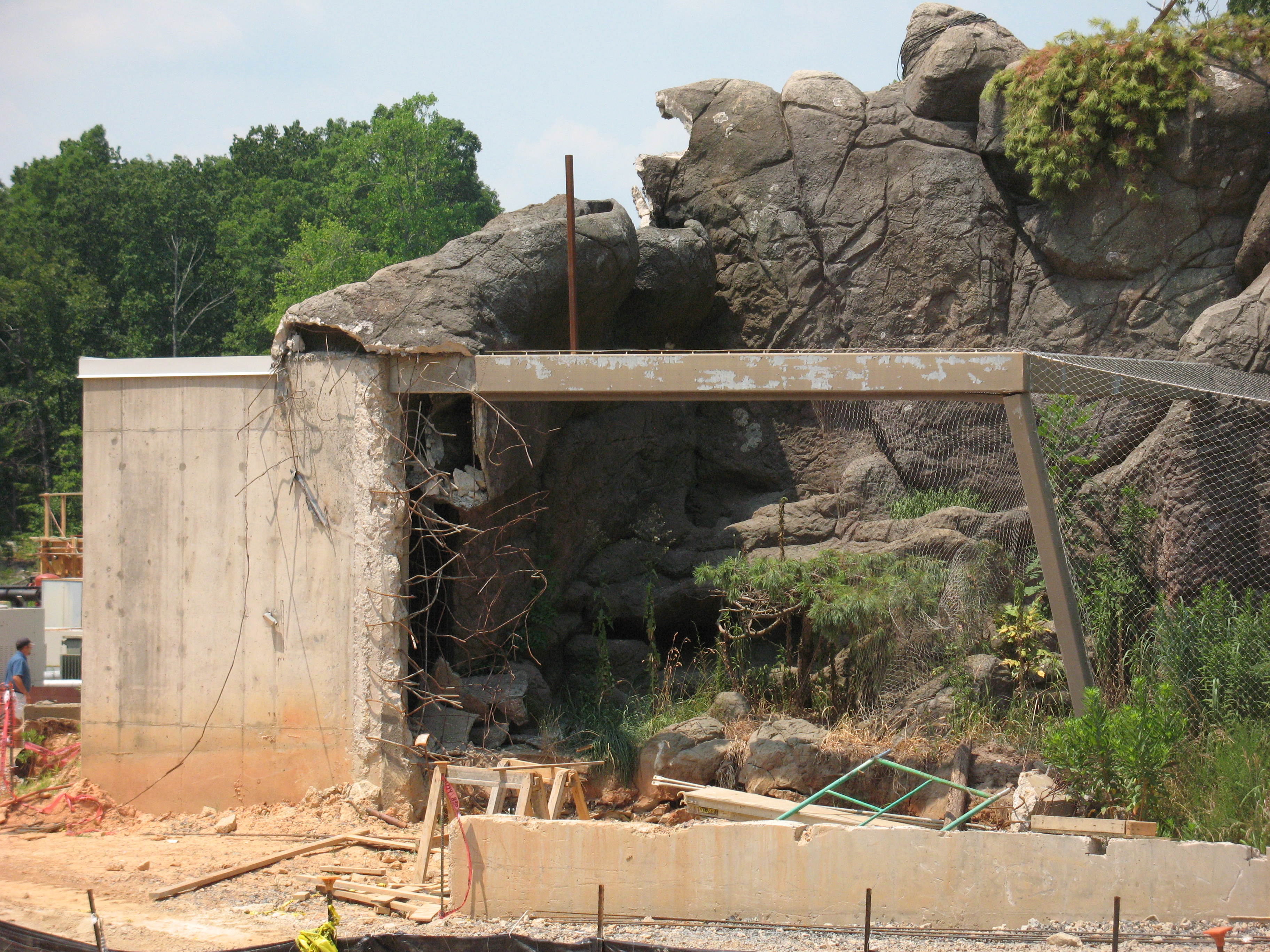
Aquila, born in 1992 at the Louisville, KY Zoo, arrived in NC in 2009 and currently resides at the Detroit Zoo.  Wilhelm, rescued from a Mexican circus, had been here since 2002 and since this winter has really been cooling his heels in Milwaukee.  The Zoo is deep (literally!) into a huge construction project that will expand polar bear habitat and renovate all of Rocky Coast.  When the bears return in 2014 their living space will conform to Canadian standards which will allow for obtaining additional bears from Alberta – as many as six bears on site in all, with facilities for breeding.  The NC Zoo will become a world-class site for preserving the species.

IMG_2912

.

IMG_2910

.

IMG_3026.

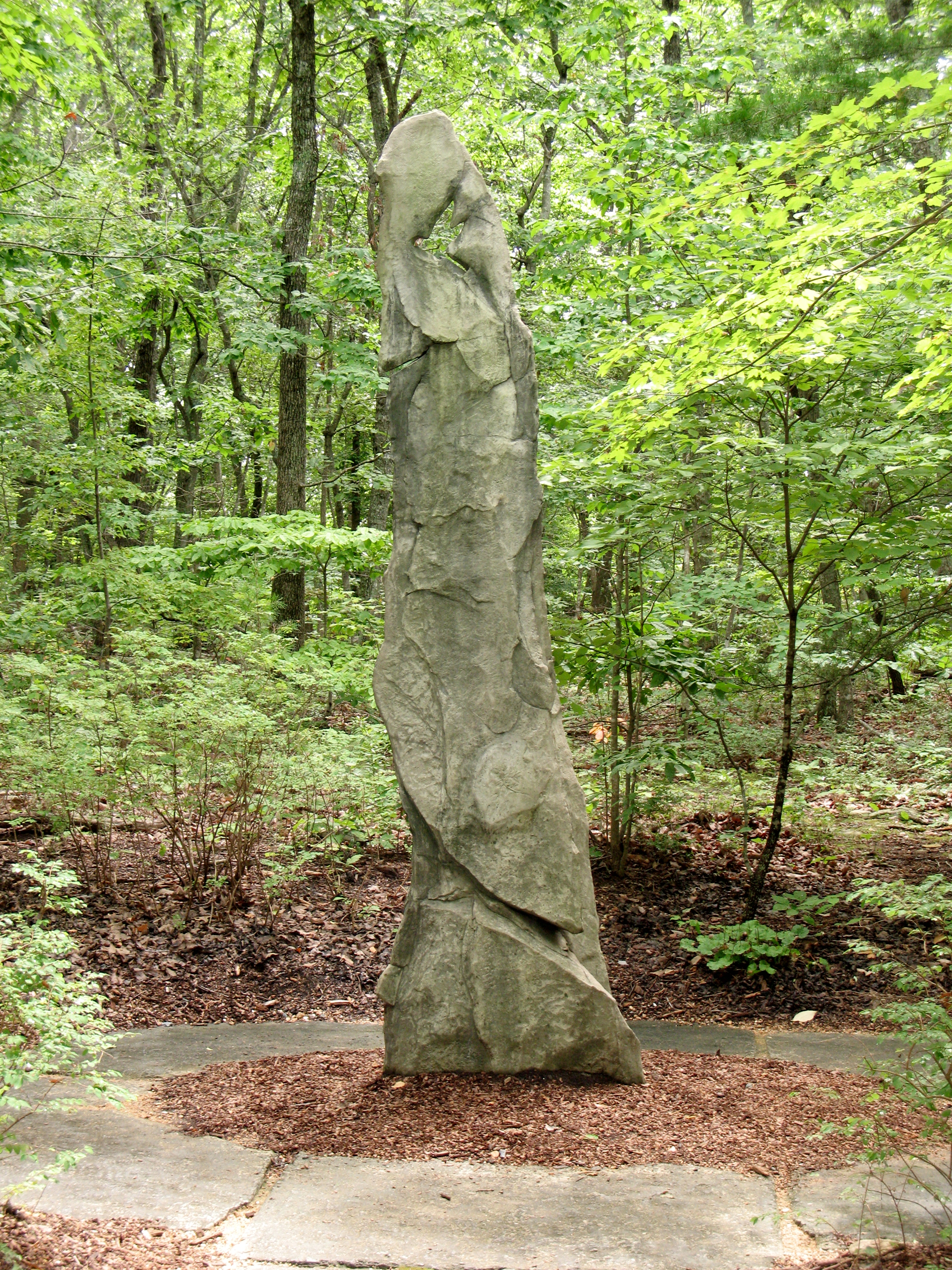
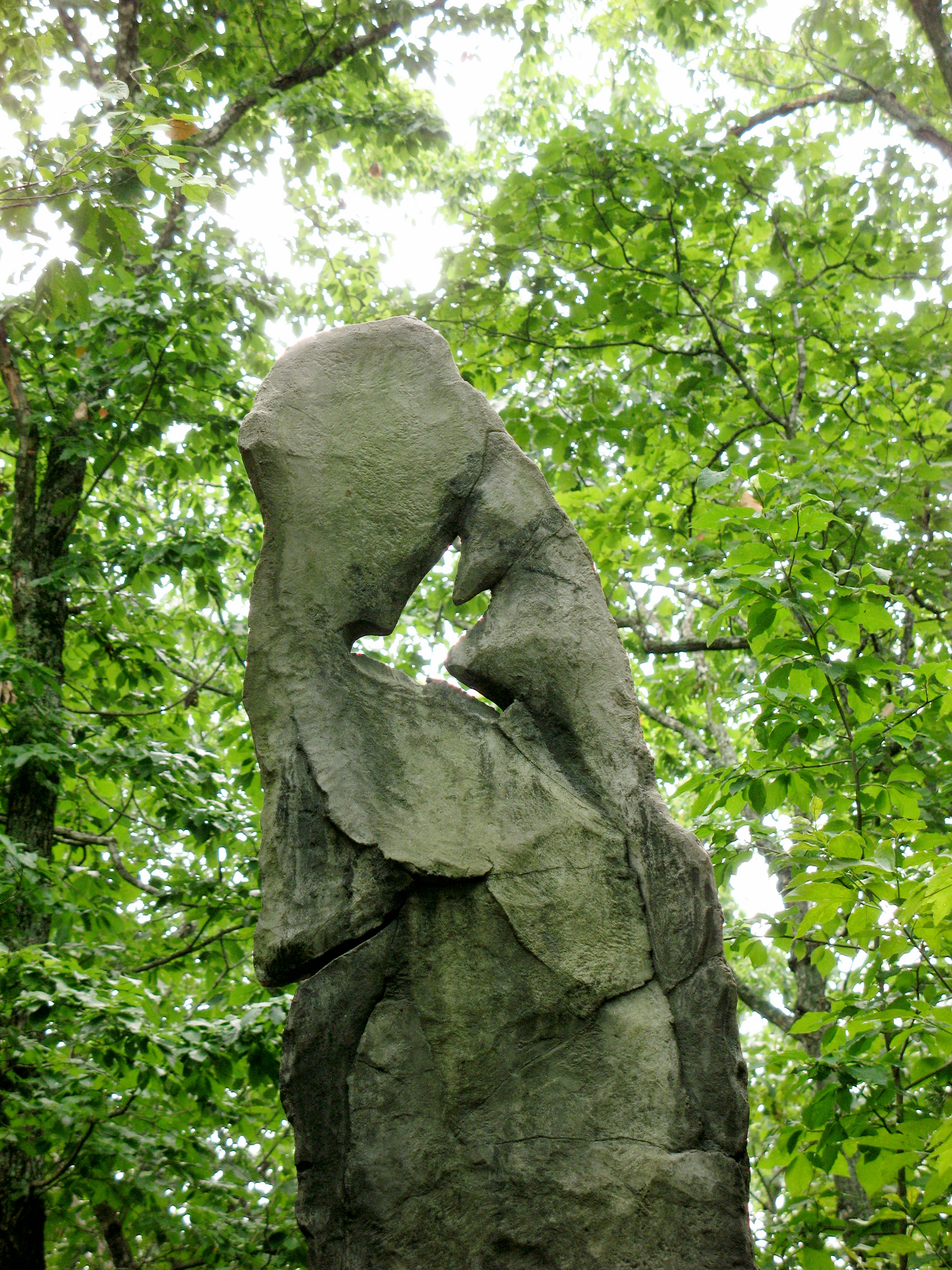
Conservation and preservation – along with education, these are the Zoo’s mission.  I’m struck as I visit each exhibit how often I see the red-lettered admonition “Endangered” beneath the species name.  The science fiction future is rapidly becoming reality when zoos are the only place on earth to see certain animals.  For me, one of the most wrenching exhibits is a seemingly unobtrusive outdoor sculpture by Roger Halligan titled, “The Stone That Stands in an Empty Sky.”  Just off the trail near the red wolves (how appropriate), a monolith rises twenty feet into the forest.  At its apex is a sculpted opening.  Stand at the proper angle and you see leaves and branches through the empty space, and then you recognize it: the full profile of the Carolina Parakeet.

Negative space.  To see, really see, when you first realize what you’re not seeing.  Almost eight million dollars for six bears.  Worth it?  It has my vote.

. . . whatever
won’t stop taking shape even though the whole
crazy quilt’s falling to pieces.

IMG_3297

.

IMG_3303

.     .     .     .     .

Mountain Time

News travels slowly up here
in the mountains, our narrow
roads twisting for days, maybe years,
till we get where we’re going,
if we ever do. Even if some lonesome message
should make it through Deep Gap
or the fastness of Thunderhead, we’re not obliged
to believe it’s true, are we? Consider
the famous poet, minding her post
at the Library of Congress, who
shrugged off the question of what we’d be
reading at century’s end: By the year 2000
nobody will be reading poems. Thus she
prophesied. End of that
interview! End of the world
as we know it. Yet, how can I fault
her despair, doing time as she was
in a crumbling Capitol, sirens
and gunfire the nights long, the Pentagon’s
stockpile of weapons stacked higher
and higher? No wonder the books
stacked around her began to seem relics.
No wonder she dreamed her own bones
dug up years later, tagged in a museum somewhere
in the Midwest: American Poet — Extinct Species.

Up here in the mountains
we know what extinct means. We’ve seen
how our breath on a bitter night
fades like a ghost from the window glass.
We know the wolf’s gone.
The panther. We’ve heard the old stories
run down, stutter out
into silence. Who knows where we’re heading?
All roads seem to lead
to Millennium, dark roads with drop-offs
we can’t plumb. It’s time to be brought up short
now with the tale-tellers’ Listen: There once lived
a woman named Delphia
who walked through these hills teaching children
to read. She was known as a quilter
whose hand never wearied, a mother
who raised up two daughters to pass on
her words like a strong chain of stitches.
Imagine her sitting among us,
her quick thimble moving along these lines
as if to hear every word striking true
as the stab of her needle through calico.
While prophets discourse about endings,
don’t you think she’d tell us the world as we know it
keeps calling us back to beginnings?
This labor to make our words matter
is what any good quilter teaches.
A stitch in time, let’s say.
A blind stitch
that clings to the edges
of what’s left, the ripped
scraps and remnants, whatever
won’t stop taking shape even though the whole
crazy quilt’s falling to pieces.

Kathryn Stripling Byer
North Carolina Poet Laureate 2005-2009

.     .     .     .     .

IMG_3223

.     .     .     .     .

Read Full Post »

« Newer Posts - Older Posts »