Feeds:
Posts
Comments

Posts Tagged ‘nature poetry’

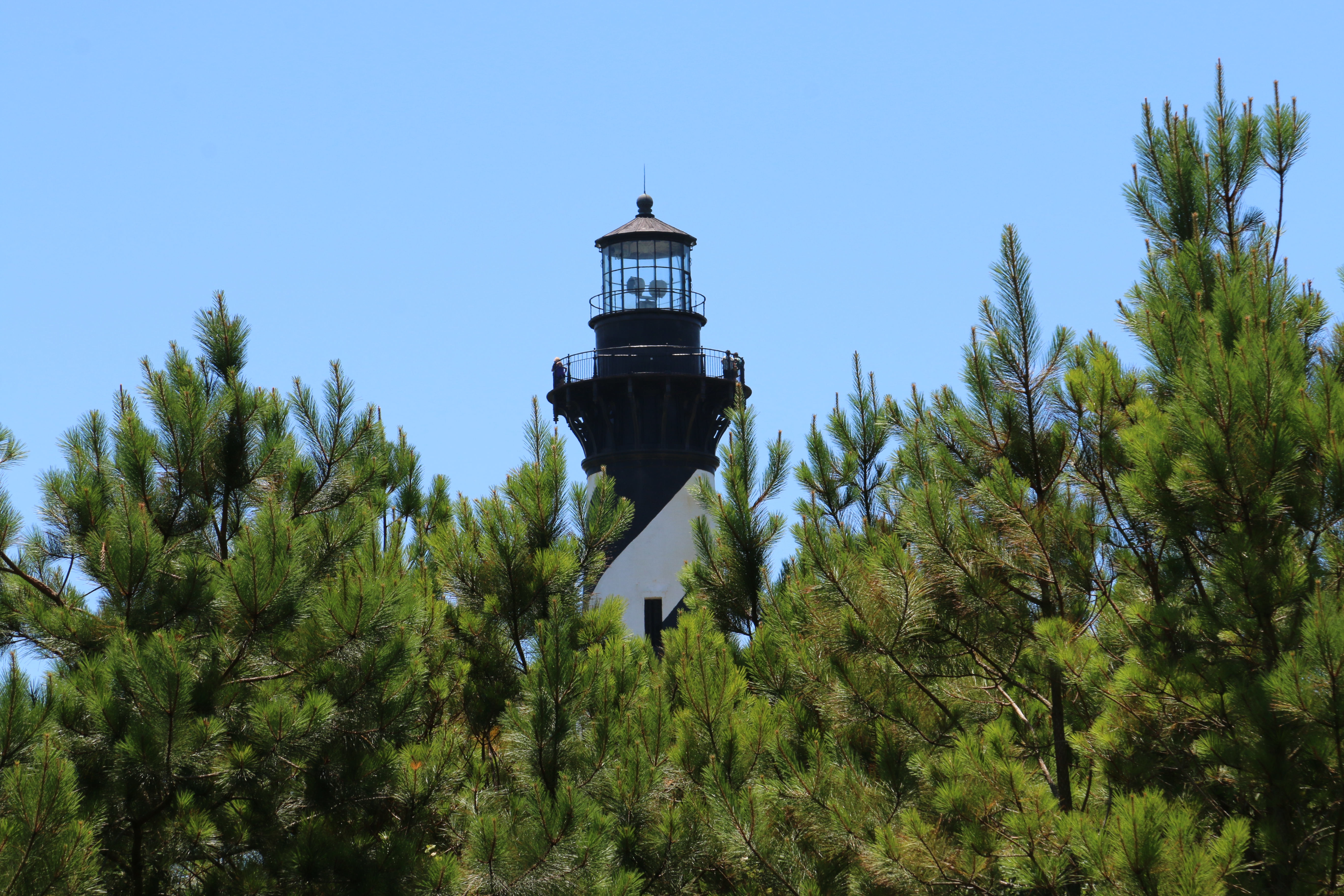
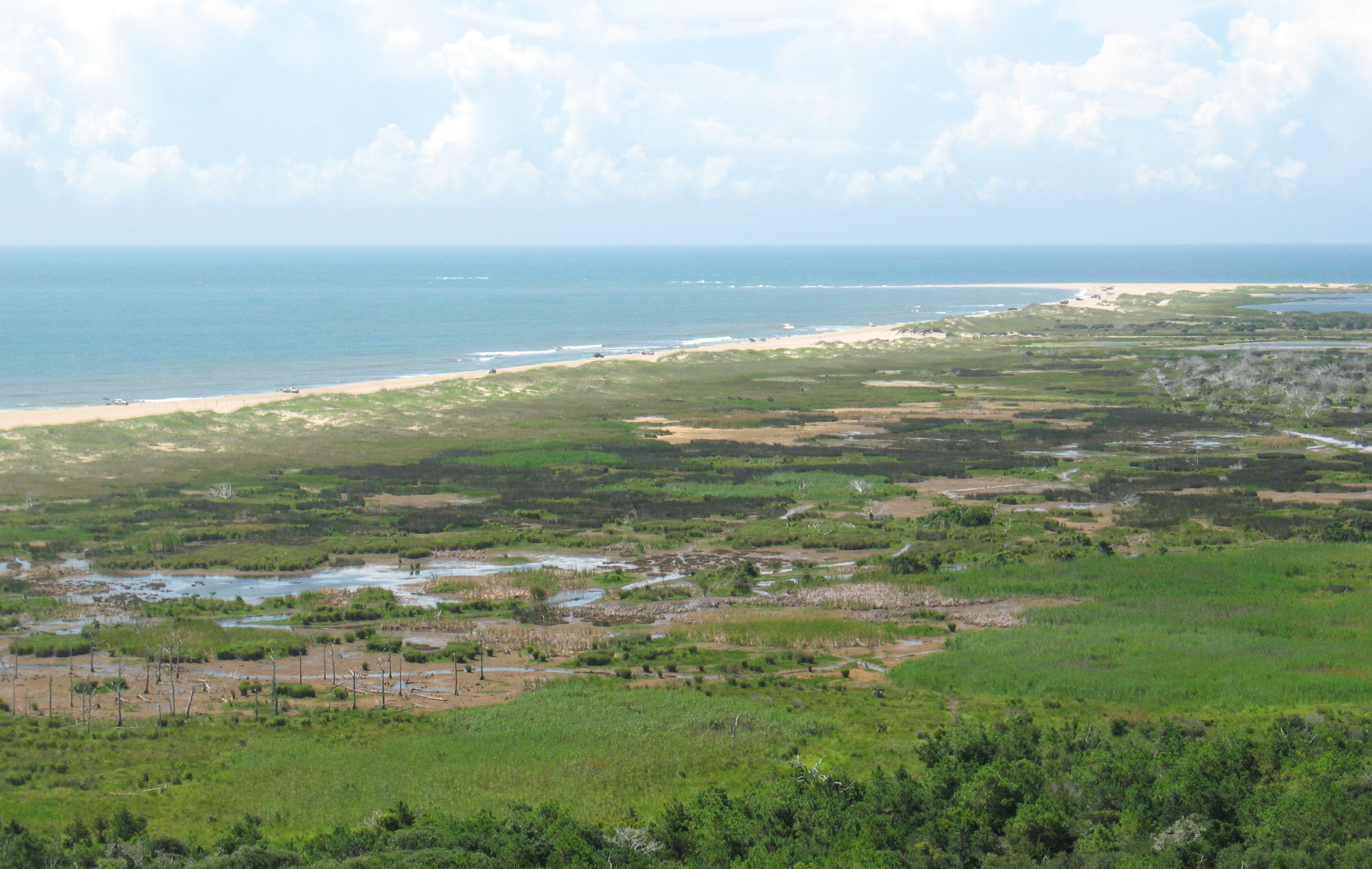
A ten minute walk from Buxton Woods there are a hundred people milling around at the base of the lighthouse waiting to climb or just spraining their necks. A ten minute walk into Buxton Woods it’s just the three of us. The trail rises, ancient dune now eternal with live oak and yaupon. Surf crash can’t reach us here but the hum is constant, cicadas, mosquitoes, something swift in peripheral vision. We descend to a slough, marsh slowly becoming meadow then woodland. Looks ancient. Smells ancient.

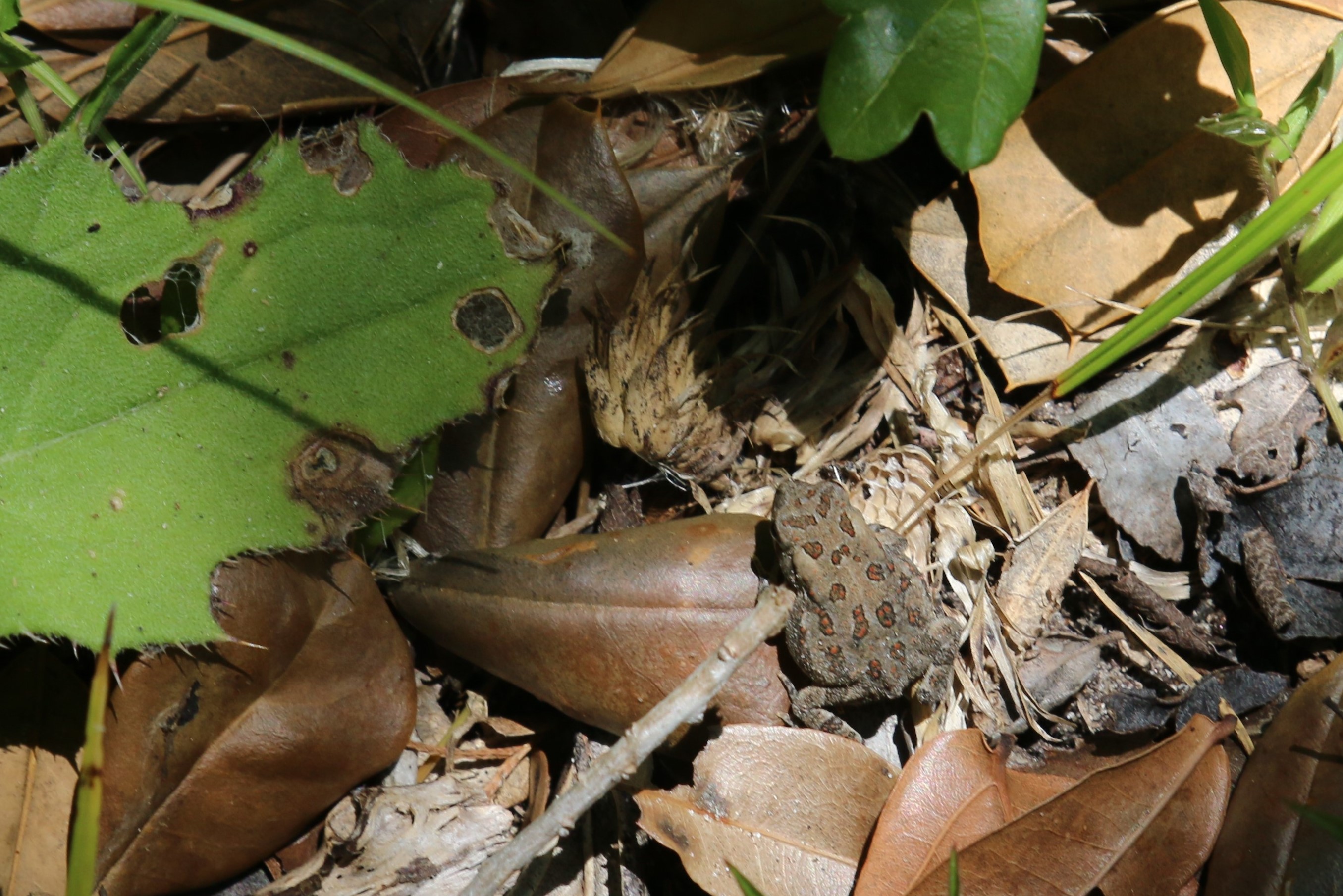
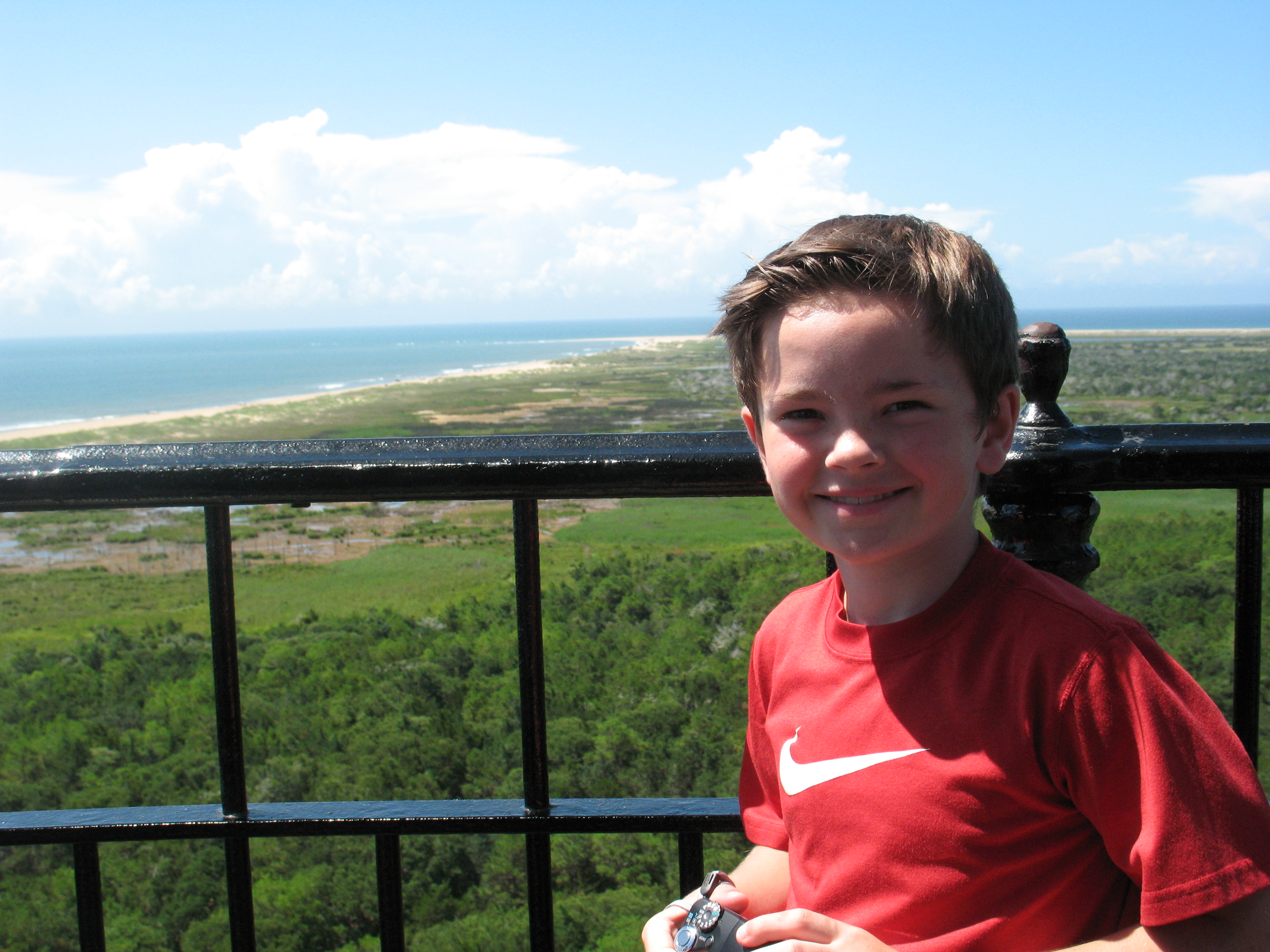
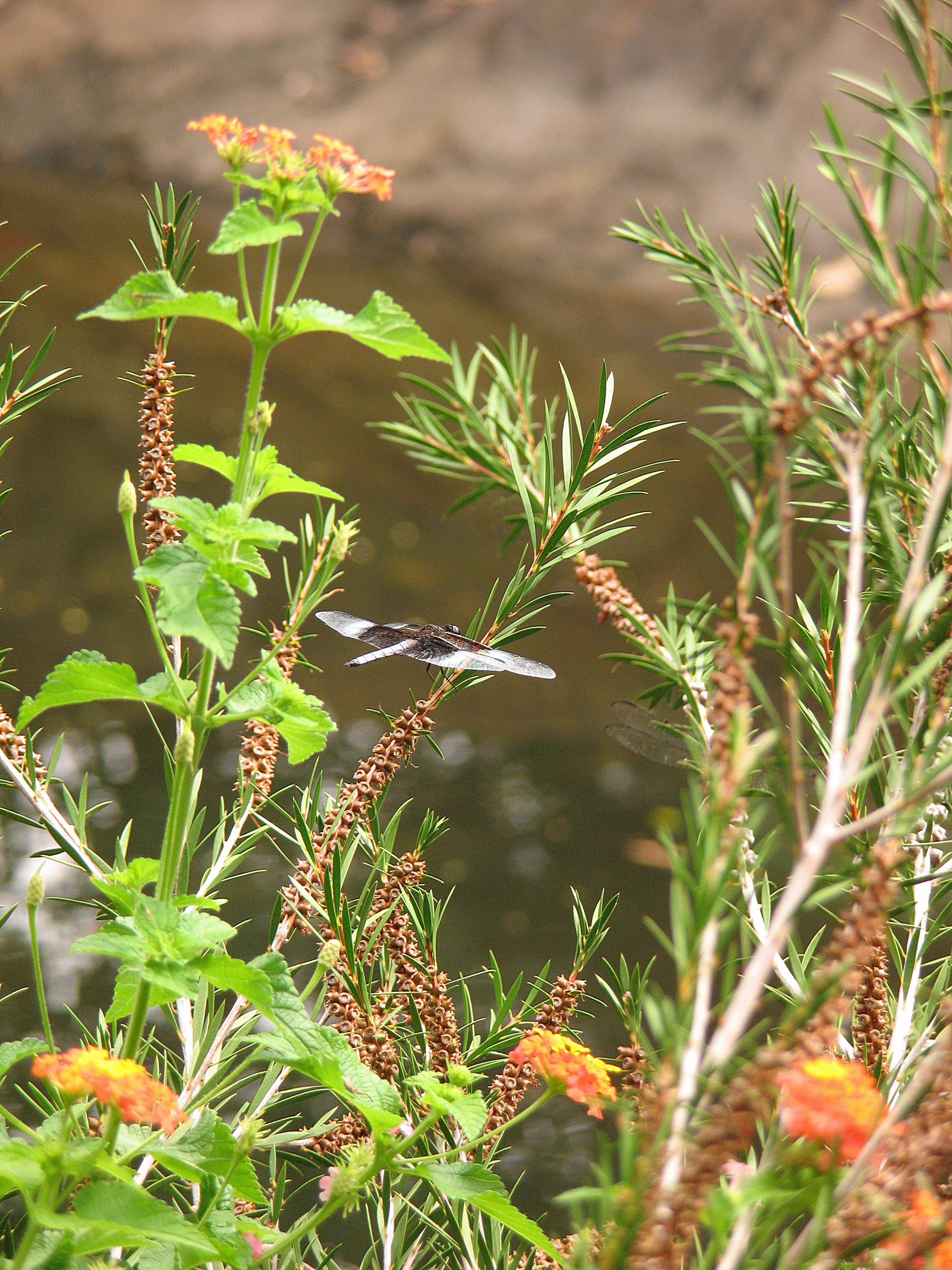
Even in deep shade the trail is not cool but our grandson thinks it’s cool to be here. We’ve never seen this many different colors of dragonflies. Along one stretch a platoon of thumb-sized toads is invisible until one hops across the trail. It’s not a dinosaur, this trail, not yet extinct but endangered. Not only because every other scrap of maritime forest along the outer banks is scrutinized greedily by developers with bulldozers, but because this is the Outer Banks. The dune ridges are a timeline of shoreline creeping ever west, the bank rolling over itself for millennia, now faster and faster. Thousand year old clam and oyster middens are still uncovered, evidence of the human beings that have visited and resided here. How much longer?

This little trail is an insect in amber. Engrave it in memory. From the gallery rail on Hatteras Lighthouse they can’t see us here.

–     –     –     –     –     –     –

This poem is from Susan Meyer’s My Dear, Dear Stagger Grass. I return to this book when the world smells like asphalt and I need a whiff of spartina. I mean, when my own ideas are pedestrian and my inspiration is muckbound and I need something with clear veined wings to chase me back into sunlight. Or a chiseled head and slender neck. How can writing be at once so rooted and so lofty? Oh Susan, how few words we need.

–     –     –     –     –     –     –

Two Friends Hiking at Old Santee Canal

Ahead of me, he balances his feet, left then right,
on the first of two planks – an unsteady bridge of sorts –
laid down for hikers to cross
what, on most days,
would be bog,
but on this one, after weeks of rain, is flooded.

We are learning the look and feel of swamp.

Waiting my turn, I can see his every step.
He pauses halfway across, standing sweaty
in the midst of the ordinary.
An inch or so beneath his heels,
under the seam of the two boards,
I see the loops and curves
of a thick brown snake.
The chiseled head, the slender neck. Above them,
his bare ankles.
How few, the words we need.
Snake, I say, unable to utter where
or put sense to it.
Which way should I go? He is a statue,
his arms frozen in air.
I tell him to come back, and he does.
We watch the snake uncurl
and disappear, but in the thrill of fear just past,
our bodies, all breath and jitters, now belong
to someone we don’t recognize.
Forward is the direction we want to choose
but neither of us can step onto the board.
We know what we must do:
stumble through ferns and mud,
clotted roots, the thick
of mosquitoes, a limestone bluff –
backtrack in the safety of a path already taken.

Susan Laughter Meyers
from My Dear, Dear Stagger Grass, Cider Press Review, 2013

–     –     –     –     –     –     –


–      –     –     –     –     –     –

IMG_0880

Read Full Post »

Keep close to Nature’s heart, yourself;
and break clear away 
once in a while,
and climb a mountain
or spend a week in the woods.
Wash your spirit clean.
John Muir
IMG_3937

.     .     .     .    .

Why have they come?  Why have they driven hundreds of miles of highway and another twenty of Forest Service gravel to this Deep Gap?  Why have they tracked down my friend Mike Barnett and persuaded him to share with them everything they will need to know to spend a few nights on the trail? Why forsake comfort for mist, rain, steep switchbacks, cold nights, hard ground?  Why have they come here?

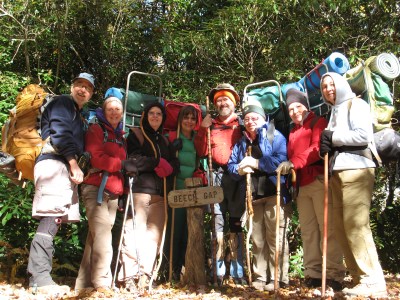
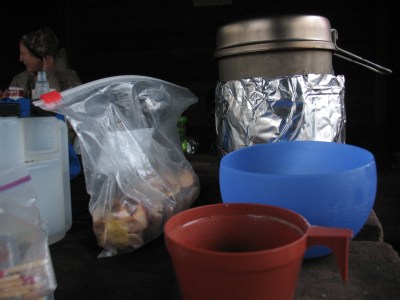
Now they huddle at the trail head – Judy, Nora, Cathy, Gloria, Joan, Nancy – median age 65 (just a wild guess, Ladies!).  They pull on fleece and rain gear because we’re already above 3,000 feet and it’s mid-October.  Mist condenses on the leaves and drips like rain.  The plan is to hike the AT for three days with everything we need to survive on our backs: food, stove, water & filter, tent, mummy bags, and lots of layers for nights just above freezing.  We’ll reward ourselves the third night with a short side hike to Albert Mountain and hope to catch the sunset and sunrise from the 5,280 foot summit and fire tower.

That sunrise seems a long way off as we hunker down for the first night half-way up Standing Indian Mountain.  It’s pitch dark , a “hunter moon,” first new moon after equinox, but what does absent moon matter when we are engulfed in cloud with thunder echoing ridge to ridge as lightning strikes the summit?  Kids, I just want to let you know that your grandmothers are some tough-ass mountain women – they wake up the next morning joking that the howl of wind and rain had caused them to miss George Clooney’s surprise midnight visit.  And the only complaint I hear is when Joan comes back from digging a cat hole just as the mist lifts to reveal a nice rainproof privy not twenty yards from our camp site.
IMG_4128

Our second night we stop at Beech Gap, a saddle between peaks with a good spring and level tent sites.  The stars burn cold as diamond just above our shoulders; we are wearing every layer of clothing we’ve carried.  I ask, “Why?  Why did you go to so much trouble to put this trek together?”

Judy was the instigator.  She told Nora she wanted to hike at least one stretch of the Appalachian Trail before she died.  Nora replied, “Gee, I know someone who’s been taking kids on high adventure hikes in the mountains for twenty years, and his sister-in-law Carol is my good friend.”  Nora called Carol, Carol called Mike, and Mike said, “OK.”  (I still haven’t asked him why he said yes!)  Wheels began to turn.  It began to look like Judy’s promise to herself that she’d have something big to to tell her grandchildren would be fulfilled.

Nora invited others, and Mike’s wife Nancy makes six.  One had hiked with her family as a child and wanted to recapture that feeling.  One walked miles every day and wondered if she could handle the challenge of doing it uphill with a pack.  Another had become concerned about her stamina and embarked on a course to improve her fitness; now she wanted to kick it up a notch. One had never experienced mountain wilderness.  All of the women had come with a frank openness to experiencing something new.  Something challenging.
IMG_3985

There are plenty of obvious physical challenges to spending a night on a mountain.  Just deciding what you’re willing to carry vs. what you’re willing to live without can become a metaphysical exercise.  Then there’s the trail itself.  Where will I find water?  Will the spring be dry?  How many uphill miles before my buns turn to steel?  How much huffing and puffing before I have a heart attack?

Physical challenges are obvious, but they are illusory.  I may be thirsty now, but I will drink later.  When the trail is steep, I walk more slowly.  I stop and rest.  Tired and sore?  Leaves are falling that I may scrape together for a bower.  Strange noises in the night?  My companions are close by.

I’m guessing there are still more reasons we’ve come to these mountains that none of us have yet spoken.  I’m certain there are reasons we couldn’t even have named until after we took this walk together.  There are reasons we’ll discover only with days and weeks of contemplation to come.  A taste of wildness – remote, unforgiving, pristine, elemental.  An assurance of self – I made it, I persevered.  Connection, unvarnished and unabashed – each one of us making our small offering to the survival, and the joy, of the group.  And a much larger connection – wind, trees, slopes, stars . . .  we are part of this living realm and can’t exist without it.

Why have we come here?  That’s exactly what we’re still discovering.

IMG_3921_crop

.     .     .     .     .

Final question: Why did Mike ask me if I’d like to come and lend a hand as general schlepper, filter pumper, water boiler, story teller?  Because he knew as soon as the word “mountains” left his lips I would be saying, “YES!”

.     .     .     .     .

Forever Mountain
Fred Chappell

for J.T.Chappell, 1912-1978

Now a lofty smoke has cleansed my vision.

I see my father has gone to climb
Lightly the Pisgah slope, taking the time
He’s got a world of, making spry headway
In the fresh green mornings, stretching out
Noontimes in the groves of beech and maple.
He has cut a walking stick of second-growth hickory
And through the amber afternoon he measures
Its shadow and his own shadow on a sunny rock.
Not marking the hour, but observing
The quality of light come over him.
He is alone, except what voices out of time
Swarm to his head like bees to the bee-tree crown,
The voices of former life as indistinct as heat.

By the clear trout pool he builds his fire at twilight,
And in the night a granary of stars
Rises in the water and spreads from edge to edge.
He sleeps, to dream the tossing dream
Of the horses of pine trees, their shoulders
Twisting like silk ribbon in the breeze.

He rises glad and early and goes his way,
Taking by plateaus the mountain that possesses him.

My vision blurs blue with distance,
I see no more.
Forever Mountain has become a cloud
That light turns gold, that wind dislimns.

This is continually a prayer.

.     .     .     .     .

from The Fred Chappell Reader, St. Martin’s Press, (c) 1987 by Fred Chappell
IMG_4192_crop

.     .     .     .     .

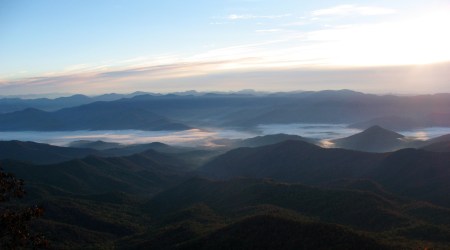
A brief postscript: Mike has told me several times of his instructions to Nancy that his ashes are to be strewn from the top of Standing Indian Mountain.  By noon on our second day the mist had lifted, and we ate lunch at that summit with glorious views of the autumn-hued ridges extending to an infinite horizon.  Mike, I hope it’s years in our future, but I can’t think of a better spot to lend the flora a little potash and calcium for all eternity.

.      .     .     .     .

Our true home lies outside, deep in the wilderness of forest and mountain, river and desert and sea, the source of our being and the destiny of our great meandering blundering dreaming journey through time. Like Odysseus in his wanderings, we are homeward bound whether we know it or not.
Edward Abbey

IMG_4021

.     .     .     .     .

IMG_1948

Read Full Post »

“It is impossible to care for each other more or differently than we care for the earth . . . there is an uncanny resemblance between our behavior toward each other and our behavior toward the earth.”

Wendell Berry

Attention precedes intention.

I know someone (actually, I live with her) who keeps a paper cup and square of cardboard under the downstairs sink.  If a wasp wanders into the house she claps the cup over her, slides the cardboard under her, and sets her free out the front door.  I’m thankful to Linda for this because I am slightly hymenopteraphobic.  I’m also thankful to her for all the crickets, centipedes, “Palmetto bugs,” and occasional skinks that have ridden that cup to freedom.  I can’t exactly express why, but it’s a blessing to be married to someone who doesn’t squash things.

Does Creation rejoice when one wasp is saved?  Maybe not, but you never know – the web of life is complex and chaotic and includes every living organism, not least the trillion bacteria that cohabit my body.  I couldn’t live without them.  Each creature occupies its essential place.

I do know this – Creation rejoices in every moment we take to pay attention.  Attention leads to intention.  Once we notice the life all around us . . . once we notice how all life interacts and how we affect it . . . we become poised to care. And to behave as if we care.

The very concept of interdependence within the natural world is only about as old as the church I belong to, Community of Christ.  That there is an intimate relationship between creatures and their environment was first developed by Charles Darwin, who is considered the Father not only of my other favorite “E” word but also of Ecology.  The first published instance of the word “ecology” was not until 1879.  One hundred and thirty-three years – not a great deal of time for the Western psyche to incorporate a radically new relationship with Creation: not dominion over all, not even stewardship of all, but coexistence with all.  Perhaps it’s not surprising that there are many people who imagine we can somehow live without Cape Fear shiners, Yellow lampmussels, or Schweinitz’s sunflowers, much less wasps, crickets, and skinks.

I expect a visit to the NC Zoo would start a lot of those people on a journey down a path at whose end they would have fallen in love, not only with a baby giraffe, but with a minnow endemic to just five counties in central North Carolina.  At least that visit would get their attention.  That’s the first responsibility of a naturalist, paying attention.  It’s the first responsibility of being human.

IMG_3205

.     .     .     .     .

Two Sundays ago I left the house at 6:30 a.m. to head for a week at the Zoo.  The car was crammed with nature books, poetry books, enough clothes to change two or three times a day anticipating some sweaty 100+ degree weather.  I had enough handouts and resources to lead workshops and present readings.  Enough food for two weeks, probably.  Enough coffee for a month.

I stopped at Bojangles and bought two sausage biscuits because they were on special.  As I headed south on I-77 I ate one, and then I thought – what did it take to make this?  How many thousands of gallons of water to grow the grain to raise the hog?  How much CO2 from tractor exhaust, how much methane from hog lagoon exhaust?   You’ve probably read how the United States creates over 16% of global greenhouse gases with only 5% of the population.  You may have read how raising meat impacts the environment much, much more than raising grain or vegetables, and how in the developing world, especially China, they are shifting their diets to include more meat as standards of living rise.  Well, when I arrived in Asheboro I handed that second biscuit to a friend and decided to give up eating meat.

Will my decision have any greater benefit to Creation than a few more wasps free in the azalea?  Maybe not, but it’s just my intention, growing out of my attention.

No matter how you lift your eyes you can’t actually see beyond the horizon. You can’t be sure of the outcomes of all your actions, but you can pay attention.  Pay attention to the things you experience every day.  To the things you do. Pay attention to what makes you feel within your heart the love your Creator has placed there.

Continue to discover your own place in Creation.Raven crop 02

RAVEN

Listen.
I’m not going to say this twice.
The sum and product of words
is no mark of intelligence.
Case in point – cousin Crow,
not half as smart as all his talk.

So listen,
I know three things:
Sky, that small kiss of warm air
that rises through my primaries;

the Water on its breath, ridgeblown mist
that bathes us all and makes springs
overflow into Inadu Creek;

and Earth, slope and cup of cove,
the steep that gathers with wide black wings
to draw down Sky,
draw Water up,
that sets free all things green
into a world first fledged.

But listen.
I know from twenty circles
of snowdeep and hungry moons
and twenty circles of fresh shoots
that Sky . . . Water . . . Earth . . .
none of them are mine.

And I know none are yours.

from Snake Den Ridge, a bestiary © Bill Griffin and Linda French Griffin, March Street Press, 2008

.     .     .     .     .

IMG_3143

.     .     .     .     .

“The universe story is the quintessence of reality. We perceive the story. We put it in our language, the birds put it in theirs, and the trees put it in theirs. We can read the story of the universe in the trees. Everything tells the story of the universe. The winds tell the story, literally, not just imaginatively. The story has its imprint everywhere, and that is why it is so important to know the story. If you do not know the story, in a sense you do not know yourself; you do not know anything.”

Thomas Berry,  1914-2009

.     .     .     .     .

IMG_0877

Read Full Post »

« Newer Posts - Older Posts »