Feeds:
Posts
Comments

Posts Tagged ‘birds’

April 27, 2012 – first scarlet tanager of spring, Elkin, NC.

If I had an hour and good binoculars I could spot him, but I know he’s there.  There’s no other song like his, just exactly like a robin with a 40 pack-year smoking history.  He always arrives about a week after the big oaks in our neighborhood have fully leaved, and then he hangs out way up in the canopy.  I’ll come back tomorrow when the sun is high, follow my ears, and when he lunges from the greenery for a moth or a beetle, I’ll have him.  A red like no other red.

Last week Linda was drawing at her desk when Saul ran in from the next room.  “Granny, I seed a red-headed woodpecker on the bird feeder!”  He pulls her into the den and there is indeed a woodpecker on the feeder, a male downy, patch of red at his nape.  “Good, Saul!  That is a woodpecker.  But a red-headed woodpecker has a head that is red all over.”  About fifteen minutes later Saul is back.  “Granny, see this red-headed woodpecker!”  And it’s head is red all over.  A bright fiery cardinal.

Red birds.  So startling!  So noticeable, so eye-catching!  Is the northern cardinal, Cardinalis cardinalis, the state bird of seven out of fifty because it’s so familiar and recognizable or because it is exotic, unbelievable that something so bright would allow itself to be seen by mortals?  I remember the first time I actually saw Piranga olivacea, the scarlet tanager.  I’d heard plenty calling and singing but never spotted one.  June 17, 1994, I was visiting my brother-in-law Skip for a weekend at his place in southern Ohio (off the beaten path doesn’t half do it justice).  Mid-morning with the binocs, about to quit because of warbler-neck (cricked back searching the tops of trees for spots of color), and there he was.  Perched high in brightness, not even attempting to conceal his flame.

Just to share a moment of that creature’s living breath, to see something in clarity and commonplace that up until that moment has been so elusive and so desired, it is to feel the earth, nature, creation expanding around me and I am a single cell in the body of God.  And if the sun is shining tomorrow, I think I’ll walk around the block and try to see another.
IMG_2128

.     .     .     .     .

It’s been almost a year since I last saw a scarlet tanager.  It’s been about a year since I last read Mary Oliver’s book, Red Bird.  I need to return to both.  Scarlet tanagers aren’t rare, although one has to go where they are to see one.  And look up.  Mary Oliver’s poems don’t seem rare.  So conversational, so commonplace.  Being alive is not particularly rare.  Six-plus billion of us Homo sapiens are engaged in it today. Out of the one-thousand four-hundred and forty minutes in each day, I don’t pause to consider many of them rare.

Shouldn’t I?  Read this poem with me.  Read and let us, you and I, share a moment of each other’s living breath.

.     .     .     .     .

Red Bird Explains Himself

“Yes, I was the brilliance floating over the snow
and I was the song in the summer leaves, but this was
only the first trick
I had hold of among my other mythologies,
for I also knew obedience: bringing sticks to the nest,
food to the young, kisses to my bride.

But don’t stop there, stay with me: listen.

If I was the song that entered your heart
then I was the music of your heart, that you wanted and needed,
and thus wilderness bloomed there, with all its
followers: gardeners, lovers, people who weep
for the death of rivers.

And this was my true task, to be the
music of the body.  Do you understand?  for truly the body needs
a song, a spirit, a soul.  And no less, to make this work,
the soul has need of a body,
and I am both of the earth and I am of the inexplicable
beauty of heaven
where I fly so easily, so welcome, yes,
and this is why I have been sent, to teach this to your heart.”

from Red Bird, Mary Oliver, Beacon Press, © 2008 by Mary Oliver

.     .     .     .     .
Read Full Post »

Every Christmas for almost thirty years, Linda and I have sung with the Elkin Community Chorus.  This year marked the 51st annual performance of the Chorus, originally founded by Fran Greene, currently directed by David McCollum, and open to all comers . . . that is anyone who wants to commit every Thursday night to rehearsing Christmas anthems beginning way back in October.  Gets you in the spirit early!

This year’s Chorus has been a special joy for me for many reasons, but one is that David selected a piece by me for us to perform.  In 2010 my friend composer and director Mark Daniel Merritt asked me to write lyrics he could work into a Christmas suite for our semi-pro choral group Voce.  We premiered The Wanderer’s Carols last Christmas at Biltmore House, and this year on December 4th one hundred of my friends and neighbors in the Elkin Community Chorus sang the first movement, The Birds’ Carol.

.     .     .     .     .

The Wanderer’s Carols
Music by Mark Merritt Lyrics by Bill Griffin
[copyright 2010]
Movement 1
The Birds’ Carol

“Morning!  Morning!” trills the lark,
“The Babe brings gold to the sky!
A song of light now showers the earth,
And we shall know God this day.
.    Now is the dawn of our new life,
.    And we shall know God this day.”

“This coat I wear,” caws the rook,
“So black, so heavy, so grim.
Only One knows the way to make it bright –
The Child who reclaims us from sin.
.    He lifts our burden upon himself,
.    The Child who reclaims us from sin.”

“Come rest with me,” coos the dove,
“In this humble stable take ease.
Kings and shepherds together embrace
The Prince who unites us in peace.
.    You make us one in all the earth,
.    O Prince who unites us in peace!”

“I . . . Thou, I . . . Thou,” vow the geese
From dark earth to heaven above –
“May we join with Thee in a world made new;
May we fly forever in love.
.    Give us wings of Your perfect light,
.    And we’ll fly forever in love.”

.     .     .     .     .

IMG_9285

I’d like to share some thoughts about the background of these lyrics:

The Lark   –   Joy

In England the Sky Lark is known for its towering display flight, greeting the morning with loops and aerobatics, all the while filling the sky with its exuberant warble.  A fitting welcome for Christmas and the newborn Babe!

Our own North Carolina Meadowlark also sings a welcome to light returning to the earth   –   its melody seems to chant the words, “Spring of the year!”

.     .     .     .     .

The Rook   –   Hope

Every one of us encounters darkness during our lives; there is no one that does not shoulder some burden.  The Rook proclaims hope in the coming of the Child who will take our burden upon Himself.  The One who can bring light into our darkness.

The English Rook is first cousin to our American Crow, both of them highly sociable and intelligent creatures.  If you’re smart, you know you must look beyond yourself for the hope of salvation.

.     .     .     .     .

The Dove   –   Peace

The Dove has symbolized God’s promises since ancient times   –   picture the bird clasping an olive branch as it returns to Noah and the wanderers.  Today there is no more universal image of peace than the Dove.  In this verse, the Dove affirms that the peace of this Prince is promised to all people of whatever station in life, exalted or lowly, king or shepherd.  If we are to be united in all the earth, it will only be through Christ’s peace.

The Rock Dove is native to England’s cliffs and coasts, but after being imported to the new world it has become ubiquitous wherever there is human habitation   –   we call it a “pigeon.”  From the eaves of an abandoned building, doesn’t the sound of that cooing evoke peacefulness and home?

.     .     .     .     .

The Geese   –   Love

Next time you hear a pair of Canada Geese flying overhead honking back and forth (the male perhaps slightly lower pitched than the female), imagine that they are not only calling to each other but also to their Creator   –   “I, Thou . . . I, Thou.”

For me these Geese are a powerful symbol of love.  They mate for life and may live twenty to thirty years in the wild.  They constantly watch out for each other.  They protect their goslings most ferociously.  And when I hear their call through the trees at dusk, it reminds me that the love of our Creator surrounds us and lifts us up.

.     .     .     .     .

IMG_2548

If you would like to listen to the choral group Voce performing The Wanderer’s Carols (with harp accompaniment and boy soprano), please follow these links:

THE WANDERER’S CAROLS

1 – The Birds’ Carol

2 – Beside the Manger

3 – The Wanderer’s Prayer

.     .     .     .     .

Read Full Post »

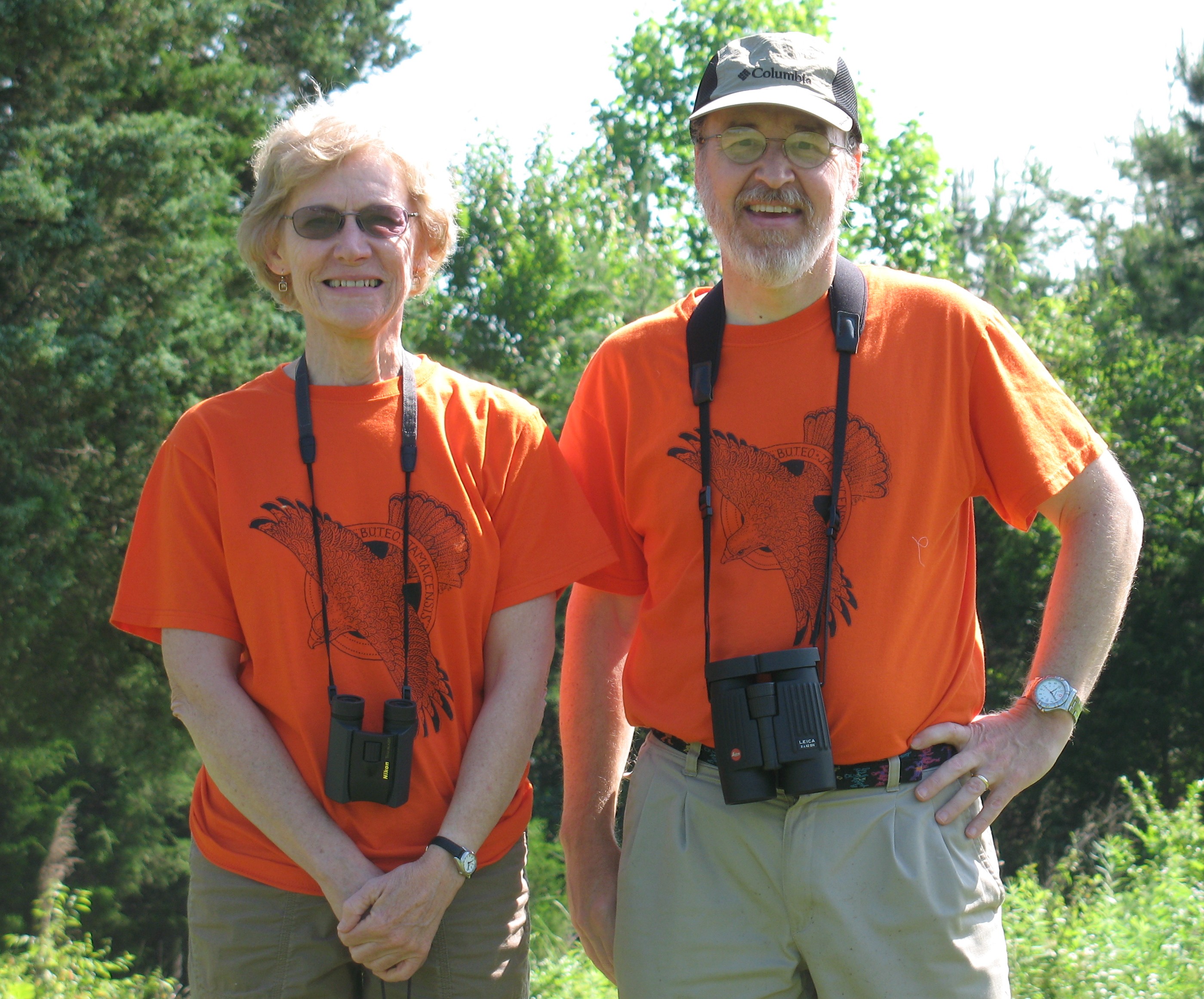
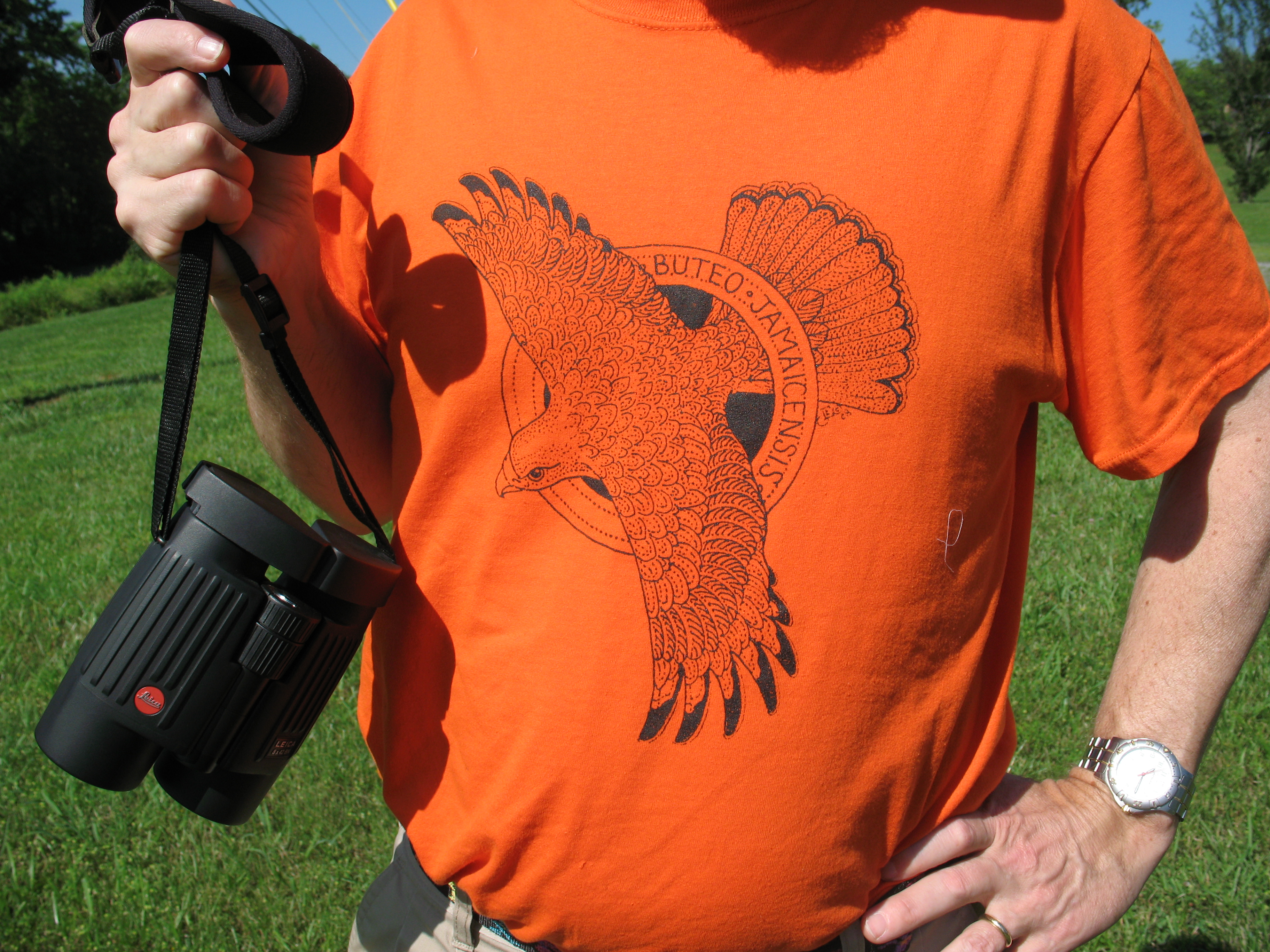
It’s just shy of 5 a.m., and I’m standing in the far corner of the Wal-Mart parking lot.  The leaves are still dripping from an all-night shower.  In exactly two minutes Nancy and Jean will pull in to meet me, we’ll check our gear and get into my car, then drive half an hour to our first designated stop.  For the next five or six hours we will be official volunteer employees of the US Geologic Service (Patuxent Wildlife Research Facility), joining about 3,000 others in US and Canada to complete the annual North American Breeding Bird Survey.

This is my seventeenth consecutive year counting Route 63027, “Copeland.”  There are fifty stops a half-mile apart, starting in Yadkin County on Old Rockford Road and ending all they way into Wilkes County.  At each stop I identify every bird I can hear or see within three minutes – Nancy is my timer and scribe, Jean counts cars and records “excess noise,” but only one person is permitted to count.  Nancy and Jean aren’t even allowed to point. From late May to the end of June, individuals and teams in all fifty states and Canada are counting along similar pre-mapped routes.  This “citizen scientist” data has allowed groups like the Cornell Lab of Ornithology to identify continent-wide trends in wild bird populations, such as the major crash in the House Finch population about fifteen years ago (eventually discovered to be due to an epizootic of chlamydia).

.

IMG_3950_crop01

.

Our first stop is a gravel drive just past Double Creek.  It’s misty, still dark, and the frogs are way louder than the birds this morning.  (I’m no expert on frog calls, but I hear tree frogs, leopard frogs (I think), a bullfrog, and an American Toad.)  A Northern Cardinal across the road is so persistent it’s hard to concentrate, but there’s an Eastern Phoebe near the creek, a Pine Warbler, and now, yes, across the field, the first one starts singing – Indigo Bunting.

Every year, as I transmit the data to the USGS, I keep my own personal tally of the number of species and number of individuals.  On a sunny day on any stretch of North Carolina piedmont roadside, an Indigo will be singing.  Constantly.  They like to perch on a wire or dead limb where they can be seen, and they are tirelessly vocal – so easy to count.  Every year Indigo Bunting is the number one most numerous individual, even when there are flocks of twenty Cedar Waxwings or thirty European Starlings.  This year, though, it is overcast right up to our forty-fifth stop, and I just don’t feel like I’m hearing many Indigos. Oh, we’ve seen quite a few, and some are singing, but I’m afraid this will be the first year they don’t “win.”

Why do I love these tiny dark cavaliers?  I remember the first one I ever saw, on Fodderstack Trail off the Blue Ridge Parkway, singing, of course, in the tip top of a dead tree.  And when the sun struck him OW! the iridescence and electricity of that little body.  When I drive down any country road in the summer with my windows down, I find myself muttering every minute or so: “Indigo . . . Indigo . . . Indigo.”  They thrive at forest’s edge, and since we’ve sliced up so much woodland into scattered chunks it just leaves more prime bunting habitat.  So how about this cool counting day when birds that usually steal away in the heat are active right up until our finish?  Will they overtake my Indigos?  Total up the hash marks on the tally sheet.  Here it comes: Chipping Sparrows – 35; American Robins – 46; and (the envelope, please) . . . Indigo Buntings – 57.

IMG_3952

.     .     .     .     .

Bird Watching
John Ciardi

Every time we put crumbs out and sunflower
seeds something comes.  Most often sparrows.
Frequently a jay.  Now and then a junco or
a cardinal.  And once – immediately and never
again, but as commonly as any miracle while it
is happening, and then instantly incredible for-
ever – the tiniest (was it?) yellow warbler
as nearly as I could thumb through the bird
book for it, or was it an escaped canary? or
simply the one impossible bright bird that is
always there during a miracle, and then never?

I, certainly, do not know all that comes to us
at times.  A bird is a bird as long as it is
there.  Then it is a miracle our crumbs and
sunflower seeds caught and let go.  Is there
a book to look through for the identity
of a miracle?  No bird that is there is
miracle enough.  Every bird that has been is
entirely one.  And if some miracles are rarer
than others, every incredible bird has crumbs
and seeds in common with every other.  Let there
be bread and seed in time: all else will follow.

.     .     .     .     .

[John Ciardi, 1916-1986, was the long-time poetry editor of Saturday Review and directed the Bread Loaf Writers’ Conference in Vermont.  His book How Does a Poem Mean? was the first instruction I ever read on how to write and appreciate poetry, and for many years was a standard.  He was also a renowned etymologist; I remember him from his NPR program on word histories.  This poem is collected in Bright Wings, 2010 Columbia University Press, edited by Billy Collins.]

.     .     .     .     .

IMG_3955

USGS Breeding Bird Survey, Route 63027
May 28, 2011

Canada Goose   –   19
Green Heron   –   1
Black Vulture   –   2
Turkey Vulture   –   1
Red-shouldered Hawk   –   2
Red-tailed Hawk   –   1
Killdeer   –   3
Mourning Dove   –   37
Chimney Swift   –   29
Red-bellied Woodpecker   –   6
Downy Woodpecker   –   2
Yellow-shafted Flicker   –   1
Pileated Woodpecker   –   2
Eastern Wood Pewee   –   2
Eastern Phoebe   –   6
Great Crested Flycatcher   –   3
Eastern Kingbird   –   2
Red-eyed Vireo   –   8
Blue Jay   –   10
American Crow   –   35
Northern Rough-winged Swallow   –   2
Barn Swallow   –   15
Carolina Chickadee   –   5
Tufted Titmouse   –   17
White-breasted Nuthatch   –   2
Carolina Wren   –   24
House Wren   –   1
Eastern Bluebird   –   24
Wood Thrush   –   4
American Robin   –   46
Gray Catbird   –   6
Northern Mockingbird   –   21
Brown Thrasher   –   7
European Starling   –   29
Cedar Waxwing   –   13
Pine Warbler   –   6
Common Yellowthroat   –   10
Scarlet Tanager   –   1
Eastern Towhee   –   16
Chipping Sparrow   –   35
Field Sparrow   –   11
Song Sparrow   –   10
Northern Cardinal   –   33
Blue Grosbeak   –   2
Indigo Bunting   –   57
Red-winged Blackbird   –   2
Eastern Meadowlark   –   5
Common Grackle   –   39
Brown-headed Cowbird   –   7
House Finch   –   5
American Goldfinch   –   8
House Sparrow   –   7
White-throated Sparrow   –   2 (non-breeding)
53 species

IMG_7491

Read Full Post »

« Newer Posts - Older Posts »