Feeds:
Posts
Comments
 . 

I want to realize brotherhood or identity not merely with the beings called human, but I want to realize identity with all life, even with such things as crawl upon earth. –Mohandas K. Gandhi

 . 
[poems by Gerard Manley Hopkins, Clint Bowman,
Boris Pasternak, Forrest Gander — 
shared by Paul Karnowski, Jenny Bates, Nancy Barnett, Bill Griffin]
 . 
Pied Beauty
 . 
Glory be to God for dappled things –
   For skies of couple-colour as a brinded cow;
      For rose-moles all in stipple upon trout that swim;
Fresh-firecoal chestnut-falls; finches’ wings;
   Landscape plotted and pieced – fold, fallow, and plough;
      And áll trádes, their gear and tackle and trim.
 . 
All things counter, original, spare, strange;
   Whatever is fickle, freckled (who knows how?)
      With swift, slow; sweet, sour; adazzle, dim;
He fathers-forth whose beauty is past change:
                                Praise him.
 . 
Gerard Manley Hopkins
 . 
I like how Hopkins celebrates the beauty he finds in the particularities of both the natural and man-made world. When we take the time to appreciate the odd, the offbeat, and the unusual, we find the unity in our diversity. – Paul Karnowski
 . 
 . 
Just Asking
 . 
Mother, please.
 . 
When you don your dazzling gown
full of shock and awe,
do you mean to turn your back
on those who need your love?
 . 
CHURNING CLOUDS
LIGHTNING STRIKES
SURGING TIDES
BUCKLING ROADS
FLOODED FIELDS
SWIRLING WINDS
FIERY WOODS
TOPPLED TREES
 . 
Mother, please.
 . 
Wear instead your comfy robe,
embrace us in the arms of days
that serve to soothe
our beaten, battered selves.
 . 
gurgling brooks
cotton clouds
gentle winds
lapping waves
tiny flowers
sprouting bulbs
sparkling sands
twinkling stars
 . 
Mother, please.
 . 
Paul Karnowski
.
.
The cockroach and the birds were both here long before we were. Both could get along very well without us, although it is perhaps significant that of the two the cockroach would miss us more.  — Joseph Wood Krutch, from The Twelve Seasons, 1949.
 . 
 . 
❦ ❦ ❦
 . 
If Lost
 . 
Look around,
establish your bearings.
 . 
Take note
of the scratched hemlock
where the trail
turns south.
 . 
Don’t rely
on wive’s tales
or the growing patterns
of moss.
 . 
Notice nature
warn itself
of your intrusion-
that warbler
isn’t singing to you,
it’s alerting the bear
around the bend.
 . 
Know your way out,
so you can tell
someone lost one day-
 . 
go downhill
if disarrayed,
act like water-
don’t be afraid.
 . 
Clint Bowman
from If Lost, Loblolly Press, Asheville, NC 2024.
 . 
Clint to me is one of the purest writer’s of becoming one of nature’s family. His sense of community within his everyday surroundings initiates the reader into private and wider relationships gracefully. He has enriched my own connectivity with the Earth as if you are taking a hike alongside him, bringing attention to coexistence among each other and fellow creatures. – Jenny Bates
 . 
 . 
A few thoughts on archery
 . 
to
 . 
the calf born yesterday shivering in the field with
no shelter and no more notice by the ground that
 . 
it lays on
 . 
sacred bloody yard art that may grow up anyway
to become someone’s afternoon meal.
 . 
So
 . 
I’m a bit skeptical today, for what I see is a
beautiful stream of calf music, a flowing of life
that lives in accordance with itself and its world.
 . 
Not
 . 
for my altering to interfere.
 . 
You
 . 
may think me a nut on one of those trees
up there in your everywhere, that’s ok.
I’m wounded just like you.
 . 
I’ll
 . 
continue to be like Artemis with a quiver
full of soul arrows, my life a bow aiming at you
because there is nothing that you have not been –
 . 
me too.
 . 
Jenny Bates
from ESSENTIAL, Redhawk Publications, 2023.
 . 
 . 
❦ ❦ ❦
 . 
We cannot live without the earth or apart from it, and something is shriveled in a man’s heart when he turns away from it and concerns himself only with the affairs of men. –Marjory Kinnan Rawlings

❦ ❦ ❦

 . March
from “The poems of Yurii Zhivago”
 . 
The sun is hotter than the top ledge in a steam bath;
The ravine, crazed, is rampaging below.
Spring-that corn-fed, husky milkmaid-
Is busy at her chores with never a letup.
 . 
The snow is wasting (pernicious anemia-
See those branching veinlets of impotent blue?)
Yet in the cowbarn life is burbling, steaming,
And the tines of pitchforks simply glow with health.
 . 
These days-these days, and these nights also!
With eavesdrop thrumming its tattoos at noon,
With icicles (cachectic!) hanging onto gables,
And with the chattering of rills that never sleep!
 . 
All doors are flung open-in stable and in cowbarn;
Pigeons peck at oats fallen in the snow;
And the culprit of all this and its life-begetter-
The pile of manure-is pungent with ozone.
 . 
Boris Pasternak
 . 
Was recently rereading my copy of Dr. Zhivago by Boris Pasternak. At the end of the novel he includes a series of poems by “Yurri Zhivago.” If you are familiar with the novel or movie you know that Zhivago was a physician whose true calling was poetry. Hmmm? The flyleaf says “In 1932, an autobiographical poem, Spectorsky, gave rise to violent accusations of  ‘anti-socialability.’” Doctor Zhivago is the first original work published by Pasternak after twenty-five years of silence. It was rejected for publication in the USSR, but the manuscript was smuggled to Italy and was first published there in 1957. Pasternak was awarded the Nobel Prize in Literature in 1958, an event that enraged the Communist Party of the Soviet Union, which forced him to decline the prize. In 1989, Pasternak’s son Yevgeny finally accepted the award on his father’s behalf. Doctor Zhivago has been part of the main Russian school curriculum since 2003. I wonder if it is still in the Russian curriculum? It’s the kind of book our governor would ban.  – Nancy Barnett
 . 
 . 
❦ ❦ ❦
 . 
The same life force that grows an oak from an acorn, a mountain from the earth’s molten core, a stream from the spring’s thaw, a child from an egg and sperm, an idea from the mind of a human being is present in all things, all thoughts and all experiences. There is no place where God is not. –Joan Borysenko, from Pocketful of Miracles.
 . 
❦ ❦ ❦
 . 
[Now the Joshua trees are withering]
 . 
Now the Joshua trees are withering
in the drought—“not to recover
in our lifetimes”—and the desert below them
is spalling, unstitching itself. Now
itself is spalling. Incrementally
making itself unavailable to us. Unavailable
to use. Our rapacious use. And though
the rocks buzz
with energy, pulsating in tune
with the earth’s vibrations, their drone
is beyond what we hear. So
the ground truth is a constant
revision. Who can read
across the vertiginous stanza
breaks? And what
possible explanation is there
for our wrong turning, but our insistent
repetition of the wrong turning?
 . 
Forrest Gander
from MOJAVE GHOST, New Directions Publishing Corp. © 2023, 2024
 . 
When I look clear through the bright blooming azaleas of spring and past the green and gold of leaf and pollen that engulf us, I fear I see our world blighted and degraded: combustion and microplastics, willful ignorance and the blight of hate. It becomes easy for me to imagine that our span on this planet (we humans, that is) is finite and reaching its finale. Still the energy of this glorious space can’t help but revive me, rocks’ buzz and ground’s vibration, blossoming and winging. Wherever it can find the least niche, no matter how hostile, life abounds. Hundreds of meters beneath antarctic ice, thousands of meters into the darkest ocean – life. For life slipping away I will mourn and remember; all life that remains I will revere and celebrate. And I will do what I can to hold and preserve it.  – Bill Griffin
 . 
 . 
❦ ❦ ❦
 . 
 . 
 . 
[with poems by Sherod Santos, William Matthews, and Robert Pack]
 . 
The Dairy Cows of Maria Cristina Cortes
 . 
Although they may be
the most mothering of all the animals,
the ones with the gentlest
complaint, the ones whose milk
has left on our tongues
the knowledge that life can be simple
and good, still,
 . 
in their pendulous,
earth bound, solitary ways, the remind me
of nothing quite so much
as those people we become after
the houselights rise
on a movie that find us wiping back
a tear. And since
 . 
sadness, however
privately borne, secreted however far inside,
is a thing that finally
weighs us down, they are also
the ones most likely
in the end to inherit the earth; so wherever
they go, wandering
 . 
the mud lanes out
from the dairy, or wading into grasses
at a pond’s edge, they
move the way a slow-forming storm
cloud moves, gathering
within it a heaviness drawn from deep
in the soil,
 . 
a heaviness it will
return there. And yet a cow jumped over
the moon, we’re told, and
what in the world has ever been
more filled with light
than a glass of milk placed by the bed
of a child still struggling
 . 
from a nightmare?
But whatever it is we say about the cow,
it’s the face we love,
a face that in spite of what we do
with our fences and barbs
and electrically charged cattle prods
shines equally on us
 . 
as on the grasses
of the world, and shines in a way that makes
us feel forgiven after all
for forgetting we, too are animals – base-
born, landlocked, spattered
with mud, and filled with an ancient cow-
sorrow and -wonder.
 . 
Sherod Santos
 . 
❦ ❦ ❦
 . 
At three separate stops along the trail this week, I’ve heard them. I wonder, were they already singing here before I knew to recognize their song or call their name? Three sweet slurred prefatory notes released into a tumbling trill – Louisiana Waterthrush. These migratory wood warblers who return from Belize every spring, usually denizens of Smoky ridges beside flash mountain streams, yet here they are nesting along this languid often silt-heavy Elkin Creek. Such a wonder!
 . 
No less the Goldfinches by twos and fours now doffing their winter flannel for summer blazers. And Robins in the front yard cocking their heads to watch for a telltale squiggle of worm – this week they are lifting into the song branches to out-compete their neighbor in melody and lilt. But how many years has it been since winter days after rain brought a hundred Robins darkening the neighbor lawn; how long since Goldfinches arrived at the thistle seed by the tens and twenties? How much is Earth losing, and how fast? What is this feeling when something you love disappears so gradually that you fail to notice until it’s too late to grab it back?
 . 
We imagine Earth lost all her dinosaurs in a flash when asteroid Chicxulub struck the Yucatan. After the global burning and after the many long winters, however, extinctions continued more gradually. The last large dinosaur species held on for at least ten thousand years [not counting the Theropod dinosaurs, whose direct descendants are currently doffing winter flannel and spearing worms]. How quickly are Earth’s species currently disappearing?  Easy for us, apparently, to ignore what we’re losing. Easy to imagine we can always grab it back.
 . 
 . 
❦ ❦ ❦
 . 
Names
 . 
Ten kinds of wolf are gone and twelve of rat
and not a single insect species.
Three sorts of skink are history and two
of minnow, two of pupfish, ten of owl.
Seventeen kinds of rail are out of here
and five of finch. It comforts us to think
the dinosaurs bought their farms all at once,
but they died at a rate of one species
per thousand years. Life in a faster lane
erased the speckled dace, the thicktail chub,
two kinds of thrush and six of wren, the heath
hen and Ash Meadows killfish. There are four
kinds of sucker not born any minute
anymore. The Christmas Island musk shrew
is defunct. Some places molt and peel so fast
it’s a wonder they have any name:
the Chatham Island bellbird flew the coop
as did the Chatham Island fernbird, the
Lord How Island Fantail and the Lord Howe
Island blackbird. The Utah Lake sculpin
Arizona jaguar and Puerto
Rican caviomorph, the Vegas Valley
leopard frog and New Caledonian lorikeet?
They’ve hit the road for which there is no name
a mouth surrounds so well as it did theirs.
The sea mink’s crossed the bar and the great auk’s
ground time here was brief. Four forms the macaw
took are canceled checks. Sad Adam fills his lungs
with haunted air, and so does angry Eve:
they meant no name they made up for farewell.
They were just a couple starting out,
a place they could afford, a few laughs,
no champagne but a bottle of rosé.
In fact Adam and Eve are not their names.
 . 
William Matthews
 . 
❦ ❦ ❦
 . 
Some things we know we will lose – our first love, our parents, our youth, even our life. Still, it’s hard. Expecting to lose something does not make it easier. But to lose what we always imagined would continue on long beyond ourselves? How much harder it is to lose coast lines, forests, birdsong. Saddest of all not to notice the loss or even admit it is possible. Bigbrain, you are the ultimate propagator, covering the Earth; you are the ultimate consumer, eating the Earth. But you with your massive cranium and metaphorical heart are capable of wonder, Earth-inspired love; you are capable of sorrow. Are you capable of sharing this planet?
 . 
 . 
❦ ❦ ❦
 . 
It Would Have Been Enough
 . 
If only daffodils had caught the light,
++++++++that would have been enough,
++++ and if to add variety,
++++++++just crocuses and tulips
++++ splashed their colors in the dawn,
++++++++ that, too, would have sufficed;
++++ and if just sparrows, common sparrows,
not white-throated, dusky-evening, golden-crowned,
++++ had tilted on a limber bough
amid the silver smooth and silver rough
++++ and twined their whistlings in the leaves,
++++++++ that would have been enough.
To add variety, it would have been enough
++++++++if only chickadees,
++++the plain gray junco, and the nuthatch
also frequented the maple tree and played
++++++++ upon a puff of wind,
and, certainly, it would have been sufficient
++++ if, beside the steady maple,
for the sake of contrast in the hazy rain,
++++ a clump of gleaming birches swayed.
It would have been sufficient for variety
++++++++ without the tamaracks,
++++without the pines, without the firs,
without the hemlocks harboring the wind;
++++++++ it would have been enough
to have the chipmunk pausing on his log
++++++++ without the browsing deer
who, one by one by one, their white tails flashing,
++++ leap across the minnow stream.
++++++++ We didn’t need that much
++++ to want to make ourselves at home
++++++++ and building our dwelling here –
just light upon the lake would have sufficed to see,
++++++++ just changing light at evening
on a birch clump or a single maple tree.
++++ For us to make ourselves at home,
++++++++ it would have been enough
if only we had said, “This is enough,”
++++++++ and for variety,
it would have been sufficient if we said
++++++++ “This surely will suffice,”
and when dawn brushed its shadows in the apple tree,
++++++++ if we had only said
how bountiful those shaded circles are,
++++++++ how silently they pull
++++ themselves together toward the stem,
that bounty would have seemed more bountiful.
++++ And even now, if I should say,
“How bountiful,” then just one daffodil,
++++ a single daffodil unfolding
++++++++ in a yellow vase
upon a maple table in the breeding sun,
++++++++ would be enough
++++ and seem abundant far beyond
what was sufficient to desire, except
++++ for one brown, ordinary sparrow
++++++++ on my windowsill,
which I cannot resist including in this light,
++++ and maybe one wide row of cedars,
winding up the valley to the misted hill.
 . 
Robert Pack
 . 
[Dayenu is a song traditionally sung during the telling of the story of Exodus at the Passover seder. The song’s stanzas list a series of kindnesses God performed for the Jewish people during and after the Exodus and concludes each with the word dayenu — “it would have been enough.”]
 . 
❦ ❦ ❦
 . 
These poems by Sherod Santos, William Matthews, and Robert Pack are collected in Poems for a Small Planet: Contemporary American Nature Poetry, Middlebury College Press, University Press of New England; A Breadloaf Anthology © 1993.
 . 
 . 
Between 1978 and 1980, geophysicists Glen Penfield and Antonio Camargo (working for Mexican petroleum company Pemex) collected data from the Yucatan Peninsula suggesting a huge asteroid impact crater. When they presented their findings at the Society of Exploration Geophysicists conference of 1981, most of the world’s experts on impact craters, the Cretaceous-Paleogene iridium layer, and dinosaur mass extinction were attending a different conference in Snowbird, Utah. For years Penfield’s conclusions were overlooked, ignored, or frankly dismissed and scoffed at. When he later chose to label the 66 million year old crater for the small nearby village of Chicxulub Pueblo, Penfield was heard to say that part of his motivation for choosing the name was “to give the academics and NASA naysayers a challenging time pronouncing it.”
 . 
❦ ❦ ❦
 . 
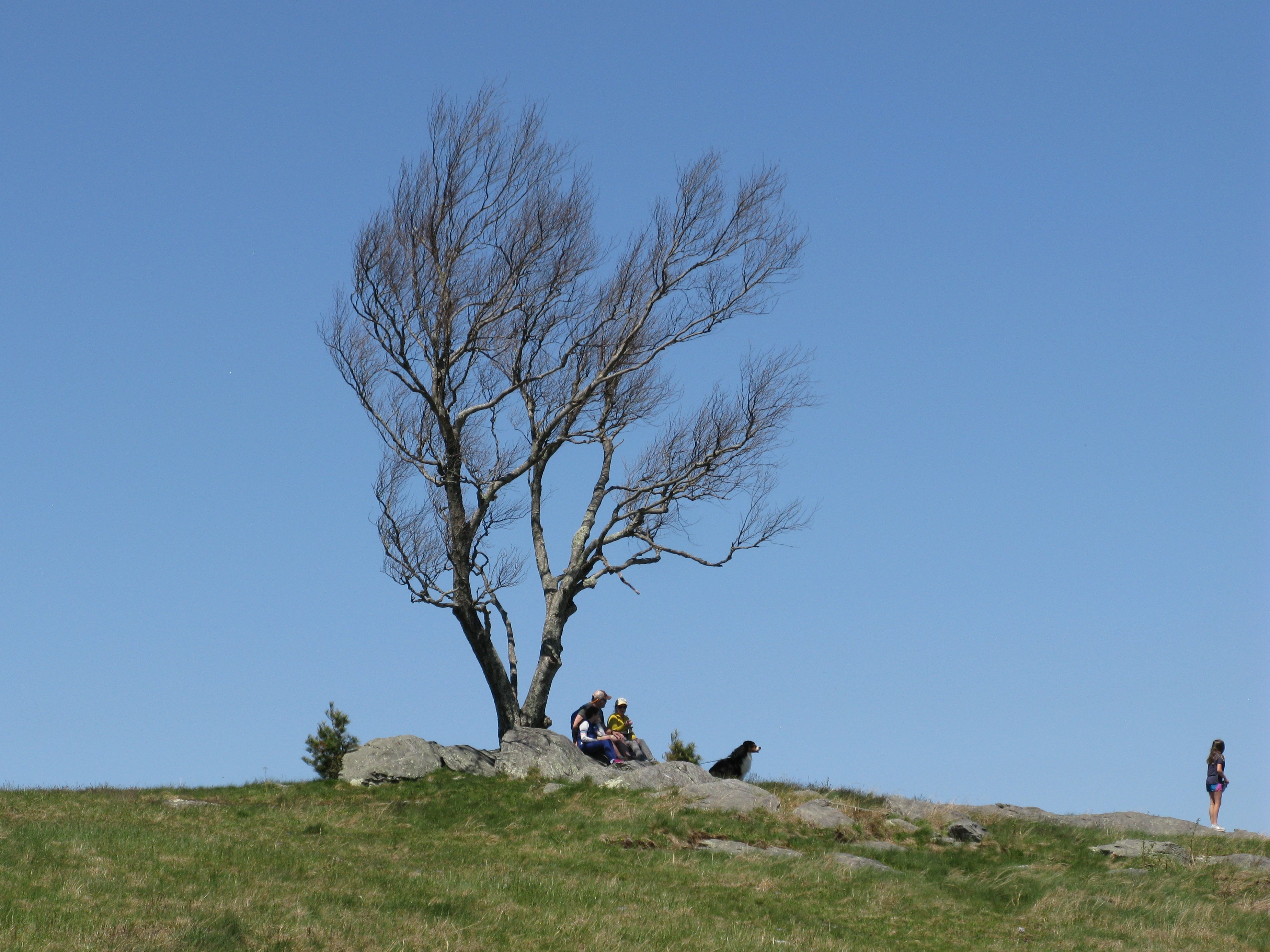
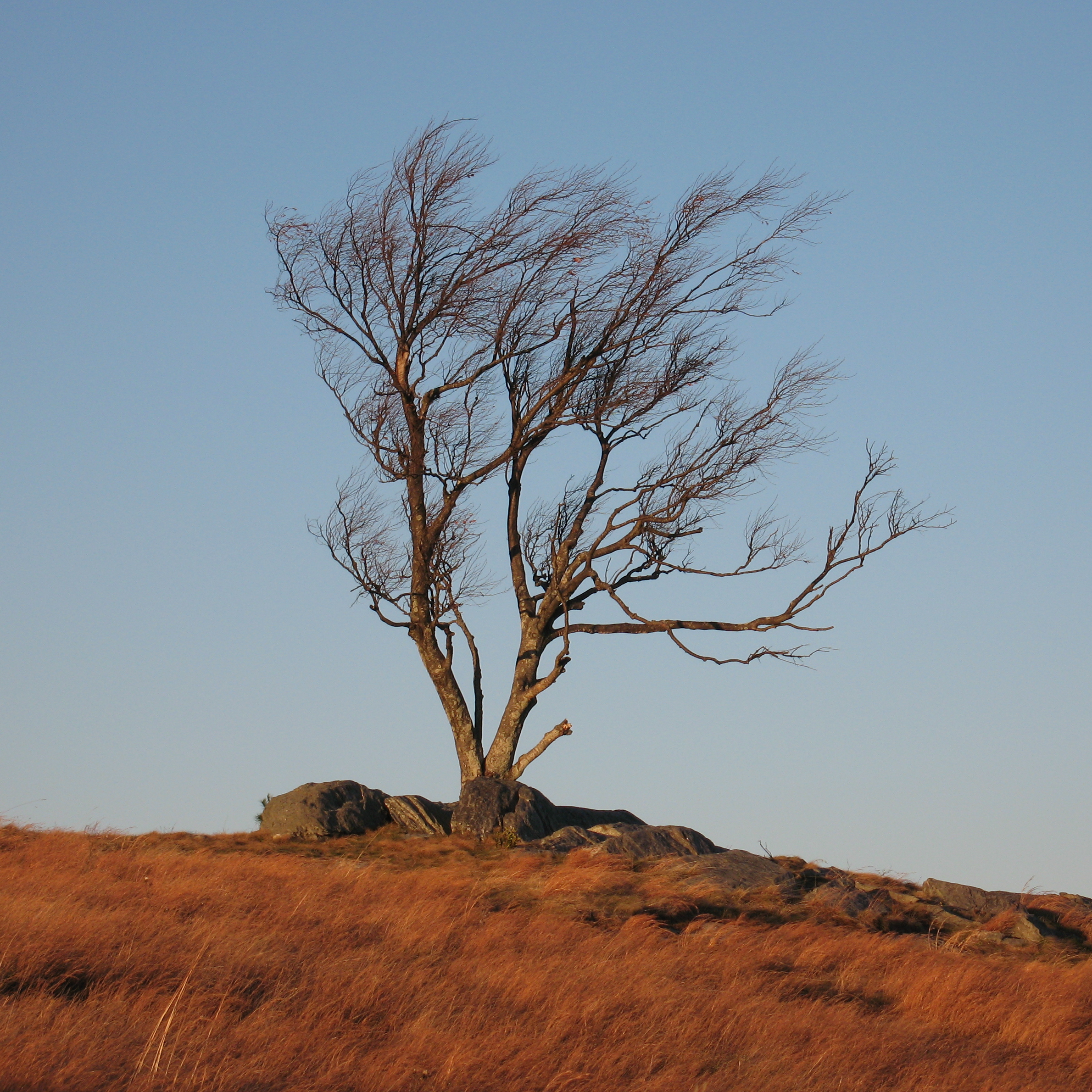
Doughton Park Tree -- 5/1/2021
 . 
 . 
Poems for the Earth: Kenneth Rexroth, Denise Levertov, Robert Frost
 . 
Lute Music
 . 
The earth will be going on a long time
Before it finally freezes;
Men will be on it; they will take names,
Give their deeds reasons.
We will be here only
As chemical constituents –
A small franchise indeed.
Right now we have lives,
Corpuscles, ambitions, caresses,
Like everybody had once –
All the bright neige d’antan people,
“Blithe Helen, white Iope, and the rest,”
All the uneasy remembered dead.
 . 
Here at the year’s end, at the feast
Of birth, let us bring to each other
The gifts brought once west through deserts –
The precious metal of our mingled hair,
The frankincense of enraptured arms and legs,
The myrrh of desperate invincible kisses –
Let us celebrate the daily
Recurrent nativity of love,
The endless epiphany of our fluent selves,
While the earth rolls away under us
Into unknown snows and summers,
Into untraveled spaces of the stars.
 . 
Kenneth Rexroth
 . 
❦ ❦ ❦
 . 
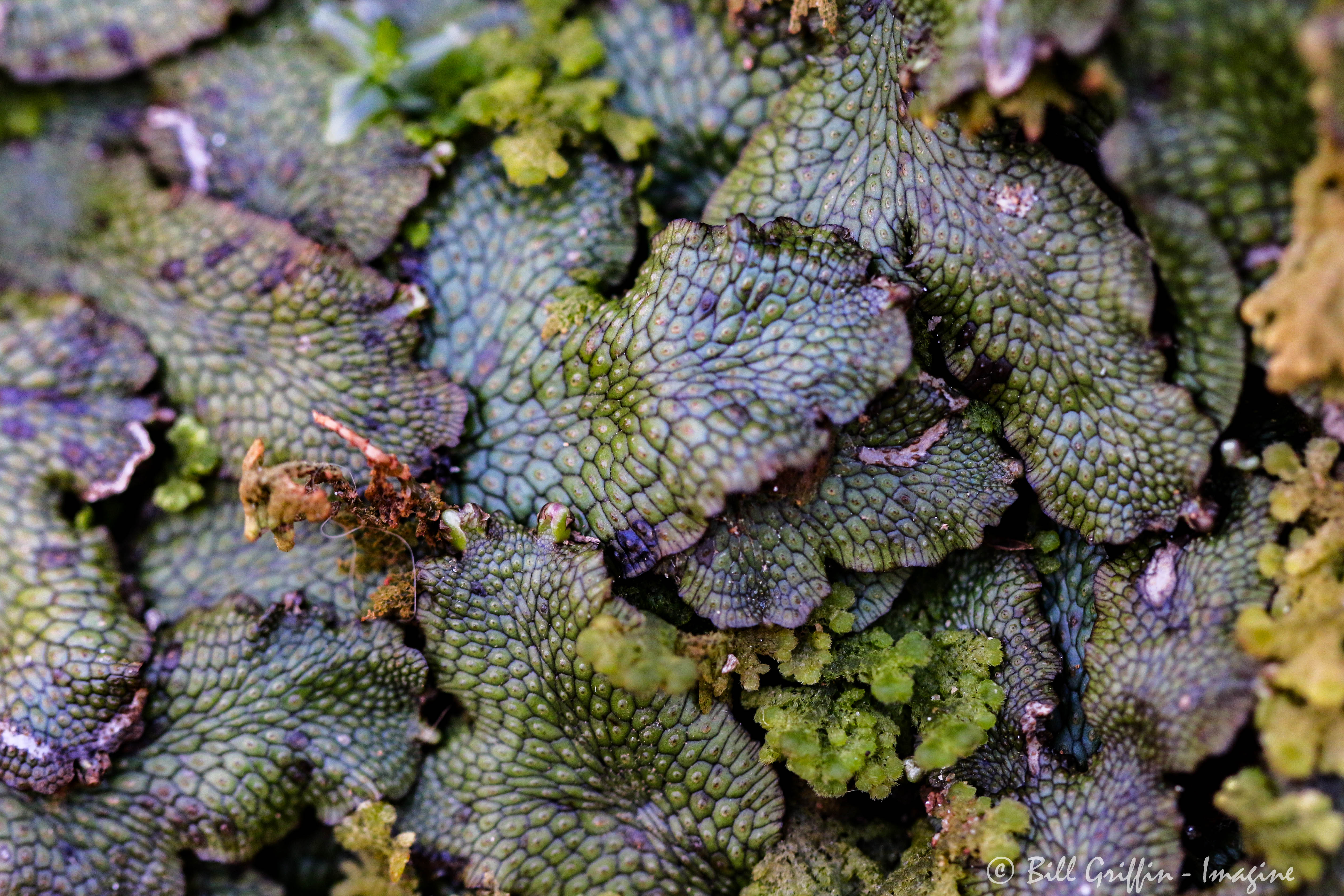
Is it really so strange that the close observation of life, noticing its many particulars and how desperate it is to spread and mingle and weave itself among the web of all other lives no matter how disparate and also individually desperate, strange that the observation and celebration of this planet solely and most fortuitously devoted to conjuring life should also ferment within the observer a noticing and rumination about death? Beside the stream the liverworts unclasp their primitive green. Rockspray nourishes them for a moment then continues its endless work of washing the ashes of earth to the sea. Between right now and when my own ashes will join them is less than a blink for the water, the rock, the bryophytes. Two or three blinks would be more than enough to embrace the span of my entire species on this middle-aged planet. A small franchise indeed.
 . 
In our current society the virtues have lost most of their value to inflation (inflation of ego primarily), and of all virtues humility seems valued least. Another winter is apparently ended but it is hard to shake the chill of despite that has settled and will not permit dispelling. For the few years left of my personal franchise among the living, where is the warmth? Right here, though, is my favorite seat on the back porch. Its cushion retains the signature of my backside. Ten feet away my favorite among all trees remains undiscouraged, staid Beech perhaps a quarter century my elder. Its scars and knots only enhance its beauty. At its crown the long slender leafbuds already unfurl to prepare the deep shade so welcome come May. And that smooth, grey skin – the filamentous liverworts readily accept its unselfish invitation to reside. As a representative of a large-brained apex species, could I humble myself before such an insignificant creature as a liverwort? Could I be half so generous as the Beech? Perhaps it is warm enough after all – life is poised to spread and mingle. Let’s go out front into the sun and plant some seeds.
 . 
 . 
❦ ❦ ❦
 . 
The Past III
 . 
You try to keep the present
 ==== uppermost in your mind, counting its blessings
 ====  ==== (which today are many) because
although you are not without hope for the world, crazy
 ==== as that seems to your gloomier friends and often
 ====  ==== to yourself, yet your own hopes
have shrunk, options are less abundant. Ages ago
 ==== you enjoyed thinking of names
 ====  ==== for a daughter; later you still entertained,
at least as hypothesis, the notion
 ==== of a not impossible love, requited passion;
 ====  ==== or resolved modestly to learn
some craft, various languages.
 ==== And all those sparks of future
 ====  ==== winked out behind you, forgettable. So –
the present. It’s blessings
 ==== many today:
 ====  ==== the fresh, ornate
blossoms of the simplest trees a sudden
 ==== irregular pattern everywhere, audacious white,
 ====  ==== flamingo pink in a haze of early warmth.
But perversely it’s not
 ==== what you crave. You want
 ====  ==== the past. Oh, not your own,
no reliving of anything – no, what you hanker after
 ==== is a compost,
 ====  ==== a forest floor, thick, saturate,
fathoms deep, palimpsestuous, its surface a mosaic
 ==== of infinitely fragile, lacy, tenacious
 ====  ==== skeleton leaves. When you put your ear
to that odorous ground you can catch the unmusical, undefeated
 ==== belling note, as of a wounded stag escaped triumphant,
 ====  ==== of lives long gone.
 . 
Denise Levertov
 . 
 . 
❦ ❦ ❦
 . 
POETRY FOR EARTH DAY 2025
 . 
Our ability to perceive quality in nature begins, as in art, with the pretty. 
It expands through successive stages of the beautiful to values 
as yet uncaptured by language.
Aldo Leopold
 . 
Is it only serendipity that Earth Day and National Poetry Month are celebrated together each year in April? Our need for the Earth, our love for the Earth, are beyond language, yet poetry must continue to yearn to express that love.
 . 
Do you have a favorite poem that enlarges the boundaries of community? That notices the often overlooked? That celebrates all life on earth as one family together? We invite you to share! The deadline is April 10. See full guidelines at this link:
 . 
 . 
 . 
These poems by Kenneth Rexroth, Denise Levertov, and Robert Frost are collected in The Ecopoetry Anthology, edited by Ann Fisher-Wirth and Laura-Gray Street; © Trinity University Press, San Antonio TX, 2020
 . 
 . 
Liverworts are ancient non-vascular plants, some 9,000 different species inhabiting every continent except Antarctica and almost every habitat and niche. They have been grouped with mosses and hornworts in the division Bryophyta, although some taxonomists split them into their own division, Marchantiophyta. One particular species, Frullania eboracensis, the New York Scalewort, is particularly noticeable on smooth barked trees such as beech, maple, and holly.
 . 
 . 
❦ ❦ ❦
 . 
The Most of It
 . 
He thought he kept the universe alone;
For all the voice in answer he could wake
Was but the mocking echo of his own
From some tree-hidden cliff across the lake.
Some morning from the boulder-broken beach
He would cry out on life, that what it wants
Is not its own love back in copy speech,
But counter-love, original response.
And nothing ever came of what he cried
Unless it was the embodiment that crashed
In the cliff’s talus on the other side,
And then in that far-distant water splashed,
But after a time allowed for it to swim,
Instead of proving human when it neared
And someone else additional to him,
As a great buck it powerfully appeared,
Pushing the crumpled water up ahead,
And landed pouring like a waterfall,
And stumbled through the rocks with horny tread,
And forced the underbrush – and that was all.
 . 
Robert Frost
 . 
❦ ❦ ❦
 . 
Doughton Park Tree 2019-02-09
 .