Feeds:
Posts
Comments

Archive for May, 2011

So they say a distinctive of Southern writing is attention to “place?” If not obsession with? What, you mean like Spanish moss dripping from live oaks on the old plantation? Oh come on, the South has so gotten over Tara. The South is the Doobie Brothers at Merle Fest in North Wilkesboro last weekend. The South is Beer Fest in Raleigh last month, a hundred artisanal microbrews. And the South is the Piedmont Land Conservancy preserving the Mitchell River watershed, or the grand opening on May 21 of the restoration of historic Jennette’s Pier in Nags Head, home of the newest NC Aquarium.

You can say that Southern writing celebrates connection to place, but I’d put the emphasis on the first word in the phrase. Connection. And that’s what I get when I read the poems of Richard Allen Taylor. Connection to a moment — as if the lines I’m reading have just popped into his head and I’m party to the tangled warp of consciousness poised to say, “Ah ha!” Connection to people, not only all manner of ex-lovers but also that tall waitress with the dark hair, and then the rest of the just slightly off-center characters he seems to encounter everywhere he goes. OK, OK, and connection to place, too, especially his hometown of Charlotte: the notorious ice storms, stuck in traffic on the beltway, deep into re-write with his writer’s group. And as the reader, I discover after each poem that I feel more and more connected with Richard. Even when he’s writing about the murkiest wanderings of the heart, and certainly with every tart turn of phrase and crisp newly minted image, he just can’t help but be his quirky crack-me-up self. (Hmmm . . . maybe that’s a distinctive of Southern writing, too.)

So there’s a lot more to geography than getting from here to there or droppin’ in to set a spell. The connections within these poems are personal, revealing; they invite me into the poem and into a relationaship with the poet. He and I, lets take us a rollicking road trip together, through the geography of the heart.
IMG_1677.jpg

Geography of the Heart

She was never happy in Charleston, though I loved
the sultry nights there, silken breezes from the harbor

where the Cooper joins the Ashley and dark ships
plod like old mules past Patriot’s Point,

plow into the fog beyond Fort Sumter,
stern lights fading to nothingness.

She grew bored with the moist softness of the South,
mountains low, lowlands tame. She took me

to her desert, a crackling skillet — wildfires,
burnt sagebrush, soot-blackened ponderosa.

On the way to Tahoe she showed me poles by the road
over Mt. Rose, put there to measure the snow

and guide the plows away from the edge. The Sierras,
in a hurry to fall down, tossed boulders like dice

across the brown valleys. She loved living
where desert and mountain can kill. Nevada — her dream,

not mine. She kissed me goodbye in Reno,
completing my degree in geography of the heart.

Richard Allen Taylor, from Punching Through the Egg of Space, Main Street Rag Publishing, 2010

Richard Allen Taylor, sample poems
IMG_1783

Read Full Post »

Big Momso

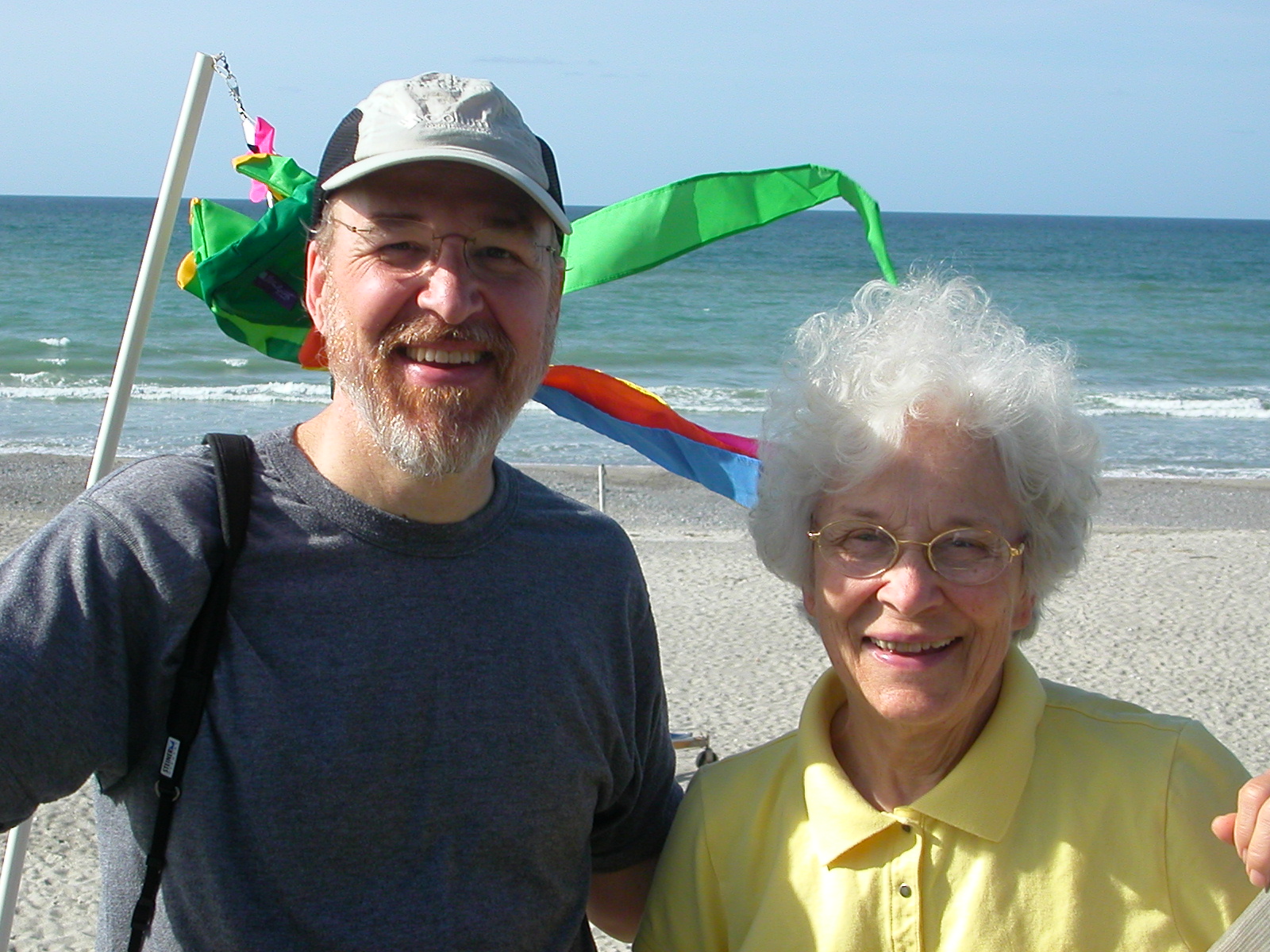
I can’t recall exactly when Mary Ellen bestowed this nickname on our mother, but into her ninth decade she is still Big Momso. And rightly so. Not for her mass or the amount of space she displaces – she’s a sprite who has to hang on tight in a high wind – but because of her big presence in our lives. Do we love words? She’s addicted to the NY Times crossword. Do we like to see who can make the other laugh first? I remember the last time she took me trick-or-treating down the street (I was 45 at the time), wearing an old wig pulled all the way down over her face and eyes painted on her cheek, totally freaking out the neighbors. Are we the least bit creative? Since her art degree from Women’s College (now UNC-Greensboro), she has never laid down the charcoals and oils, still trying out new techniques.

So here’s a few things I might not have thanked you for lately, Momso. Like going back to Kent State for your teacher’s certificate so you could help put me through school. Always being willing to pull out the old cast iron skillet and make your world famous inimitable never-to-be duplicated fried chicken, even if you and Dad are more into tofu and spring greens these days (OK, thanks for the beef wellington, too). And this is a really big one, thanks for always teaching us. From the time we quit putting everything on the ground into our mouths, you’ve inspired us to appreciate the strange creatures on the beach; the flowers of forest and garden; the scenes of Homer and the Wyeths; the joy of open books.

DSCN0216

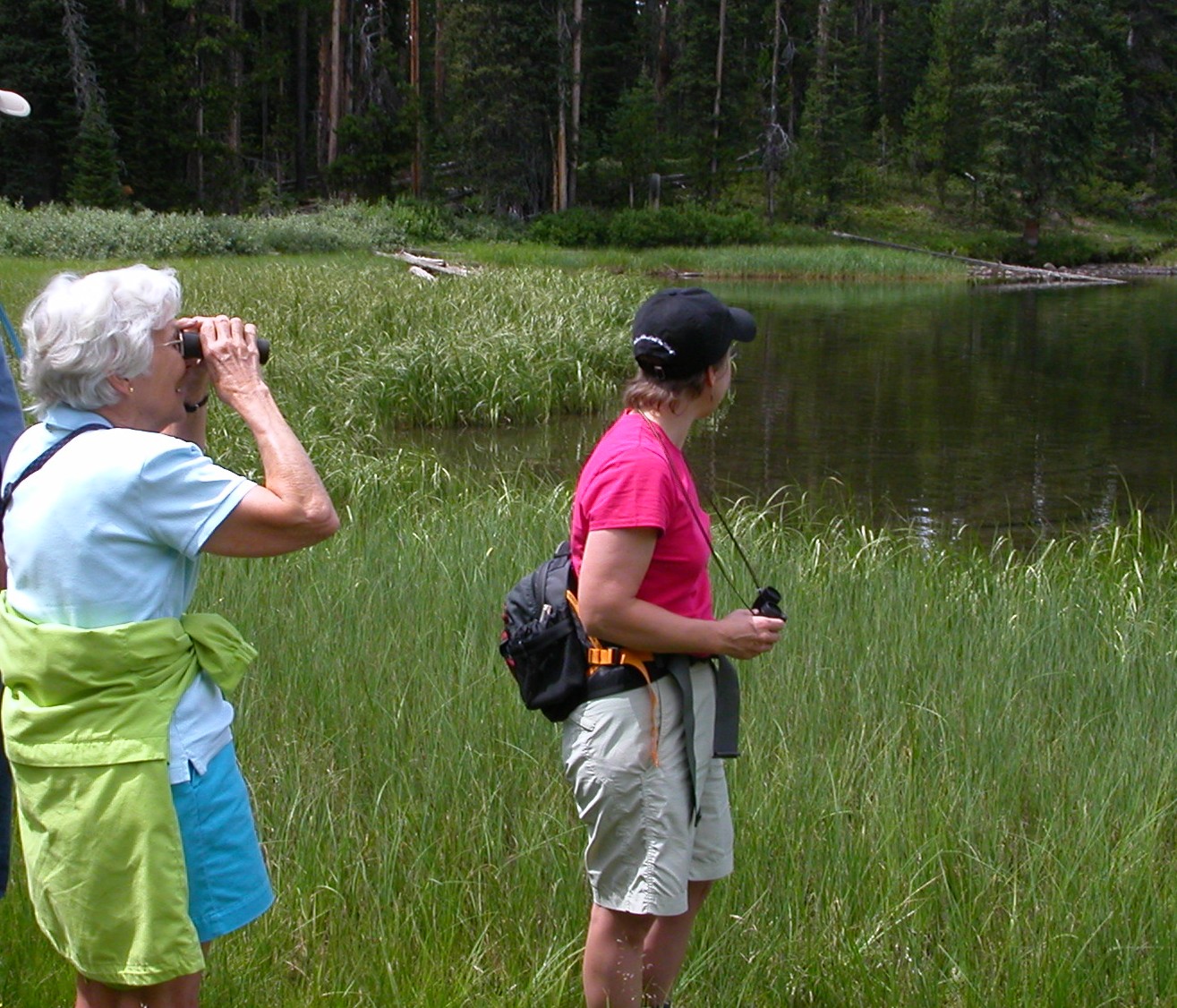
All of which leads me to the biggest one: Thanks for the birds. I don’t remember when you first taught me to call that red bird in the backyard a Cardinal, but I do remember heading off for my sophomore year with a big bag of seed and a windowsill feeder. For years afterwards I was satisfied to know the difference between a titmouse and a chickadee, until that one afternoon in the Shenandoahs over twenty years ago. You and Dad had rented a cabin, our kids were still pre-teen and not averse to a walk in the woods. We’d come to a big blowdown where sun streamed into the forest, and you pointed to a flit of saffron. I lifted my binoculars. And then I wrote down its name. And I’ve been keeping a list ever since.

DSCN4543_crop01

My poem Leave and Come Home won the 2009 Poet Laureate Award of the NC Poetry Society. In four sections, it covers fifty some years of being a son and father to a son. Each section covers a different geography, the sighting of a different warbler, and a new phase in our relationship as a family. This is the first section:

Leave and Come Home

Lewis Mountain, Shenandoah National Park, Virginia

Mom may have said Redbird once in her life
but what she taught us kids was Cardinal,
Chickadee, Titmouse, the feeder gang – learn a creature’s name
and the two of you share a home in creation.
Her wedding gift to us was field guides, binoculars;
we hung our own feeders, shooed away the squirrels,
and they arrived, the usual characters, the recognized.
When our son could reach the sill and look he didn’t say Redbird,
and when we visited Grandmommy she would point into the trees.

This summer a gathering of generations at a mountain cabin,
the cool of altitude, red spruce and chestnut oak speaking
a language I don’t yet comprehend, nor realize I don’t.
Where a giant has fallen new growth points to sky,
and Mom points – a new word for me, an unnamed color.
Chestnut-Sided Warbler opens its throat and explains all,
a preface, a turning page. Josh, age ten now, reaches
for the glasses – Dad, let me look! Yes look, my God yes,
keep looking. But even more keep wanting to.

DSCN1602.jpg

Today’s List
Reynolda Gardens, May 8, 2011

Northern Cardinal
Eastern Bluebird
American Robin
Common Grackle
House Finch
Northern Mockingbird
Gray Catbird
American Goldfinch
European Starling
Eastern Towhee
Carolina Wren
Great Crested Flycatcher
Green Heron
Wood Thrush
Brown Thrasher
Yellow-throated Vireo
Red-Eyed Vireo
Black-Throated Green Warbler
Common Yellowthroat
Hairy Woodpecker
Red-Bellied Woodpecker
Red-Shouldered Hawk


Read Full Post »

« Newer Posts