[with two poems by Kathryn Stripling Byer]
Hepatica: its flowers spring up in March before its new leaves. Quick! Before arching limbs furl their green sails and hijack the wind of sunlight, quickly make your tiny seeds from last year’s photons! New leaves will have all summer and fall to glean what the canopy misses.
When Linda and I discover the first hepatica blooming along Elkin Creek each spring we take heart. The world is not such a grim and wintry place. One morning last April we counted 50 individual plants along a mile of trail. Such bounty! How they thrive! How our hearts do!
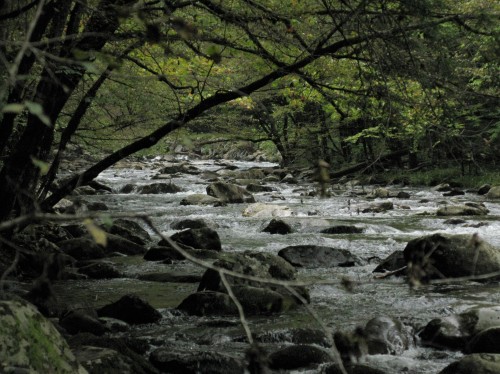
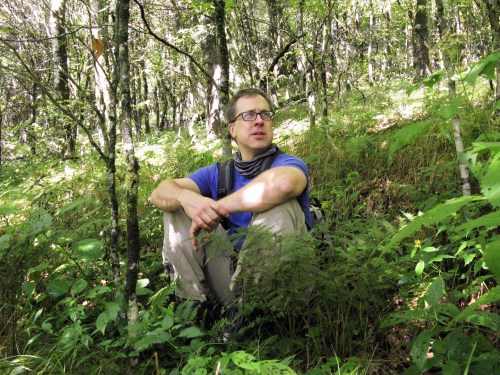
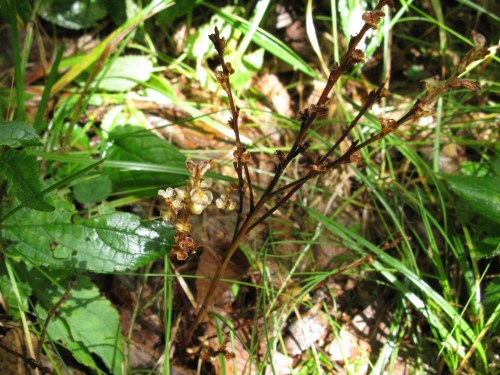
A few weeks ago I walked one mile of nature trail at Chimneys picnic area in Great Smoky Mountains National Park. At the end of September hepatica leaves are glossy, taut, ready to overwinter. As I strolled the cove, deep cathedral of old growth hardwoods, I estimated within 5,280 feet I saw 50,000 individual hepatica plants.
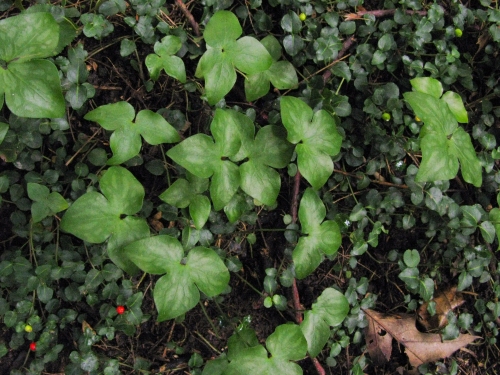
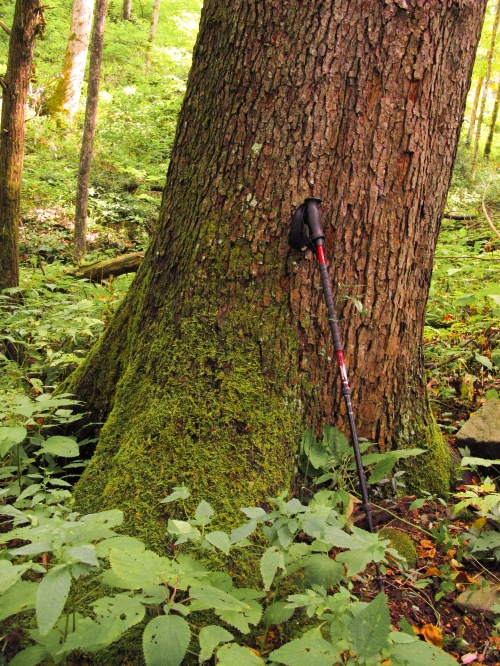
Life wants more of itself. Life wants to fill every niche. How many generations, how many hundred, did it take to create this mountain cove topography? Mossed, leafy, pits and mounds left by an ancient giant fallen. The light gap its falling created. Explosion of variety in the margins. Trunks of all sizes and ages in the understory, massive individuals creating the canopy. I didn’t know a black cherry, a silverbell, ever got this big!
Leave a patch of ground alone long enough and it will grow into what it is meant to be. Mountain flanks and shoulders for protection, rain upon rain, limestone subsoil for minerals – the old growth cove hardwood community shelters biodiversity approaching a tropical rainforest. These few sections in the Smokies that the loggers never reached are still revealing new species. Life wants more.
And to what purpose? What is it good for? I could probably list a few dozen reasons the undisturbed and unmanipulated forest is good for me and good for you. But how about this – the thousands of reasons it is simply good for itself.
. . . . . . .
Kathryn Stripling Byer (1944-2017) was North Carolina Poet Laureate from 2005-2009 and the first woman to hold that position. She and her family lived in the mountains of western NC (she taught and was poet-in-residence at Western Carolina University); her grace and generosity reached throughout the southeast and beyond. She was teacher and mentor but, even more, she encouraged and celebrated the creative spirit wherever and in whomever it was found. Even me. Thinking of her today brings me joy.
I have gone back to Kay’s first book for these two poems. The Girl in the Midst of the Harvest was her debut collection (Texas Tech Press, 1986) and was re-issued by Press 53 (Winston-Salem, NC) in 2013.
. . . . . . .
The Backwoods
Great-grandmother carried the cadence of Genesis.
Girl cousins up late at family reunions,
we made her an Indian, although her forebears
were Irish. Before her lay darkness, the empty fields
barren as desert until she came forward,
the sweat on her high cheekbones gleaming like eyes
we imagined surrounding her, bob-cat and red fox,
the last of the sleek, singing wolves. Every evening
she shouldered her how and walked home
through the tasselling corn. The Good Lord only knows
what bare feet stalked the backwoods in those days,
what waited behind every woodpile! She brought forth
a daughter with black hair that never curled.
Shy as a fieldmouse, that girl fell in love
with a man scything hay in the twilight. They kissed
twice. A moment she stood in her white dress
and smiled back at us, then she grew fat and sighed
in the kitchen. Four daughter she bore,
and the three who survived scarlet fever
wove grass in their brown hair and danced every night
with the fireflies. They galloped on wild horse
bareback until they got married and gave birth
to us, Southern Belles who could sit in a parlor
all evening and never complain. We could faint
in a handsome man’s arms. We could charm a
a stone wall. But we never forgot the back door,
how to disappear into the darkness, our crinolines rustling
like cornstalks between our legs. We told
this story so well, we inherit its black earth
where women hoe all night, inscrutable as Indians.
. . . . . . .
Frost
“Shake the cold from our hands,” you call, running ahead
of me onto the frozen grass. Look, in the garden
your father wrests vines from a tripod of bamboo stakes.
Okra’s grown weary with mourning another year
gone and just yesterday, Darling,
they wore yellow buds in their hair. Like you
twisting a puny chrysanthemum into your tangles
and galloping off on a broomstick. Down Caney Fork
scarecrows come hobbling like old soldiers
leaving their cornfields. They’ll sit by the river
and talk about what the crows told them: a hard winter
coming. Those windy crows, all they keep saying
is cold, cold, and when I see clouds swept
like ice down the creek, I believe them
too easily. Why must the maple leaves rattle
Remember me, as if someday
I’ll forget there were thousands came
falling the morning I felt for the first time you
shiver inside me, no fish as I thought you would be
but a mouse in its burrow? Now you sit in sand
and make birthday cakes, blowing out candles
that aren’t there. I blow on my hands
like an old woman taking no heed of a child
who believes time can be shaken from her like water.
poems by Kathryn Stripling Byer
from The Girl in the Midst of the Harvest, Press 53, © 2013 Kathryn Stripling Byer
first published by Texas Tech Press, January 15, 1986
. . . . . . .
Mountain Cove plant communities occur in sheltered areas with abundant rainfall in mid- to lower-elevation areas of the Southern Appalachians. Especially the Rich Cove Forest subset, with less acidic and more rich mineral soils, is home to a huge diversity of tree species, flowering plants and ferns, insects, reptiles and amphibians. Original (old growth) forests will have massive individual trees hundreds of years old mixed with trees of all ages where a giant has fallen and allowed sunlight to reach the forest floor. There are a number of these areas where loggers never reached in GSMNP, such as Chimneys and near Cades Cove.
. . . . . . .
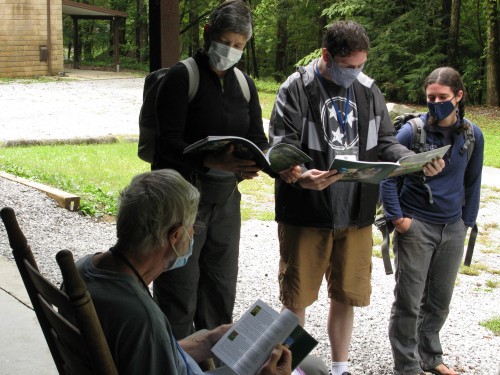
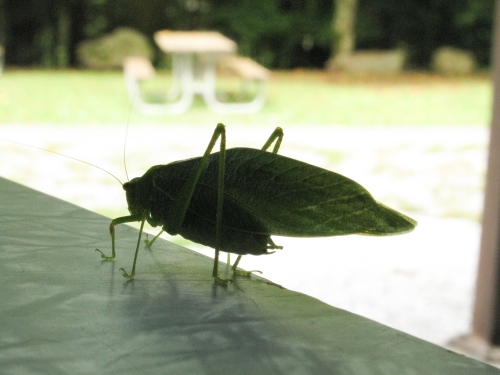
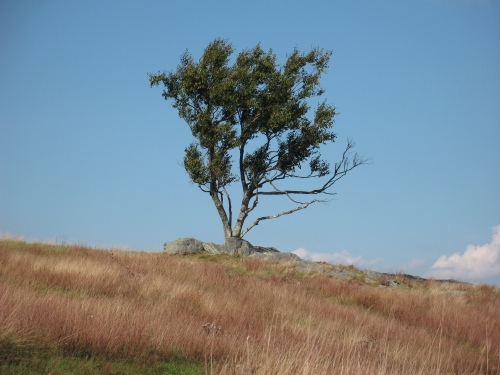
All photos by Bill Griffin from Southern Appalachian Naturalist Certification Program; Southern Appalachian Ecology, September 2020, Great Smokies Institute at Tremont; instructors Jeremy Lloyd and Elizabeth Davis.
. . . . . . .





[…] https://griffinpoetry.com/2021/04/21/earth-day-eve/ https://griffinpoetry.com/2021/01/08/we-do-favor/ . . . ❀ ❀ ❀ ❀ ❀ . Thank you for visiting…