Feeds:
Posts
Comments

Posts Tagged ‘poetry’

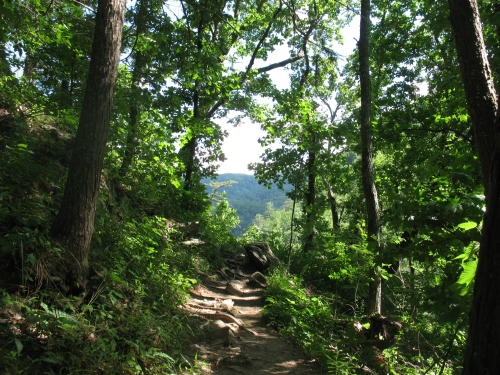
Halfway down the steep ridge behind our house I am carving out a level spot where I will plant a bench.  On cool mornings I’ll lean forward and peer between the beech and hickory, Dutchman Creek ripples below, a pileated raps and quarrels above.  On warm evenings lengthening into dusk I will lean back, tentative step of unseen deer behind, mosquito countertenor in my ears. Join me as we entertain small thoughts.

IMG_4918

.     .     .     .     .

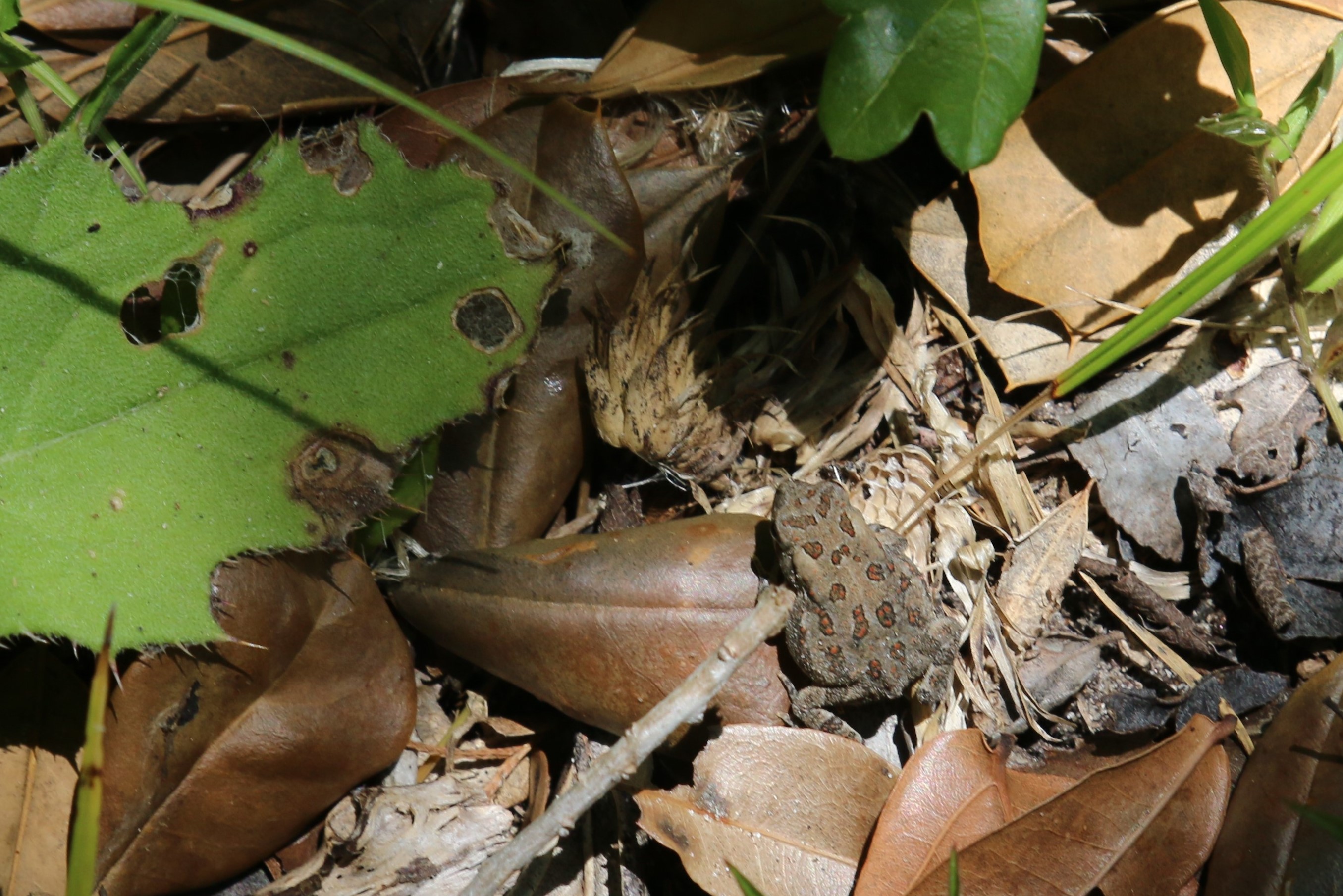
Weekend before last I laid down the mattock and dug with my hands.  Scooping up dirt to mold a shallow campfire pit, I lifted something soft.  An underground fungus, the sort that pigs sniff out?  Rare petrified bear scat from a wilder epoch?  What?

I opened my hands – a toad, inert in its hibernation.  It cracked one eye the smallest slit and looked up at me.  “Just five more minutes?”  I found a safer spot between the beech tree roots and tucked him in with moss.

.     .     .     .     .

IMG_4925

Adam & Eve Orchid

Jalalu’ddin Rumi
(translated by R.A.Nicholson)

If there be any lover in the world, O Moslems, ‘tis I.
If there be any believer, infidel, or Christian hermit, ‘tis I.
The wine-dregs, the cupbearer, the minstrel, the harp and the music,
The beloved, the candle, the drink and the joy of the drunken – ‘tis I.
The two-and-seventy creeds and sects in the world
Do not really exist: I swear by God that every creed and sect – ‘tis I.
Earth and air and water and fire – knowest thou what they are?
Earth and air and water and fire, nay, body and soul too – ‘tis I.
Truth and falsehood, good and evil, ease and difficulty from first to last,
Knowledge and learning and ascetism and piety and faith – ‘tis I.
The fire of Hell, be assured, with its flaming limbos,
Yes, and Paradise and Eden and houris – ‘tis I.
This earth and heaven with all that they hold,
Angels, peris, genies, and mankind – ‘tis I.

.     .     .     .     .

Doughton Park Tree #2

Read Full Post »

My grandson’s favorite Christmas song this year is Holly Jolly Christmas by Burl Ives.  This is really not so astonishing – the first record we ever played for him was a collection of folk songs by Burl Ives.  By the time Saul was two he was requesting him by name: “Play Bur Lives.”

What did astonish me today, though, was realizing that Saul knows all the words to the song.  I was impersonating a fly on the wall with a magazine while he built a little Lego house and had all his Lego men come visit.  The entire time he was working, he sang.  Say Hello to folks you know / and everyone you meet.  Or sometimes just recited.  Hey Ho, the mistletoe, hung where you can see.  With an entire village of different voices, tempos, timbres.  Somebody waits for you / Kiss her once for me!  Sometimes tuneful little boy soprano, sometimes gruff, briefly importuning, and when he noticed me listening quite loud and raucous.  All the Holly Jolly variations.

.     .     .     .     .

A four-year old is a highly evolved little primate.  He knows just how far he can boss Pappy around before he’s crossed the line.  He can ask for ice cream a half hour before supper and convince Pappy the request is not at all unreasonable.  He operates on the rock solid premise that simply wanting a thing fully entitles the person to get it.  Or, and this is much more likely, he knows all the rules full well but also knows from experience that with the one-hundred-and-first request the rule might shatter.

But what happens if I sometimes call the little anthropoid’s bluff and just laugh?  He laughs too, and we go on to the next game.

IMG_3474

.     .     .     .     .

I bought Sarah Lindsay’s book Primate Behavior at a reading she gave in Southern Pines this year.  Reading it is like an archeological dig: each poem must be read carefully, brushed with fine bristles, held up to the sky.  No bulldozers, please.  I’m still working my way, layer by layer.  I’m discovering that there is unrevealed depth and complexity to us hominids.  I wonder, how did Lindsay get hold of my family tree?

.     .     .     .     .

Primate Behavior

What was she looking for, the woman two days from
the end of a wasting death
who told her nursing daughter, “Shave my legs”?
Or the hospital-ridden one
who, coming out of ether, could only keep saying she couldn’t
be comfortable
without her panties on.

If one of us slips on ice, he or she
checks first for an audience, second for broken bones.
We are the apes
with mirrors inside our heads.  We pick our noses,
we fart and enjoy it,
but this is rarely mentioned.  We make fun of outdated clothes.
We listen to music.

In a thick place of mountain bamboo the
gorilla mother
croons and cradles her young one in her arm.
With her other large hand
she catches her own dung and eats it.
A hum of insects and green wet rot.
The father beside her sleeps.  Is it eight-thirty Monday?
His lower lip hangs on his chest.
Alone at her golden oak table
the young lady licks her finger, dots at the grains
of spilled sugar,
and licks it again.

Close to the Pole, where daytime stretches
like taffy
and icebergs move in vast and moaning herd, a furry man
scrawls a few notes in Norwegian.  He cannot carry a tune,
but he can make stew.  He has thought of little else but stew
and warming his feet for weeks.  Realizing
how dirty his face is, he tells himself:
I am here for no personal good, but to help make maps.
I am civilized.  See the word Forward is drawn on my heart.
And he throws some dried fish to the dogs.

from Primate Behavior, Sarah Lindsay, Grove Press, © 1997 by Sarah Lindsay

Sarah Lindsay received her M.F.A. in creative writing from the University of North Carolina at Greensboro and currently lives in Greensboro.  Primate Behavior was a National Book Award finalist.  Lindsay’s latest book of poetry, Twigs and Knucklebones (Copper Canyon Press, 2008), was selected as a “Favorite Book of 2008” by Christian Wiman, editor of Poetry magazine.

.     .     .     .     .

IMG_1609

Read Full Post »

He began life as Blue Mouse, and how apt: pointy nose, bristly whiskers, cupped ears, and of course he’s the color of September sky.  Nowadays, though, when I walk in the kitchen door and Saul careens from across the room, he grabs my hand and says, “Get Blue Rat!  Get Blue Rat!”  Just how has the little creature transformed? Perhaps it’s the prehensile tail (it has wire in it so it can curl and grab things, like little boys’ ears), or the big googly Muppet eyes.  Could be because Blue is three times the size of the life-like field mouse finger puppet that drives the school bus and doesn’t talk much.  Most likely, however, it’s because of Blue Rat’s voice: gravelly, colloquial, with a distinct Bronx accent.

Voice?  Voice, you say?  How did a little stuffed plush critter come by a voice?  Well, from his conception Blue Rat has been designated as my ward.  When it’s play time (and it’s always play time) and we pull out the fuzzy animals, plastic figures, Lego men, Saul commands, “You talk Blue, and I’ll talk all of these.”

Because they all have voices.  Mappy the Hamster doesn’t have a mouth – he sort of mumbles.  Pinky Pie (purple kitty with pink nose) is high pitched and squeaky.  Lego pirates and space men are appropriately gruff and swashbuckling.  Saul “talks” all of those.  I get to talk Blue Rat.  He just looks like the kind of guy who’d be most comfortable chomping a Coney Island while he ogles the girl rats on the boardwalk.  So every afternoon when Saul whips him up a sandwich (plastic pancake, tomato, fried egg), he gustos it down and says, “‘Ey, Baby, dat’s deelishus.”

IMG_4356

.     .     .     .     .

Voice.  (Prepare for a big leap here.)  Voice.  When you read, don’t the characters speak in your mind?  Pitch, accent, cadence.  When you write, don’t you imagine and invent a persona for each creature?  Their voice?  How they say is as important as what they say.

One of my favorite little books is The Bat-Poet by Randall Jarrell.  The whole week I was at the Zoo last summer I carried copies and gave a couple away.  The Bat Poet discovers the voice of Owl, Chipmunk, Mockingbird, and they are all true.  In the end he discovers his own voice, and we discover how odd and wonderful it is to live in the bat-world.

Here are a few stanzas: I hope you’ll borrow or buy the book yourself.  Is there any end to the voices we may speak?

.     .     .     .     .

from The Bat-Poet, Randall Jarrell, pictures by Maurice Sendak, copyright 1964 by The Macmillan company, copyright renewed 1992 by Mary Jarrell

Owl
. . .
The mouse beside the stone are still as death –
The owl’s air washes them like water.
The owl goes back and forth inside the night,
And the night holds its breath

Chipmunk
. . .
Curled at his breast, he sits there while the sun
Stripes the red west
With its last light: the chipmunk
Dives to his rest.

Mockingbird
. . .
A thrush is singing, then a thrasher, then a jay –
Then, all at once, a cat begins meowing.
A mockingbird can sound like anything.
He imitates the world he drove away
So well that for a minute, in the moonlight,
Which one’s the mockingbird?  which one’s the world?

Bat
. . .
The mother drinks the water of the pond
she skims across.  Her baby hangs on tight.
Her baby drinks the milk she makes him
in moonlight or starlight, in mid-air.
Their single shadow, printed on the moon
Or fluttering across the stars,
Whirls on all night . . .

IMG_3692

.     .     .     .     .

New York Times book review of The Bat-Poet from 1964.

.     .     .     .     .

IMG_7491

Read Full Post »

« Newer Posts - Older Posts »