
.
[with 3 poems by Jack Kristofco]
.
The Walkways at the Marsh
.
counterfeit geometry,
as if our straight lines matter,
railing, spindles, planks,
pressure-treated pathways
over bluegill, newt,
below the heron’s pterodactyl flap to
shifting clouds,
across an azure sky;
.
sun pays close attention to the boards,
like children lined at school,
the impudence of rooflines
in their misbegotten hope
of order out of chaos,
believing in a dreaming land of precept
in a teeming world
that seethes alive, primeval,
crawling in its mess
beneath our feet
.
Jack Kristofco
from After the Harvest, The Orchard Street Press, Gates Mills OH; © 2025
.
❦ ❦ ❦
.
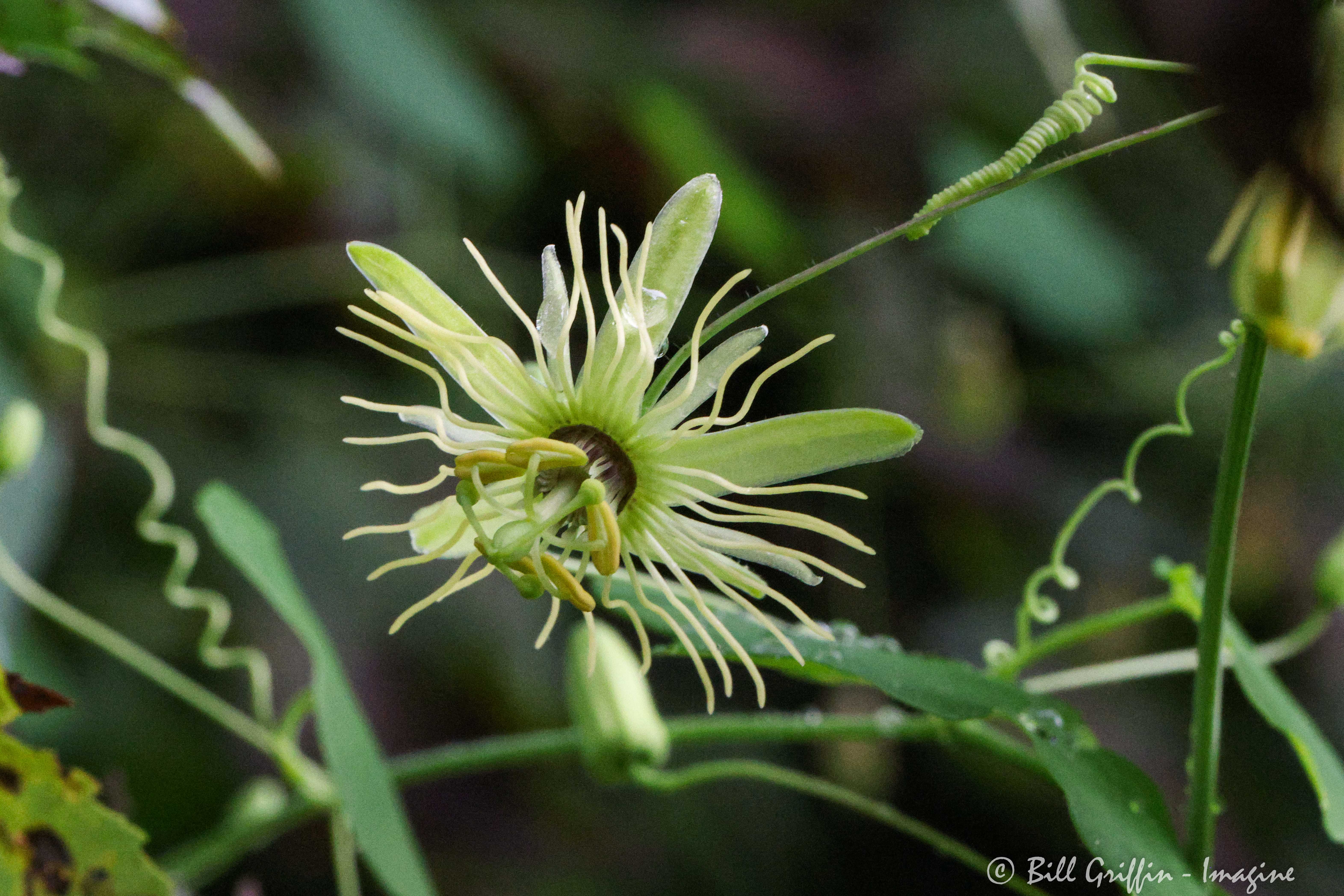
When I wasn’t looking it crept up out of the jungle (below my driveway). Never seen before, unnamed, it has climbed into the reluctant arms of the hemlock and draped itself like a boa for the cotillion. What the ? What stealthy hand sowed these seeds? From what alien universe has it landed here? But when I look closer at the pale frill and awkward angles around each blossom, I realize I know its sister well.
.
After the tornado introduced light to our wooded lot, I gathered seeds from autumn pastures and broadcast them on the new bare clay. My friend Joe brought me labeled paper bags from his own Mitchell River meadows. Boneset, ironweed, asters, goldenrod, wild senna – I thought I knew what would sprout to fill my little parcel, but seeds have their own agenda. Two years after the bulldozer finished clearing away downed trunks, I am discovering the unexpected. I (try to) ignore the invasive Japanese stiltgrass, and I’m not at all surprised by Fireweed which rises everywhere at the least sunny opportunity, but how did this spleenwort get here? Which Symphiotrichum aster is this? I don’t recall pulling seeds from boneset six feet tall. And these giant leaves now lifting above my head can only be from the pumpkin I tossed down here after Halloween three years ago.
.
Soil seed bank / bud bank – some annuals and perennials will survive, buried in earth, longer than human generations. Can that be possible? Still viable five years from now? Piece of cake. Charles Darwin was the first to systematically consider the soil seed bank in 1859 when he noticed sproutings from muck dug out of the bottom of a lake. University Ag departments publish studies of weed seed persistence; Lambsquarters will still germinate after 40 years and possibly 1600 years. And some seeds are just waiting for a good scorching to spring forth.
.
So what about this delicate vine I have never seen in 40 years of living here? Has it been waiting for this unusually wet summer? Or did a blue jay drop its seeds here last fall? Gently lobed leaves, truly unworldly blossom with narrow angled corolla and robot-finger pistil and stamens, it has to be a smaller, paler relative of gaudy Maypops – Passionflower. I will loop its tendrils away from the hemlock and into the sunlight maple and simply say, “Welcome to the Jungle.”
.
.
❦ ❦ ❦
.
Creed
.
we watch the comet rifle by,
light our milky pebble in a sky
so vast we only hold it with
some primal clutch of faith:
fidelity of those who know that god has died
or never was
because they’ve never seen the corpse,
aren’t impressed with winding sheets and veils,
though they seek the certitude
embraced by hearts they don’t respect,
+++ bowed heads and cathedrals
+++ where with confidence they pray for resurrection
+++ from this maze;
.
even the agnostics all believe,
+++ if only in their unbelief,
the truth of their uncertainty,
lighthouse on the journey
through the saints and sinners sea,
faithful travelers all,
milky-eyed sojourners
every one
.
Jack Kristofco
from After the Harvest, The Orchard Street Press, Gates Mills OH; © 2025
.
❦ ❦ ❦
.
After the harvest the trucks rumble heavy to the silos and disgorge their corn to be elevated, a plenty, certitude for the seasons. The man stands in the middle of the bare field. Perhaps he imagines the tall stalks still reaching above his head, elbow to elbow, their humid breath and the creak of their joints. Perhaps he notices lesser things that have thrived in the corn’s shade, a twisted morning glory, a puffball, moss. The field has opened – he can see to the treeline and hear the buntings singing their territories, he can feel hot September on his back. All the giving in and the taking away, the uncertainty of sowing and bearing fruit, the golden wealth has been removed and is distant. The man feels his feet on earth; here some wealth remains.
.
Jack Kristofco’s new collection, After the Harvest, cultivates contradiction and ambiguity. Life, as he demonstrates, is convoluted. He discovers even in the innocent paths of his childhood the latent struggles to come – a quiet ride with his father reminds him that some day he will take the wheel. The world of school kids playing baseball and dreaming of the girl across the street held us but a moment / then rose up all at once / and threw us to the fancy of the wind. We might strive to impose some order on existence, strive all our lives in fact for straight walkways and neat flower beds, but in a moment the stooping hawk of uncertainty will slice it all to bits.
.
Maybe I should embrace uncertainty. Maybe there are times when not being able to decide is exactly the right decision. Maybe it’s worth reflecting from time to time that there might be other right paths besides the one I seek so desperately to dig and smooth for myself. Jack describes meditating on his reflection in a pond – when he finally stands he sees himself both rise and sink. Our daily reality can never be quantized, regimented, predictable, no matter how we might desire it. Uncertainty itself is the lighthouse on our journey, and we are milky-eyed sojourners every one.
.
❦
.
Jack Kristofco is founder of The Orchard Street Press in Ohio and editor of its annual poetry journal, Quiet Diamonds. Explore back issues as well as the Press’s many published poetry collections HERE.
.
Check out a list of plants whose seeds can persist in the soil seed bank for ten, twenty, thirty years and even longer HERE.
.

.
❦ ❦ ❦
.
The Hawk and the Man Watch the Yard
.
he looks across the slices
of a setting sun
splintering through trees
at peace with all his trim and sweeping,
lines of roses,
green of bright hydrangea leaves,
newly painted house for birds,
spray to keep the deer away
.
while on a silver maple in the neighbor’s yard,
its nest behind a school
where children study science and the paradigms
that lead to roses in a flower bed,
a red-tail pivots its sleek head,
jet-black eyes
to scan the sea of green and brown,
the arrogance of rooflines and concrete,
seeking any movement, any twitch,
a shadow, a fateful turn to light,
.
and then it falls
with such a sudden strike
it startles every leaf and branch,
the blossoms and the man
.
slicing their contentment
like a knife
.
Jack Kristofco
from After the Harvest, The Orchard Street Press, Gates Mills OH; © 2025
.
❦ ❦ ❦
.

.
.

 V E R S E and I M A G E
[…] About/Submit […]