Feeds:
Posts
Comments

Posts Tagged ‘imagery’

“. . . I think / of the artist’s needle, how it broke the skin.”
 
A short story may wander, but it knows there’s a way through these woods and dammit it’s going to find it, even if it’s nothing but a deer path and briars.

A poem is a story on open water with a busted keel. It may try to tack, but when the wind blows it skitters sideways. It has to go where it has to go.

John Hoppenthaler read his poem Buffeted at Walking into April last Saturday. Within its lines how many stories swirl and beat against each other like storm surf?  Hints of a rocky past; the lovers with their secrets. And in dead center a Gordian knot of a line that’s worth repeating slowly out loud: how much like the book / you said you could read me like this is of me:

Damaged everything and matching dragonfly tattoos – will they take flight, or will they only remind us of blood? Even the atmosphere – faux Tiki bar, clams and tequila – is a character in this story. And the title. Did one word ever have more meanings?

IMG_0113

BUFFETED

Stoned in the canned jangle of steel
drum tunes in the faux Tiki bar, I sit below
dusty plastic frond and nurse my drink. A few stools
down, too precious for words, a tongue-studded, nose-ringed
lesbian couple, heads bowed close, whisper secrets and softly laugh.
I want their love to last.

I order a plate of clams oreganato
with crusty French bread on the side for dipping
into the buttery broth that strongly hints at salty brine.
Ted slides another frozen margarita down the lacquered
surface of the bar top while come raw, tequilaed-up synapse fires,
and I remember the Paul Simon

song that mentions two fragile ex-lovers
speculating over who’s been damaged the most.
Guess what?: I think of you: how much like the book
you said you could read me like this is of me: to flounder
still in our marred way of being together in the world. I love the dead
dumb clack of emptied shells

as I assemble them into a stylized pile, as if
building an already weathered monument to sailors
the night sea took away and never gave back. Damaged
dreamboat. Damaged land. Damaged ocean. Damaged man.
Damaged woman. Damaged tide. Damaged moon. Damaged pride.
Damaged angel. Damaged wing.

Damaged Jesus. Damaged everything. I don’t think
it will last, though the adorable lovers have not gathered
tightly in each other’s arms and seem, in this heartbeat, defiantly
inextricable, their matching dragonfly tattoos now visible, poised as if
for trans-Atlantic flight on each girls right shoulder blade. I think
of the artist’s needle, how it broke the skin.

(c) John Hoppenthaler, from Anticipate the Coming Reservoir, Carnegie Mellon University Press, 2008; reprinted by permission of the author.

IMG_6944

Walking into April, Barton College
http://www2.barton.edu/news/collegenews/?p=1405

John Hoppenthaler profile
http://www.ecu.edu/cs-cas/engl/profiles/hoppenthaler.cfm

Four poems by John Hoppenthaler
http://www.authormark.com/article_716.shtml

Read Full Post »

Learn O Voyager to Walk

 From 1999 to 2000 my wife Linda devoted every joule of her creative energies to a project she titled Cosmologia. She selected thirty sayings about human perception and the nature of the universe, from Aristotle to the Bible and Einstein to Archibald MacLeish. She then illustrated each passage with drawings magical and transcendent – today, paging again through the entire collection, I feel me feet threading sporangia into the earth and the tendrils of my brain entangling the stars. I take again my first step into the cosmos.

And aren’t we all wanderers in a vastness at once inexplicable and primal? Are we ever really at home? Can we ever really be apart? One of the passages Linda selected has shaken me with new awareness every time I’ve read it, and I’ve read it a thousand times: the first stanza of Seafarer by MacLeish.

And learn O voyager to walk
The roll of earth, the pitch and fall
That swings across these trees those stars:
That swings the sunlight up the wall.

Most days I sit at my desk or walk to my car and take for granted that everything will remain perfectly solid beneath my feet. But once in a while a tremor of poetry enters in. Suddenly the earth is revolving and the galaxy wheels; I see for a moment the shadows racing up the wall, the moon arcing through the night branches. It is all movement. It is all embrace. Welcome.


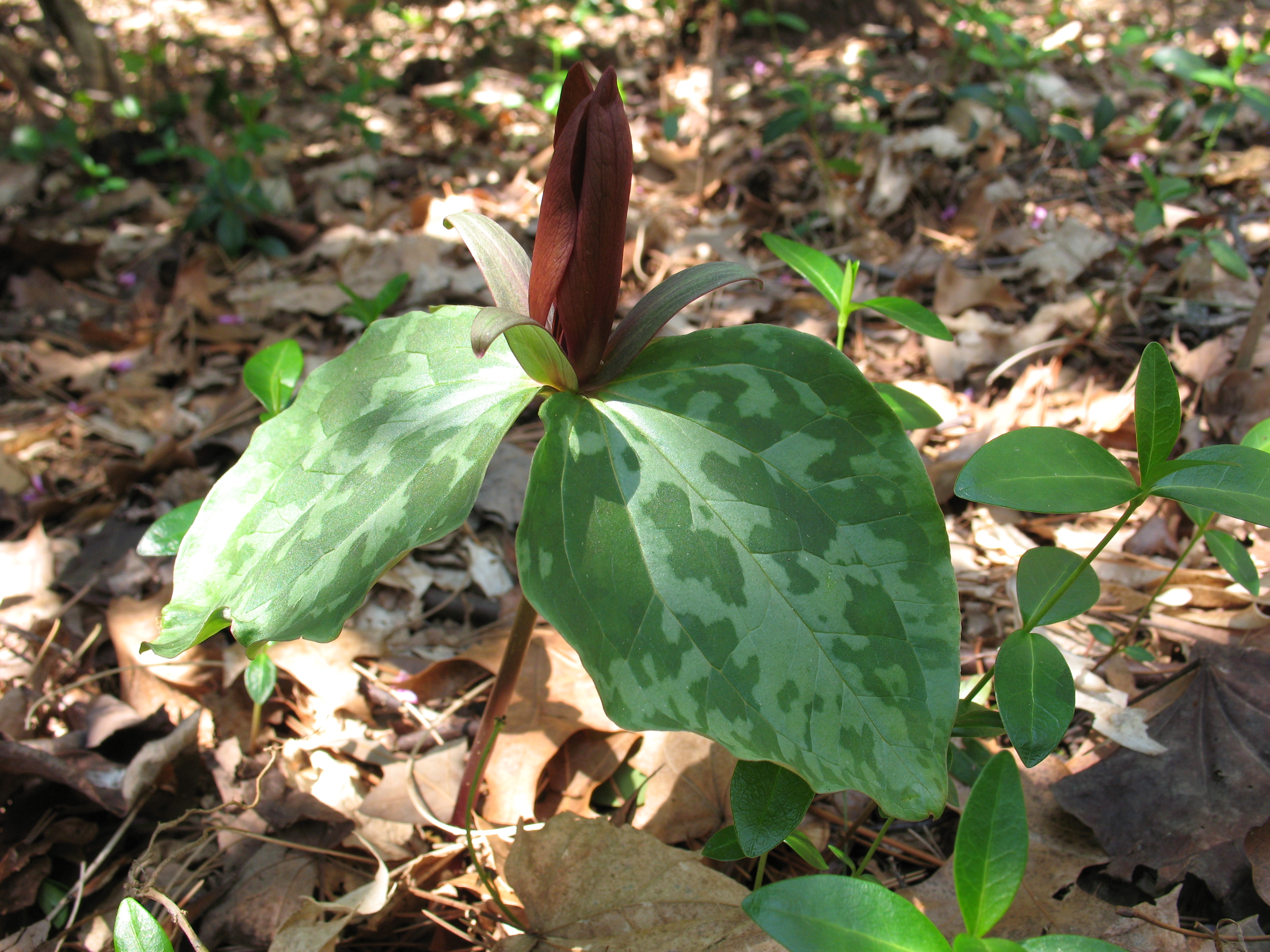
Wake Robin, Reynolda gardens 2011


Seafarer
 
And learn O voyager to walk
The roll of earth, the pitch and fall
That swings across these trees those stars:
That swings the sunlight up the wall.

And learn upon these narrow beds
To sleep in spite of sea, in spite
Of sound the rushing planet makes:
And learn to sleep against this ground.

Archibald MacLeish, Copyright © 2003 The World War II Lecture Institute. All rights reserved.


Read Full Post »

Picture a slender somewhat grave man approaching the lectern. Matter-of-fact. Even slightly reticent. With only the briefest introduction he begins to read, and now you’re suddenly jolted by verse that is tart as some strong organic acid. Or wickedly funny. Or so tender, so full of love, you want to beg this person to be your friend, too.

And sometimes all three of those in the same poem!

I have admired Dave Manning’s poetry for a decade, but the images that seethe up through his lines have been simmering from California in the ‘60’s all the way to Cary, NC yesterday. Sarcasm that is never cruel. Sweetness never treacle. And always lurking a page or two away that divine wickedness.

Two of my favorite are collected in his book-length The Flower Sermon. In almost every poem a mystery hovers at the edges. The lines between waking and dreams, between chemistry&physics and the spirit realm, between existence and the everafter, all these lines are blurred and merging.  From the poem Mysteries:

How can light so absolute be gone –
no lesson to learn, no explanation?
Only a wall where a door
once opened. A mystery

like death
or where fire goes
when it goes out.

A poem like a Zen koan, more question than answer. The act of discovery comes after I’ve finished the last line; its silence reverberates, its hushed clamor.

And the last two stanzas of Mallards in Winter, which cries to be read when spring is still a thing hoped for but mostly unseen:

Their peace is so profound I cannot
disturb them. Their house is icebound,
but its attic is the sky. In the tearing storm

I invite them to take refuge in my dreams.
At the canvas edge, where the seasons
change, they escape into springtime.

So many of Dave’s poems intimate that where there seems to be no escape – from ice, from winter, from death – the mystery of hope abides.

Crested Dwarf Iris

Here are the complete poems:

Mysteries
you are the music
While the music lasts.  —  T.S.Eliot

I light candles to the way
you eyes would find me
from the far choir loft
and you would smile,

to the day
we brought the smell
of Liquidamber leaves indoors
with us, the first two stair steps
wet with the May rain; on a wall
a painting I had never seen —
geese rising from a marsh at dawn —
street sounds with tones,
the green-bue of late afternoon.

How can light so absolute be gone –
no lesson to learn, no explanation?
Only a wall where a door
once opened. A mystery

like death
or where fire goes
when it goes out.


Mallards in Winter

With the leaves down, I see them
paddle the creek-length, green heads
against the lighted flow.

They drift downstream in silence,
as if in a painting on a silk screen,
toward Lake of the Winds.

Their wakes show them to be real.
I watch them bob and disappear,
then emerge from the banks into the winter’s

silvering light. They let the current
take them, soundless, through
the shadowed channel’s mystery.

Their peace is so profound I cannot
disturb them. Their house is icebound,
but its attic is the sky. In the tearing storm

I invite them to take refuge in my dreams.
At the canvas edge, where the seasons
change, they escape into springtime.

[from The Flower Sermon, Main Street Rag Publishing, (c) 2007 David T. Manning]


Links to other poems by David T. Manning:

Dave Manning Sampler in WestEndPoets Newsletter
www.Westendpoetsweekend.com/pdf/WestEndPoetsNewsletterjanuaryFebruary2011.pdf
www.Westendpoetsweekend.com/pdf/WestEndPoetsNewsletterMarchApril2011.pdf

At the Spring, in Rattle
http://rattle.com/blog/2009/05/at-the-spring-by-david-t-manning

Mirella, in PoetrySpark
http://Poetryspark.sparkcon.com/poems/manning/mirella.html

Read Full Post »

« Newer Posts - Older Posts »