
Henbit, Lamia amplexicaule
.
Taken from my monthly naturalist article for the Elkin Tribune, May 2026.
You are invited to join the ethnobotany hikes June 5 and June 6
at NC TRAIL DAYS!
.
Back towards the end of winter, before the first glimmer of spring, before your grass even dreamed of the roar of the mower, did you notice odd sprigs of green appearing in your yard? Around the mailbox, at the edges of the garden, places where well-behaved plants aren’t usually invited to grow? There is an entire menagerie of little herbs looking for an opportunity to get a head start on blooming, some native and some non-native (and hush, don’t call them weeds!). And some of them are good to eat!
.
Start with henbit. This hardy non-minty mint with lovely tiny purple flowers is native to Europe but is now found throughout the eastern US. It’s possible that the colonists brought it with them on purpose to feed chickens! If you drive out through the farms in Zephyr before spring planting, you’ll see fields covered with a lilac haze – henbit blooming, along with its cousins deadnettle and creeping charlie. I’ve even seen henbit flowers in the Rec Center parking lot in January. And if you pick the leaves while they’re tender, they make a tasty addition to a tossed salad.
.
And toss in some corn salad. No golden kernels involved: this little plant is a native leafy green that gets its name because it grows between the rows of grain and corn. The leaves remain edible even as the plant gets lanky and leggy, and they taste like butterhead lettuce. Here are three questions you should ask yourself, though, before you forage for local wild edibles: #1 – Am I 100% certain of my identification? Some plants in the carrot family are spicy and herby, others are deadly poison. #2 – If I pick this, how will it affect the experience of anyone who comes after me? NEVER remove plants from public parks, and get permission on private land. #3 – How am I affecting the local ecosystem? Bugs, birds, and critters need to live, too! (And I’ll throw in question #4 – Do dogs poop here?)
.
“SOME FEED US, SOME HEAL US, SOME KILL US.”
Ethnobotany is the study of how different cultures use plants. For food? For medicine? In rites and rituals? I am hosting two ethnobotany hikes on the E&A Nature Trail for NC Trail Days 2026 in Elkin, NC:
June 5 and June 6
9:00 AM
Meet at Elkin Rec Center to walk the E&A Nature Trail
I hope to see you there!
.
NC TRAIL DAYS in Elkin and Jonesville is June 4-7, 2026. Find the full schedule of events at https://www.nctraildays.com/schedule.
.
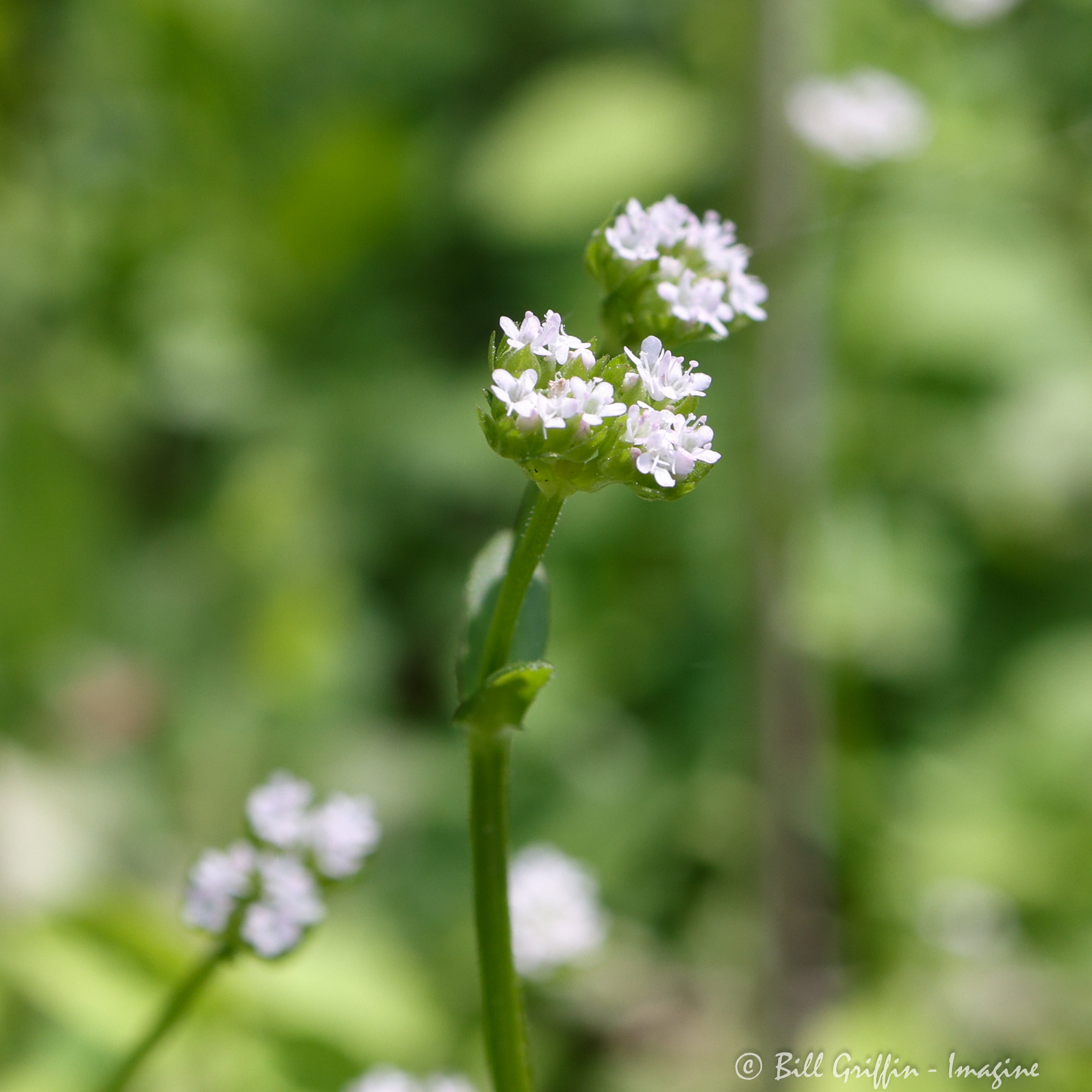
Beaked Corn Salad, Valerianella radiata
.
LINKS:
June 5 Naturalist Hike
June 6 Naturalist Hike
NC Trail Days full schedule of events
Elkin Valley Trails Association
Contact Bill Griffin, EVTA naturalist, at ElkinNatureHikes@gmail.com
.
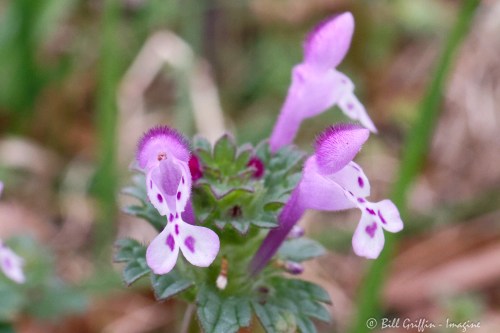
Henbit


I live in the woods, you know at Hanging Rock Park under Cook’s Wall. I have many plants that I can identify and some like the mushrooms that sprout everywhere after rains, that only friends who know what they are discovering are excited about. I wrote a poem to a friend who could identify every fungi that lives in my woods, amazing really…
Toadstool
I’m trying hard to die
that going off alone
to wait
to stare
over the fence
instead of searching
for pleasures — some
beneath your feet
toadstools, fungi things
you may think are nasty
or else have never realized
that they
are worth looking at
maybe,
I want to be eaten
maybe,
I’m poisonous,
Be careful.
I would be witches’ butter
or candle snuff
dead men’s fingers…
I’ve struck out but
maybe,
if you get a book about
toadstools —
I really do like Toads
and you get to know a few?
you will be astonished
how various, delicate
and beautiful they are.
Some things call alluringly and some do not. Some things sing and some are mute. ~ Brian Doyle, Martin, Marten
LikeLike
Thanks Jenny. I love this viewpoint. Every small thing is a wonder and filled with its own excitement. Henbit. A toadstool. —B
LikeLike
This is great! And very exciting! Thanks for sending,
LikeLike
Thanks Jane, come on down. The naturalist and the poet use the selfsame tool — paying attention. —B
LikeLike