.
[ 4 poems with a scientific bent ]
.
Epistemology
.
I
Kick at the rock, Sam Johnson, break your bones:
But cloudy, cloudy is the stuff of stones.
.
II
We milk the cow of the world, and as we do
We whisper in her ear, “You are not true.”
.
Richard Wilbur (1921-2017)
.
❀ ❀ ❀
.
Seeing Things
.
Close as I ever came to seeing things
The way the physicists say things really are
Was out on Sudbury Marsh one summer eve
When a silhouetted tree against the sun
Seemed at my sudden glance to be afire:
A black and boiling smoke made all its shape.
.
Binoculars resolved the enciphered sight
To make it clear the smoke was a cloud of gnats,
Their millions doing such a steady dance
As by the motion of the many made the one
Shape constant and kept it so in both the forms
I’d thought to see, the fire and the tree.
.
Strike through the mask? you find another mask,
Mirroring mirrors by analogy
Make visible. I watched till the greater smoke
Of night engulfed the other, standing out
On the marsh amid a hundred hidden streams
Meandering down from Concord to the sea.
.
Howard Nemerov (1920-1991)
.

.
❀ ❀ ❀
.
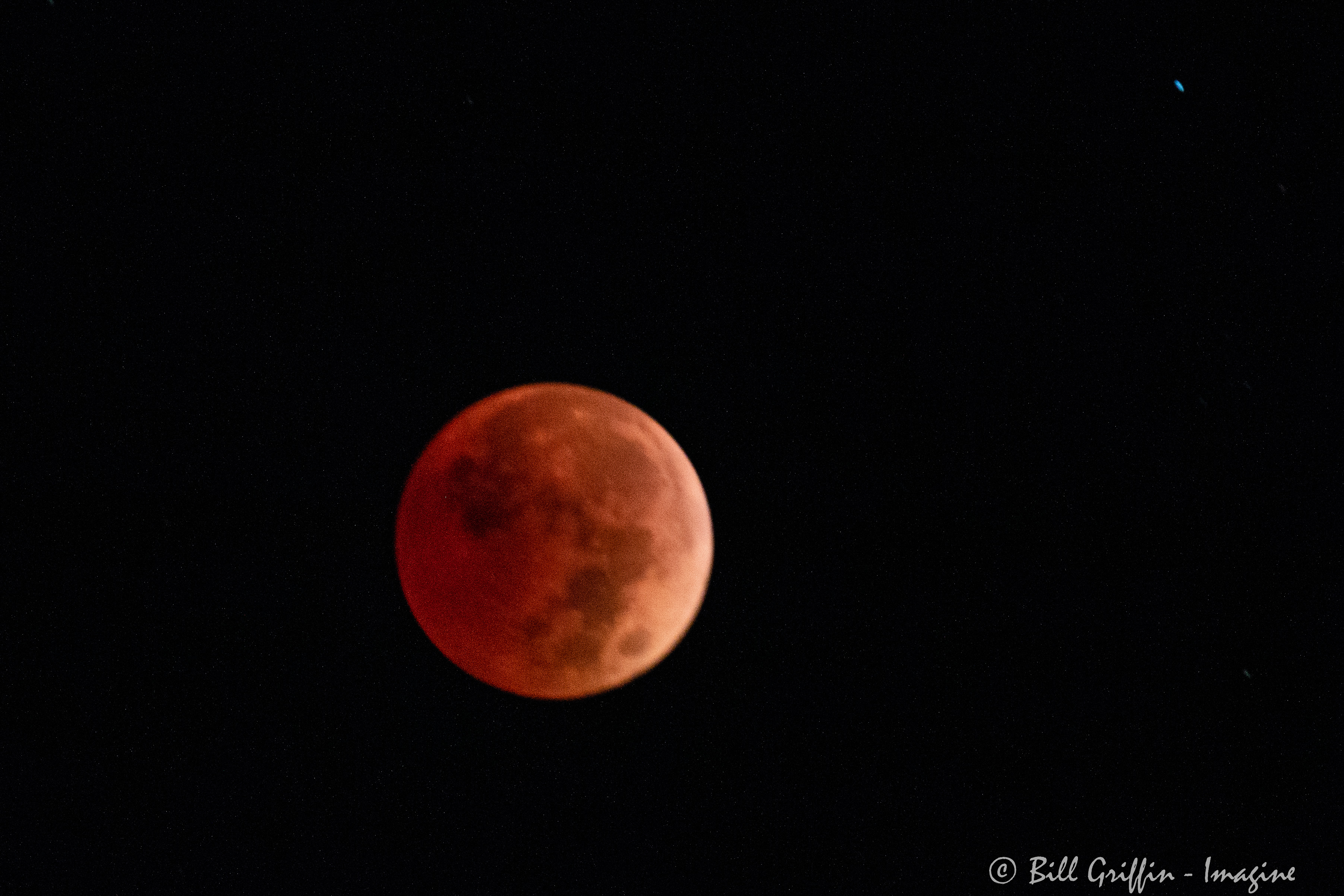
Little Cosmic Dust Poem
.
Our of the debris of dying stars,
this rain of particles
that waters the waste with brightness;
.
the sea-wave of atoms hurrying home,
collapse of the giant, unstable guest who cannot stay;
.
the sun’s heart reddens and expands,
his mighty aspiration is lasting,
as the shell of his substance
one day will be white with frost.
.
In the radiant field of Orion
great hordes of stars are forming,
just as we see every night,
fiery and faithful to the nd.
.
Out of the cold and fleeing dust
that is never and always,
the silence and waste to come —
.
this arm, this hand,
my voice, your face, this love.
.
John Haines (1924-2011)
.
❀ ❀ ❀
.
Cosmic Gall
.
Neutrinos, they are very small.
+++ They have no charge and have no mass
And do not interact at all.
The earth is just a silly ball
+++ To them, though which they simply pass
Like dustmaids down a drafty hall
+++ Or photons through a sheet of glass.
+++ They snub the most exquisite gas,
Ignore the most substantial wall,
+++ Cold-shoulder steel and sounding brass,
Insult the stallion in his stall,
+++ And, scorning barriers of class,
Infiltrate you and me! Like tall
and painless guillotines, they fall
+++ Down through our heads into the grass.
At night, they enter at Nepal
+++ And pierce the lover and his lass
from underneath the bed — you call
+++ It wonderful; I call it crass.
.
John Updike (1932-2009)
.
.
❀ ❀ ❀ ❀ ❀
.
These poems are from The World Treasury of Physics, Astronomy, and Mathematics, this year’s Christmas present to me from Linda. Essays by Albert Einstein, Werner Heisenberg, and Stephen Hawking jostle up against chapters by Annie Dillard, Isaac Asimov, and Lewis Thomas. And then comes the section of poetry! Walt Whitman, Emily Dickinson, and Gerard Manley Hopkins open to be followed by these four 20th century poets, and there is even a poem by James Clerk Maxwell (1831-1879), titan of electromagnetism and whose equations remain the bedrock of classical physics. Who knew? The following paragraphs are from the section introduction, The Poetry of Science:
.
+++ The scepticism that many poets display toward science reflects, and to some extent perpetuates, the myth that science is cold and inhuman, poetry warm and romantic. Yet science is more romantic than is generally realized, poetry less so, and the scientists and the poets ultimately are allies. Both are creative and unpredictable (and therefore dangerous). Neither can tolerate authoritarianism, blind obedience, or cant. And both, to do their best work, must draw on aesthetic as well as intellectual resources; a logical but ugly mathematical theorem is as unsatisfactory as a pretty but silly sonnet.
.
+++ This is not to say that scientists should try to emulate poets, or that poets should turn proselytes for science. Poetry and science are both too powerful to benefit from so bland and bourgeois a marriage, and their relationship is likely to remain stormy so along as each remains vital. But they need each other, and the world needs them both.
.
The World Treasury of Physics, Astronomy, and Mathematics, edited by Timothy Ferris. Little, Brown and Company, Boston Toronto London. © 1991 by Timothy Ferris.
.
.
❀ ❀ ❀ ❀ ❀
.
Thank you for visiting Verse and Image:
. . . . . every Friday I present one or two poems I’ve read this week that particularly speak to me;
. . . . . every Saturday I present one or two poems submitted by YOU, my readers.
.
If you would like to offer a poem for consideration, either by a favorite author or your own work, please view these GUIDELINES for Saturday Readers Share:
.
.
If you would like to receive an email each time a post appears, please SUBSCRIBE to Verse and Image using the button on the Home Page.
.
If you have a hard time finding the SUBSCRIBE button on this WordPress site, you can send me your email address and I will add you to the subscriber list. Send your request to
.
COMMENTS@GRIFFINPOETRY.COM
.
Thanks again for joining the conversation.
.
– Bill
.

.


 V E R S E and I M A G E
Leave a comment